You can reteach the same math skill three different ways, give extra practice, pull a small group, and still have students stare at the problem like they have never seen it before.
Frustrating?
Absolutely.
But it may not mean your lesson failed.
It may mean the missing piece is number sense.
When students do not understand numbers, relationships, and reasonableness, every new math skill feels harder than it needs to be. They may memorize steps for a little while, but as soon as the numbers change, the problem looks different, or they have to explain their thinking, everything starts to fall apart.
And that is exactly why number sense matters so much during math intervention.
Math intervention should not just be about getting students through more problems.
It should help students build the foundation they need so the math actually makes sense.
Let’s talk about why number sense may be the missing piece in your math intervention block and what you can do to support it.
What Is Number Sense?
Number sense is a student’s ability to understand numbers and how they work.
It is more than counting.
It is more than memorizing facts.
It is more than following steps.
Number sense helps students understand:
- Numbers and quantities
- Relationships between numbers
- Magnitude
- Estimation
- Reasonable answers
- Patterns
- How operations work
- How to apply number knowledge to new problems
A student with strong number sense can look at a problem and think, “That answer does not make sense,” or “I know 49 is close to 50, so I can use that to help me.”
A student with weak number sense may only see numbers and symbols on a page.
They may not understand what the numbers represent, how they relate, or whether their answer is even reasonable.
That is where math intervention gets tricky.
Because if we only reteach the procedure, but never rebuild the number understanding underneath it, students may continue to struggle with the next skill, and the next one, and the next one.
Why Number Sense Matters During Math Intervention
Students who lack number sense often rely on memorized steps.
And sometimes, those steps work.
Until they don’t.
They may be able to solve a problem when it looks exactly like the example. But when the numbers change or the problem is worded differently, they freeze.
You might notice this when students:
- Follow a procedure but cannot explain why it works
- Get an answer that makes no sense and do not notice
- Struggle to estimate before solving
- Mix up operations in word problems
- Count everything one by one
- Memorize steps but forget them quickly
- Need constant prompting to start a problem
This is why number sense is such a big part of math intervention.
Without number sense, students are not just missing a strategy. They are missing the foundation that helps the strategy make sense.
Number sense supports:
- Problem solving
- Math reasoning
- Mental math
- Fact fluency
- Place value understanding
- Fraction understanding
- Operation sense
- Mathematical confidence
When students build number sense, they become more flexible thinkers.
They can choose strategies instead of waiting for someone to tell them which steps to follow. They can explain their thinking. They can recognize when an answer is unreasonable.
And for students who need intervention, that kind of understanding is huge.
Signs a Student May Need Number Sense Support
Sometimes students do not need more practice with the same type of problem.
They need support with the thinking behind the problem.
Here are some signs that a student may need number sense support:
- Counts everything one by one
- Struggles with mental math
- Gives unreasonable answers without noticing
- Has trouble estimating
- Relies only on memorized procedures
- Cannot explain why an answer makes sense
- Struggles when numbers are presented in a different way
- Freezes during word problems
- Has difficulty comparing numbers
- Does not understand place value
- Uses the same strategy for every problem, even when it does not fit
If you are seeing these patterns, the answer may not be to give students more problems.
The answer may be to slow down and build the number sense skills they are missing.
And I know that can feel hard when you have pacing guides, assessments, and a long list of standards to teach.
But here is the truth:
Students cannot build on a foundation that is not solid.
If number sense is weak, other math skills will feel harder than they should.
How Number Sense and Progress Monitoring Work Together
Building number sense is important, but we also need to know if students are making progress.
That is where progress monitoring comes in.
Progress monitoring does not have to be complicated. It simply helps you answer:
- Is this student improving?
- Is this strategy working?
- Does this student need more support?
- Should I reteach this skill another way?
- Is this student ready to move forward?
This matters because number sense gaps may not be fixed in one lesson.
A student who has struggled with place value for years may need repeated exposure, visual models, math conversations, and targeted practice before the concept finally clicks.
And that is okay.
The goal is not to rush students through intervention.
The goal is to help them grow.
When you use progress monitoring, you are not guessing. You are looking at student work, noticing patterns, and making instructional decisions based on what students actually need.
That is what makes intervention more purposeful.
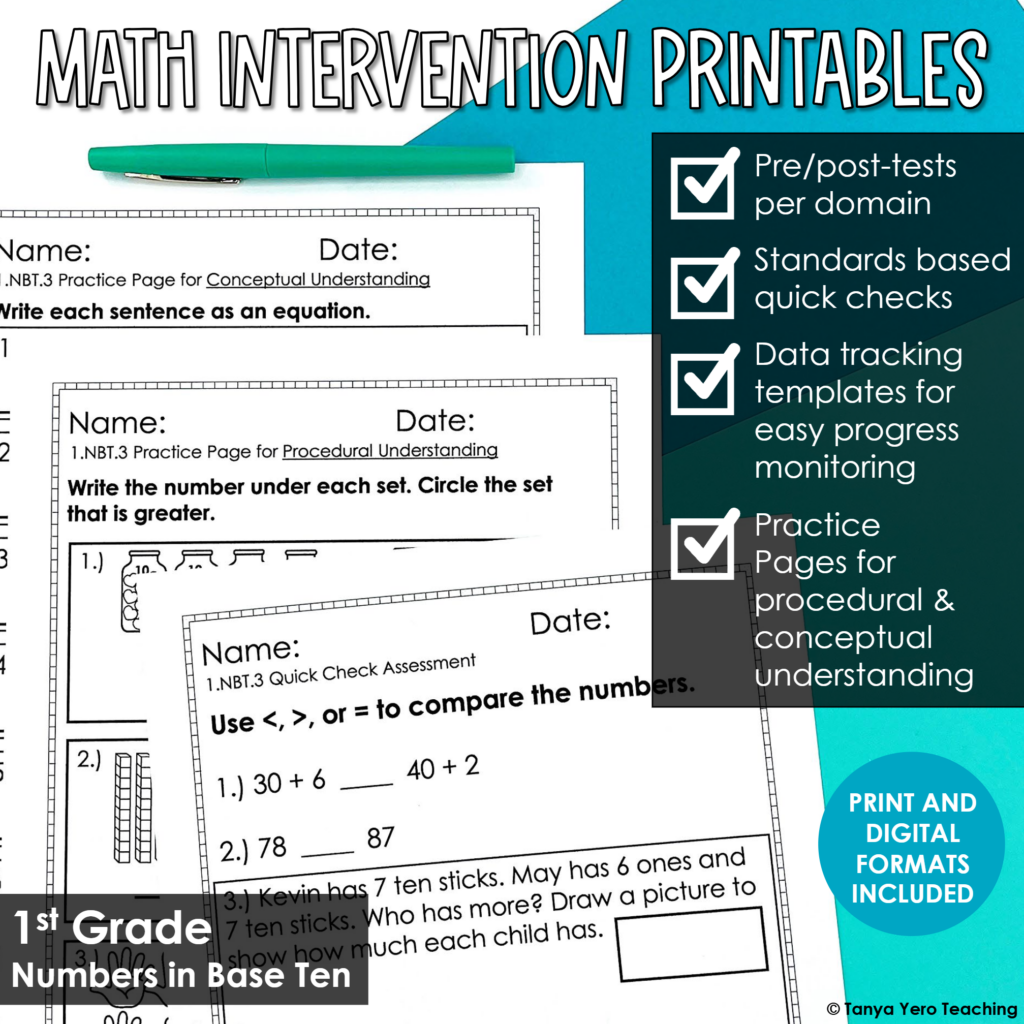
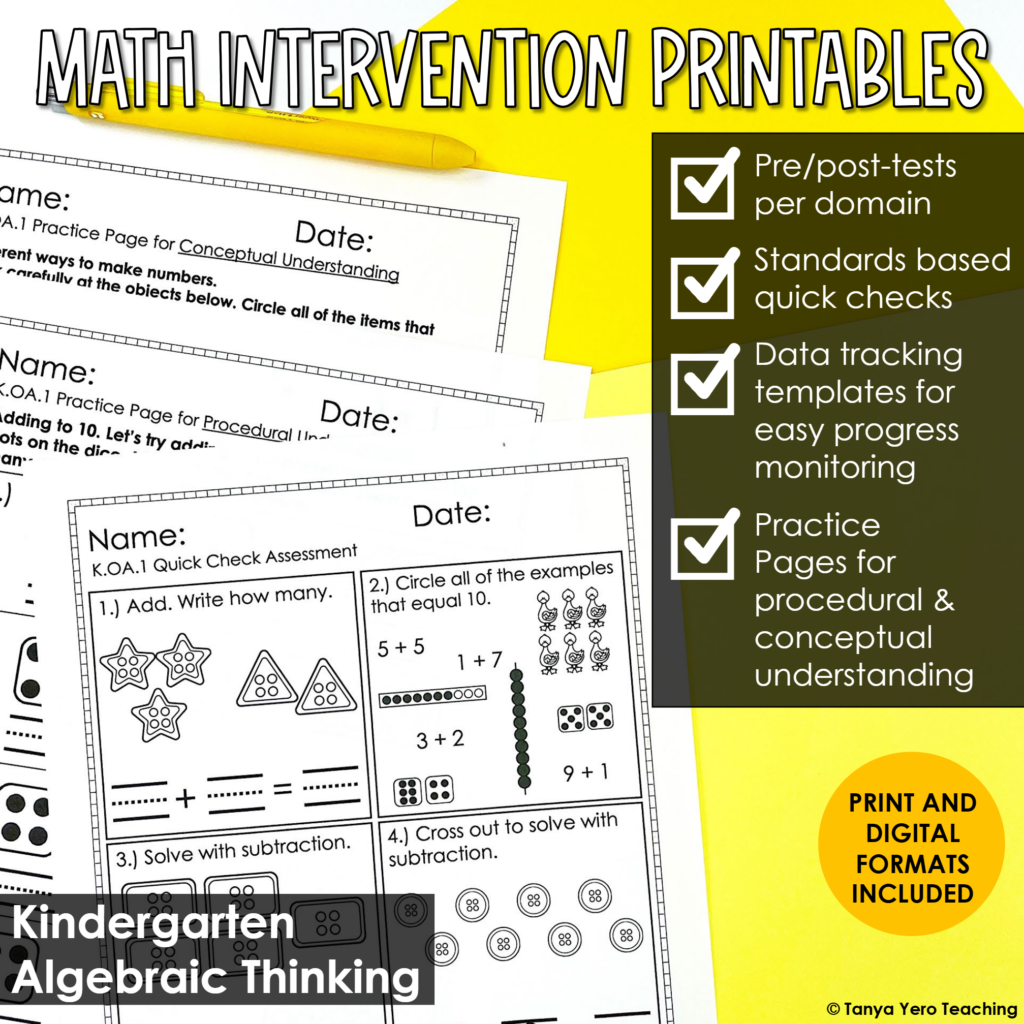
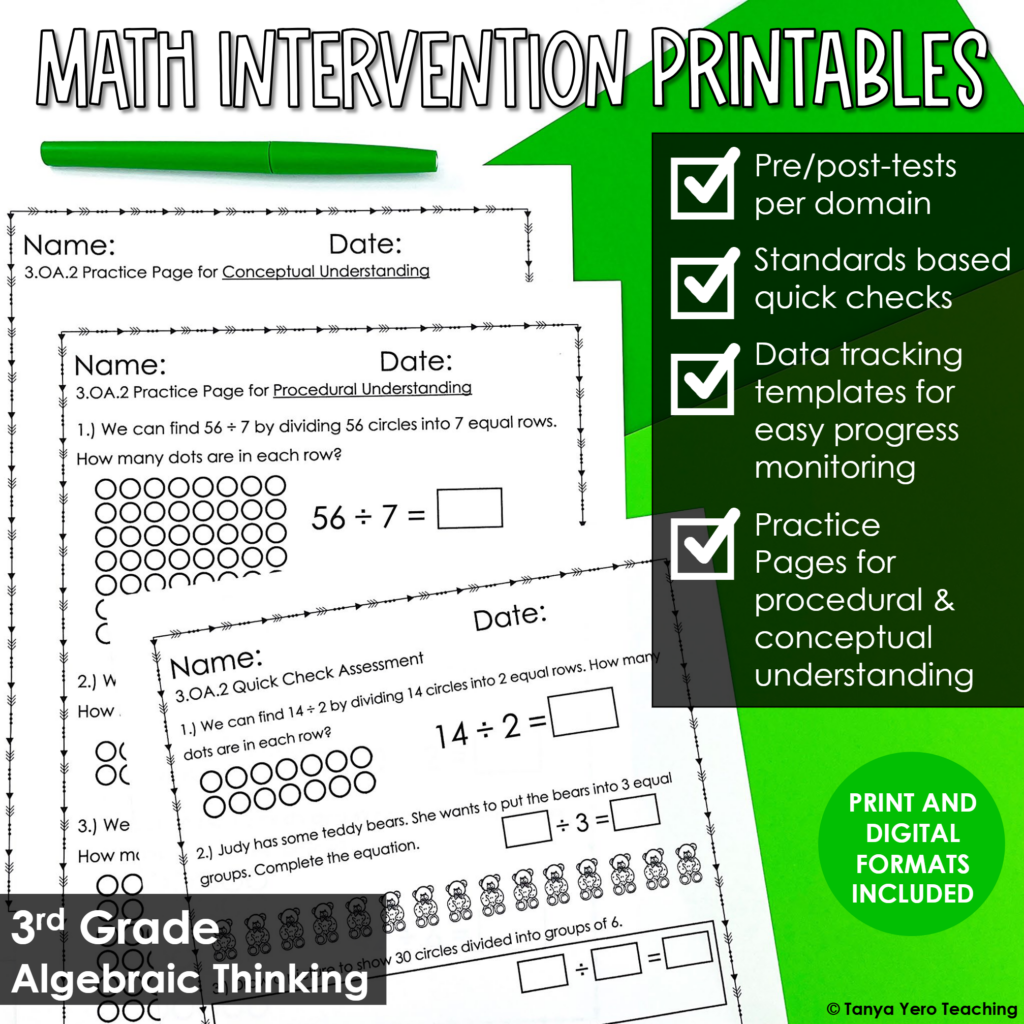
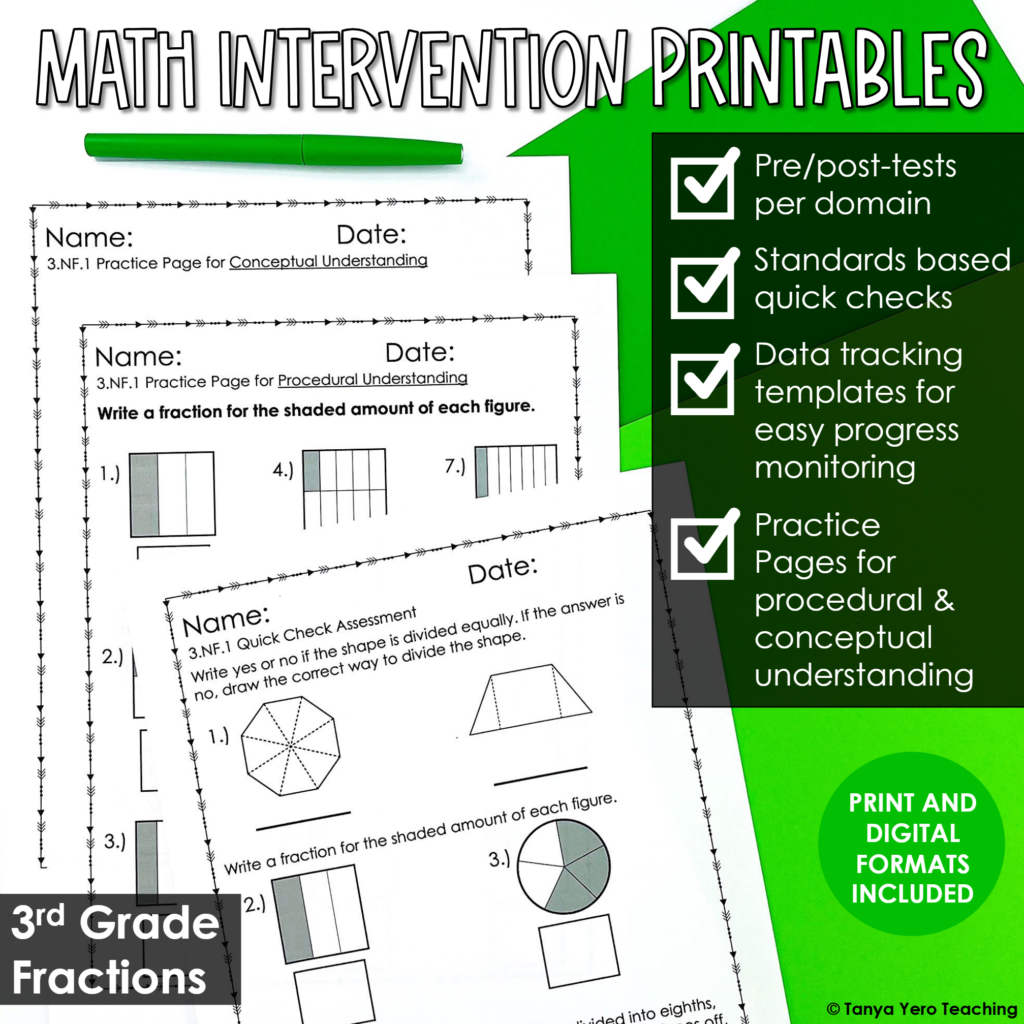
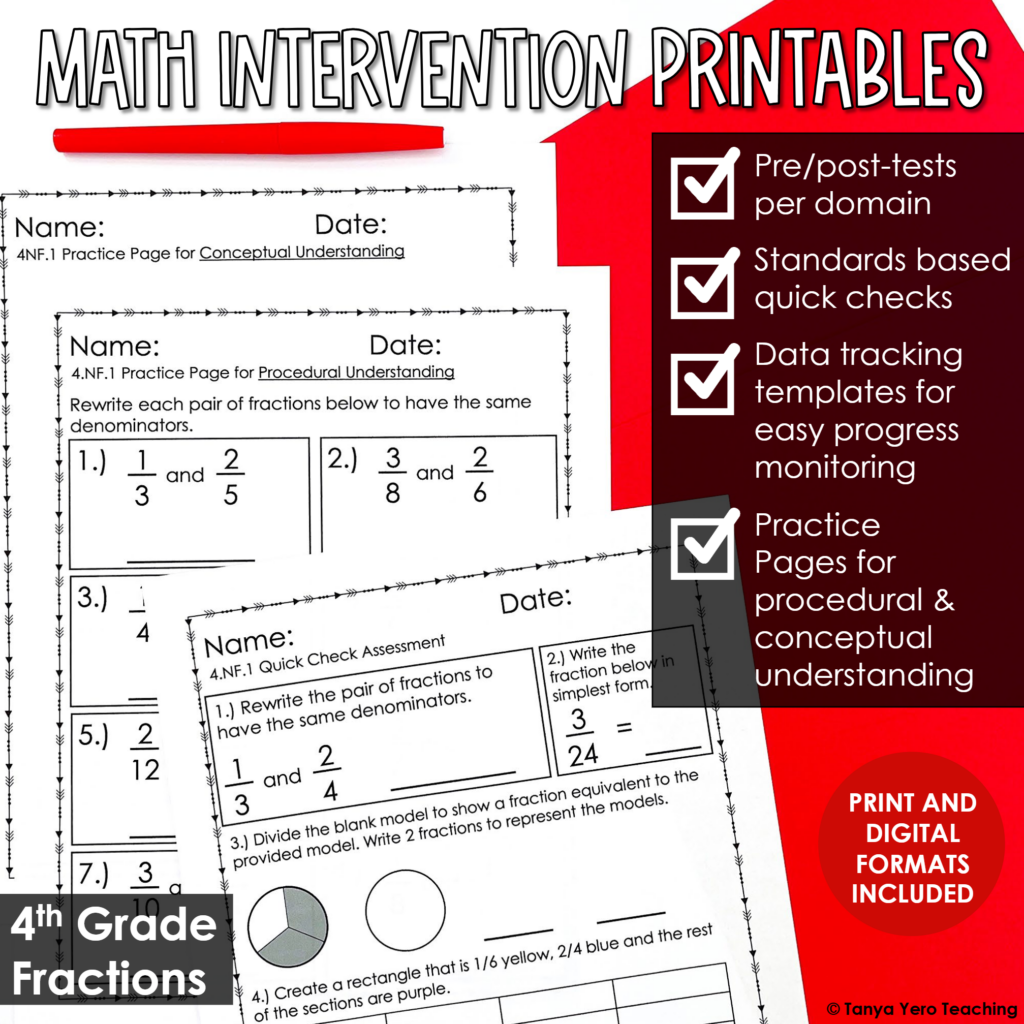
Need help tracking student progress? My Math Intervention Binders include pre/post-tests, quick checks, practice pages, and data tracking forms to help organize your intervention instruction.


5 Ways to Build Number Sense During Intervention
The good news is that building number sense does not have to be fancy.
You do not need to completely change your math block.
You just need to be intentional about helping students understand the math behind the steps.
Here are five ways to build number sense during math intervention.
1. Start With Visual Models
Visual models help students see the math.
This is especially important for students who have been relying only on memorized steps.
Use tools like:
- Ten frames
- Number lines
- Base-ten blocks
- Place value charts
- Arrays
- Fraction strips
- Area models
- Quick sketches
For example, if a student is struggling with place value, do not jump straight into a worksheet full of numbers.
Start with base-ten blocks. Build the number. Break it apart. Talk about the value of each digit. Show it in expanded form. Compare it to another number.
Students need to see that numbers have meaning.
When students can visualize the math, they are more likely to understand the process.
The goal is to move students from concrete understanding to visual understanding to abstract thinking.
That progression matters.
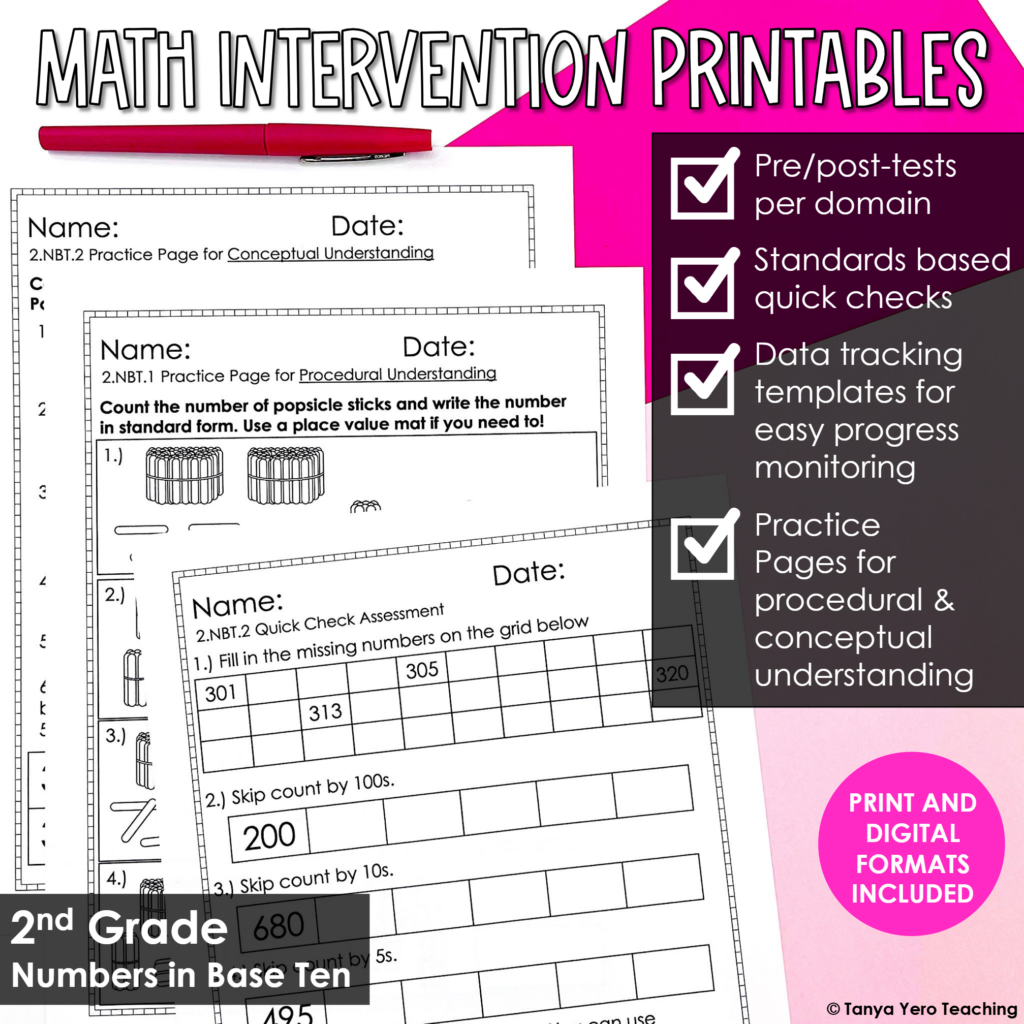
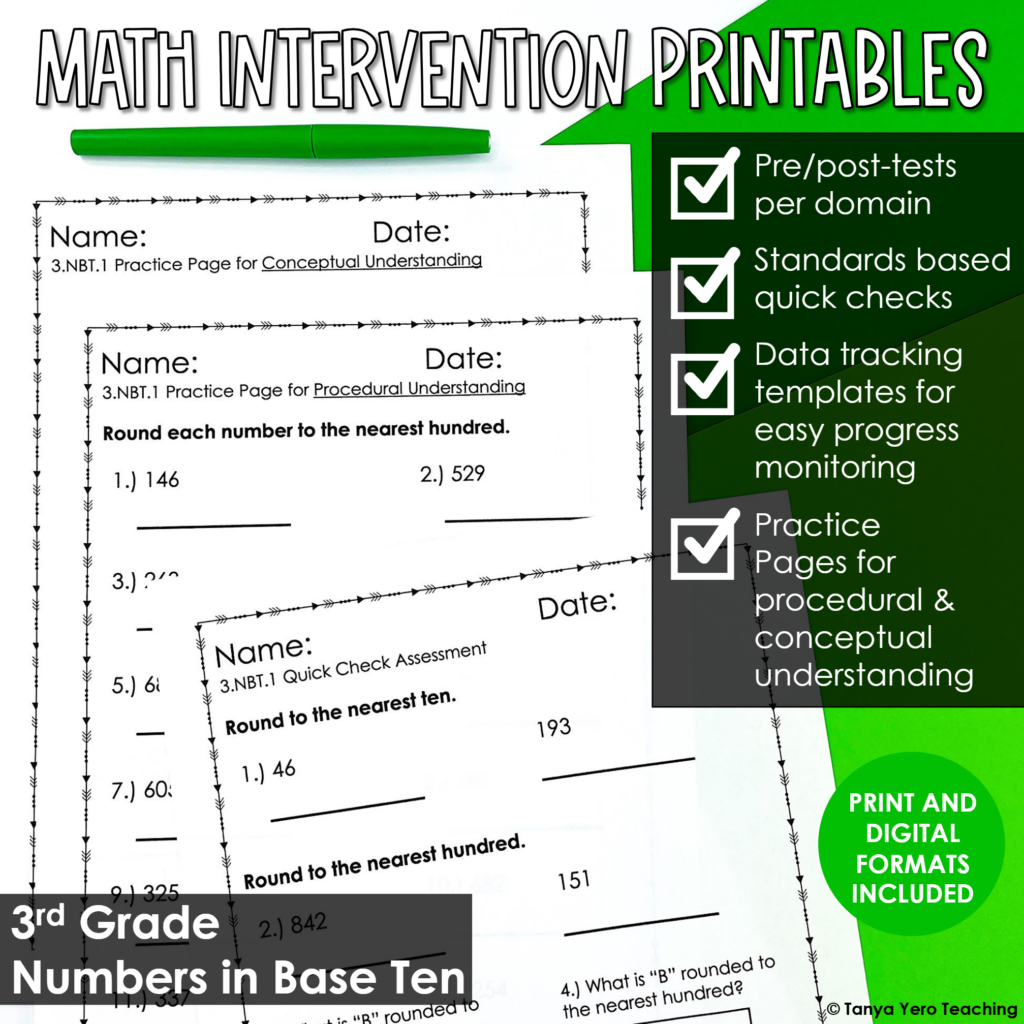
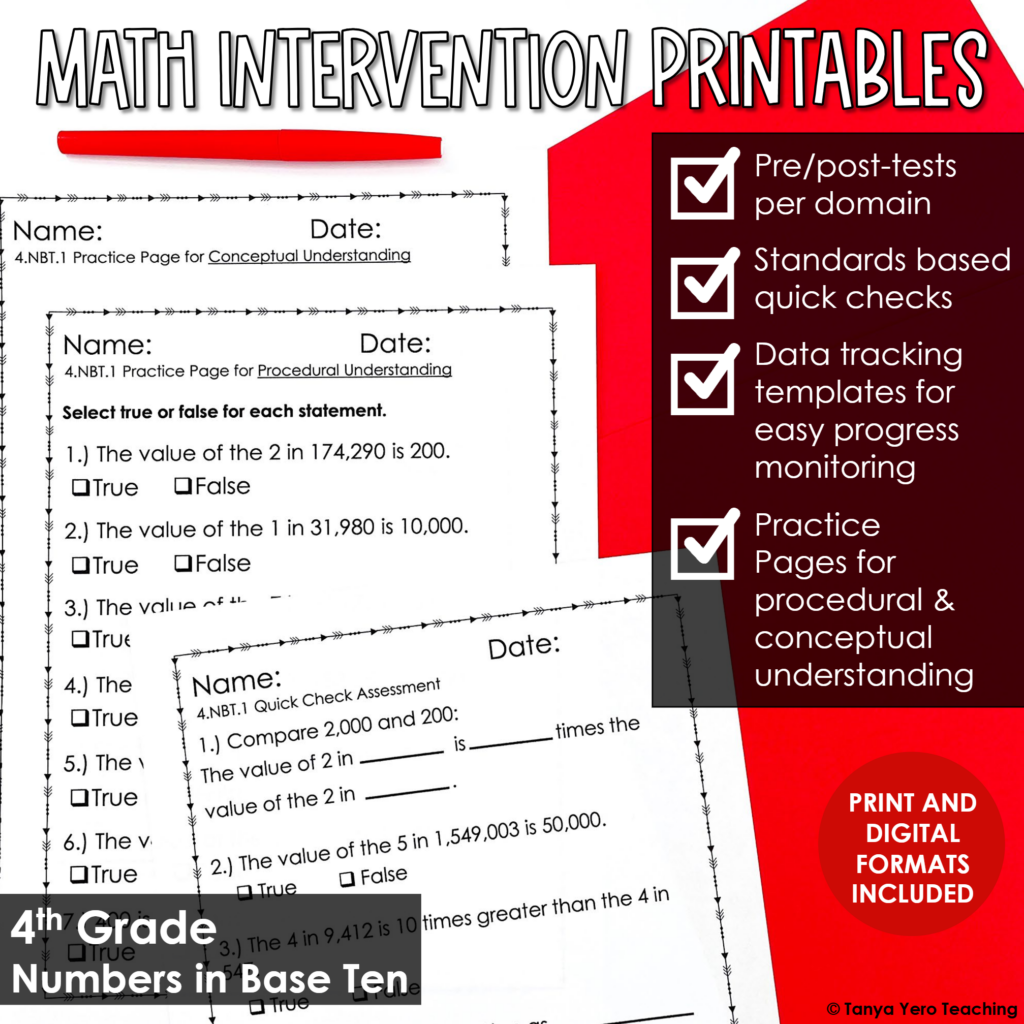
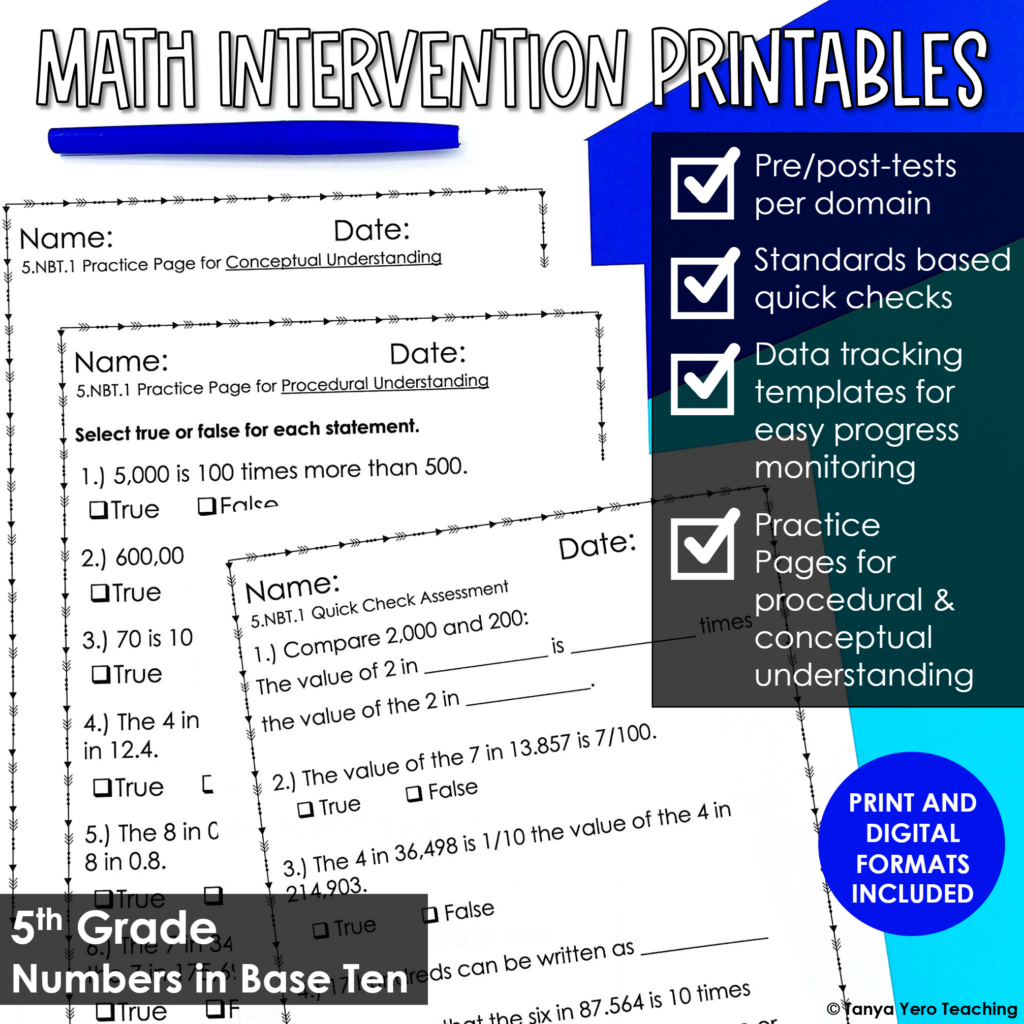
If your students are struggling with place value or base ten understanding, these targeted intervention packs can help you slow down and build the foundation.
2. Ask Students to Estimate First
Before students solve, ask them to estimate.
This one small habit can tell you a lot.
Ask:
“About what should the answer be?”
This helps students think about reasonableness before they start calculating.
For example, if a student is solving 398 + 207, they should know the answer will be around 600.
If they get 1,405, they should pause and think, “That does not make sense.”
But students will not automatically do this if we never ask them to.
Estimation helps students build:
- Reasonableness
- Magnitude
- Mental math
- Flexible thinking
- Confidence with numbers
And it is quick.
You can add estimation to small groups, warm-ups, problem solving, or intervention lessons without needing a completely separate activity.
3. Use Number Talks
Number talks are a powerful way to build number sense because they focus on student thinking.
Instead of only looking for the answer, number talks ask students to explain how they solved.
That matters because students need to hear that there is often more than one way to think about a problem.
One student may make a ten.
Another may use doubles.
Another may break apart numbers.
Another may use place value.
When students hear different strategies, they start to build their own toolbox.
During intervention, number talks can help students:
- Explain their thinking
- Compare strategies
- Listen to classmates
- Build mental math skills
- See numbers more flexibly
You do not need a long number talk every day.
Even a few minutes can make a difference.
Try asking:
- How did you solve it?
- Did anyone solve it a different way?
- Which strategy felt easiest?
- Why does that strategy work?
The more students talk about numbers, the more confident they become using them.
4. Connect New Skills to Familiar Numbers
When students struggle, we sometimes jump straight into reteaching the new skill.
But students often need us to connect the new skill to something they already know.
For example:
If students are struggling with multiplication, connect it to skip counting, arrays, and repeated addition.
If students are struggling with fractions, connect it to equal parts, halves, and benchmark fractions.
If students are struggling with decimals, connect it to place value and money.
If students are struggling with multi-digit addition, connect it to tens, hundreds, and expanded form.
Students need bridges.
They need to see that math skills are connected, not random.
When you connect new learning to familiar numbers or familiar models, students are less likely to shut down.
They can think, “Oh, I know something about this.”
That little bit of confidence matters.
5. Ask Better Questions
Questions are one of the most powerful intervention tools you have.
Not complicated questions. Not trick questions.
Just better questions.
Instead of only asking, “What is the answer?” ask:
- How do you know?
- Does that answer make sense?
- What strategy did you use?
- Can you show it another way?
- What do you notice?
- Where did you get stuck?
- What could you try first?
These questions help you figure out what students understand.
Sometimes a student gets the right answer but has no idea why.
Sometimes a student gets the wrong answer, but their thinking shows they are closer than you realized.
That is valuable information.
During intervention, you need to hear student thinking so you can respond to it.
The answer matters, but the thinking matters more.
Intervention Should Build Understanding, Not Just Correct Answers
This is the heart of math intervention.
The goal is not to rush students through more problems.
The goal is to help students understand the math deeply enough to use it again.
That means intervention should include:
- Explicit instruction
- Visual models
- Hands-on practice
- Student explanations
- Progress monitoring
- Targeted skill practice
- Time to revisit foundational concepts
It also means we have to be willing to slow down.
I know that is not always easy.
Teachers have so much pressure to move forward. But if students are missing number sense, moving faster will not fix the problem.
It usually makes the gap bigger.
When students build number sense, they are not just learning one math skill.
They are building the foundation for so many future skills.
Place value supports operations.
Operations support problem solving.
Fraction understanding supports decimals.
Estimation supports reasonableness.
Mental math supports confidence.
It is all connected.
And that is why number sense belongs in math intervention.
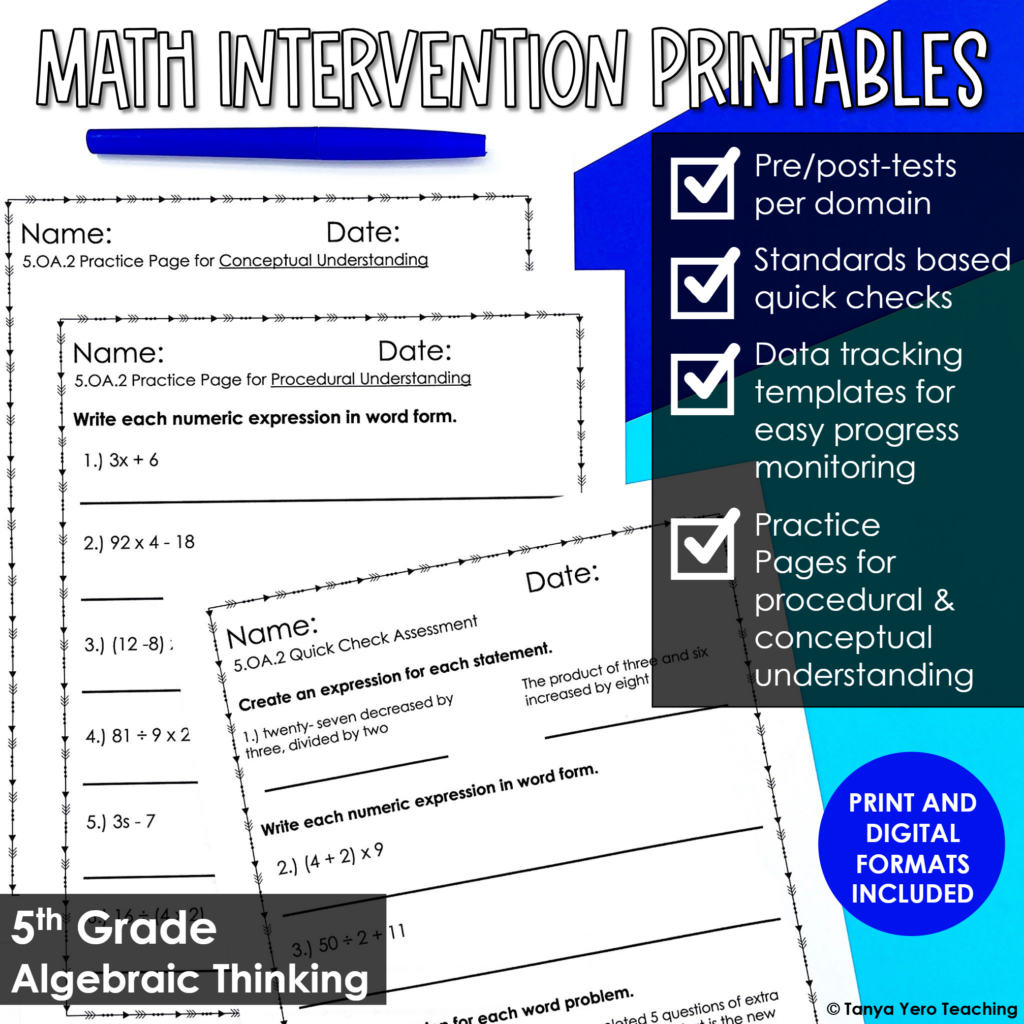
Need targeted support for a specific skill gap? Explore domain-specific Math Intervention resources for place value, base ten, algebraic thinking, fractions, and more.
Number Sense Can Change the Way Intervention Feels
When students struggle in math, it is easy to think they just need more practice.
And sometimes they do.
But many times, they need a better foundation.
They need to understand what numbers mean.
They need to see relationships.
They need to estimate.
They need to explain their thinking.
They need to recognize when an answer does not make sense.
That is number sense.
And when students build number sense, math intervention becomes more than extra practice.
It becomes the bridge between confusion and confidence.
So the next time a student is struggling, pause before giving another page of problems.
Ask yourself:
Is this student missing the procedure, or are they missing the number sense underneath it?
That one question can change your next step.
Ready to Strengthen Your Math Intervention Block?
If your students are struggling with number sense, place value, fractions, operations, or problem solving, My Math Intervention resources can help you target the skill gap and track student growth.
These resources are designed to help teachers:
- Identify skill gaps
- Use quick checks
- Support small groups
- Provide guided and independent practice
- Track progress
- Make intervention more manageable
Start small.
Choose one skill.
Pull one group.
Use one visual model.
Ask one better question.
That is how number sense starts to grow.