Have you ever taught a math skill, watched your students master it, and then realized a few weeks later that they barely remembered it?
Yep. Me too.
In my first few years of teaching, math retention was one of my biggest struggles.
I would teach a concept, give students plenty of practice, and assess their understanding. Everything looked great.
Then the skill would pop up again a few weeks later, and suddenly I was hearing:
“I don’t remember how to do this.”
“Did we learn this already?”
“I’ve never seen this before!”
Except…we had definitely learned it before.
I tried strategies from colleagues, books, and workshops, but nothing really stuck.
Some ideas took too much time. Others required more preparation than I could realistically keep up with. And some worked for a few days before disappearing once our schedule got busy.
Then, one year at back-to-school time, I decided to try something different.
I added a short, consistent spiral review routine to my math block using a resource I carefully designed.
And honestly? It made all the difference.
Instead of waiting until testing season to find out what my students had forgotten, I could catch misunderstandings early and keep important math skills fresh throughout the year.
I also saw a noticeable improvement in how well my students retained previously taught concepts.
The best part?
It only took 5–8 minutes a day.
If you are looking for a simple way to make review more consistent this year, you can browse my Math Spiral Review resources for grades 3–6 here.
Why Do Students Forget Previously Taught Math Skills?
Most math instruction is taught in units.
We teach a skill, practice it, assess it, and then move on to the next standard.
We have to. There is a lot of content to cover!
The problem is that students may not see that skill again for several weeks or even months.
By the time it appears on a benchmark assessment, state test, or future assignment, many students have forgotten the steps, strategies, and concepts they once understood.
It becomes a cycle:
- Teach the skill.
- Practice the skill.
- Assess the skill.
- Move on.
- Discover that students have forgotten the skill.
- Reteach it.
Sound familiar?
The good news is that you do not need to spend hours reteaching every concept.
Students simply need consistent opportunities to revisit and apply previously taught math skills.
That is where math spiral review comes in.
What Is Math Spiral Review?
Math spiral review is the intentional practice of revisiting previously taught concepts throughout the school year.
Instead of practicing a skill only during the week or unit in which it is taught, students continue to see that skill mixed in with other concepts.
A daily spiral review may include questions involving:
- Number sense
- Computation
- Fractions
- Geometry
- Measurement
- Word problems
- Mathematical reasoning
- Previously taught grade-level standards
The goal is not to give students another giant worksheet.
The goal is to give them short, meaningful opportunities to retrieve and apply what they have already learned.
Research supports reviewing and retrieving previously learned information over time, and I saw the benefits firsthand in my own classroom.
This repeated exposure helps students make connections between skills and strengthen their understanding.
It also gives you a much clearer picture of what your students truly remember.
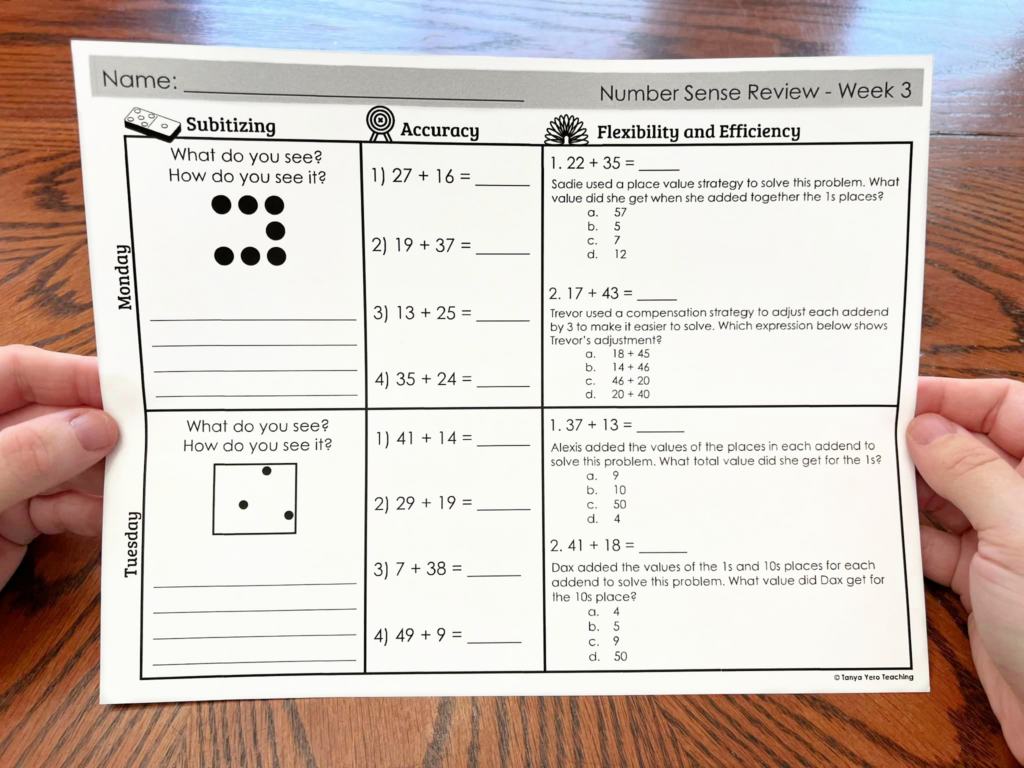
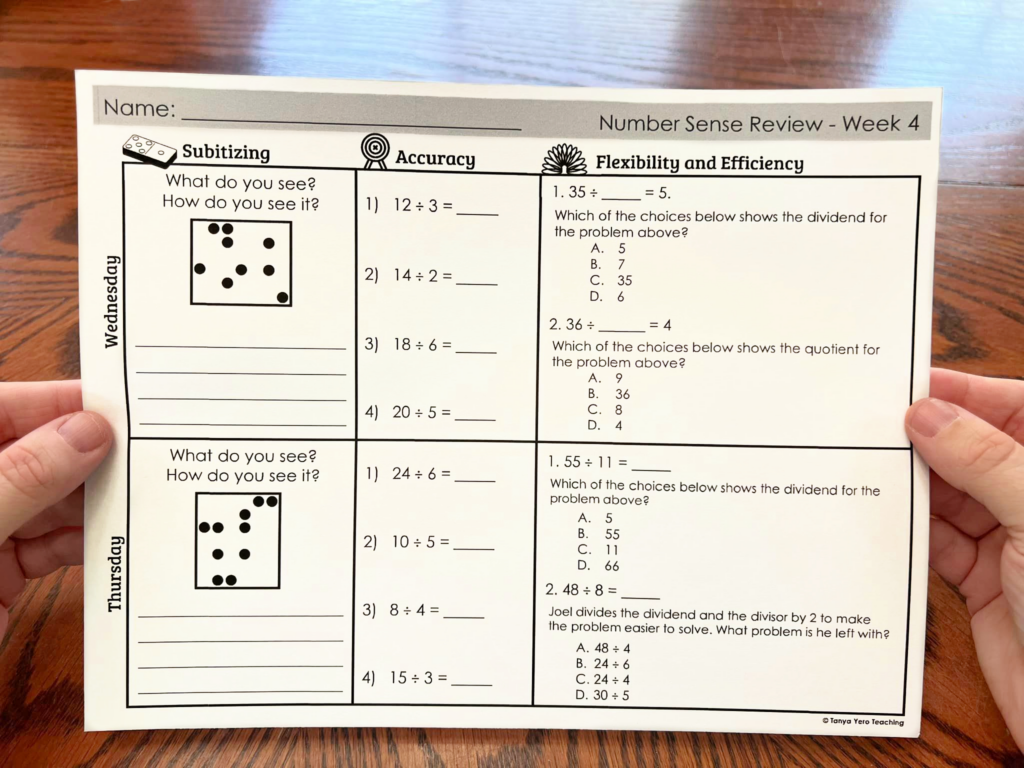
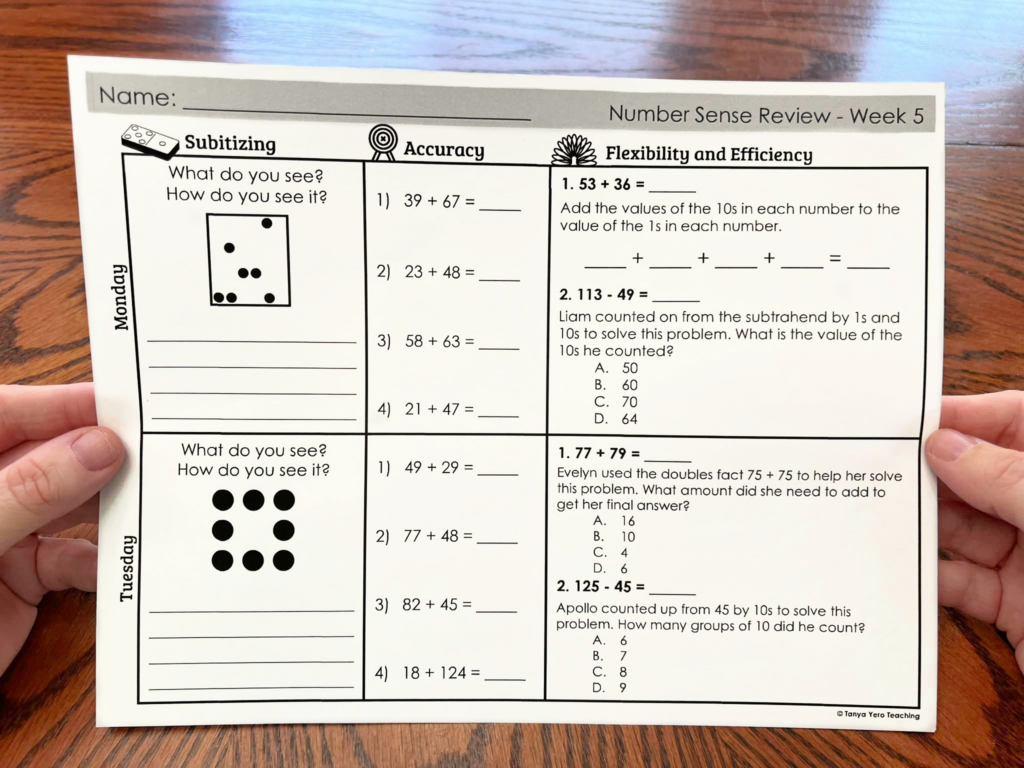
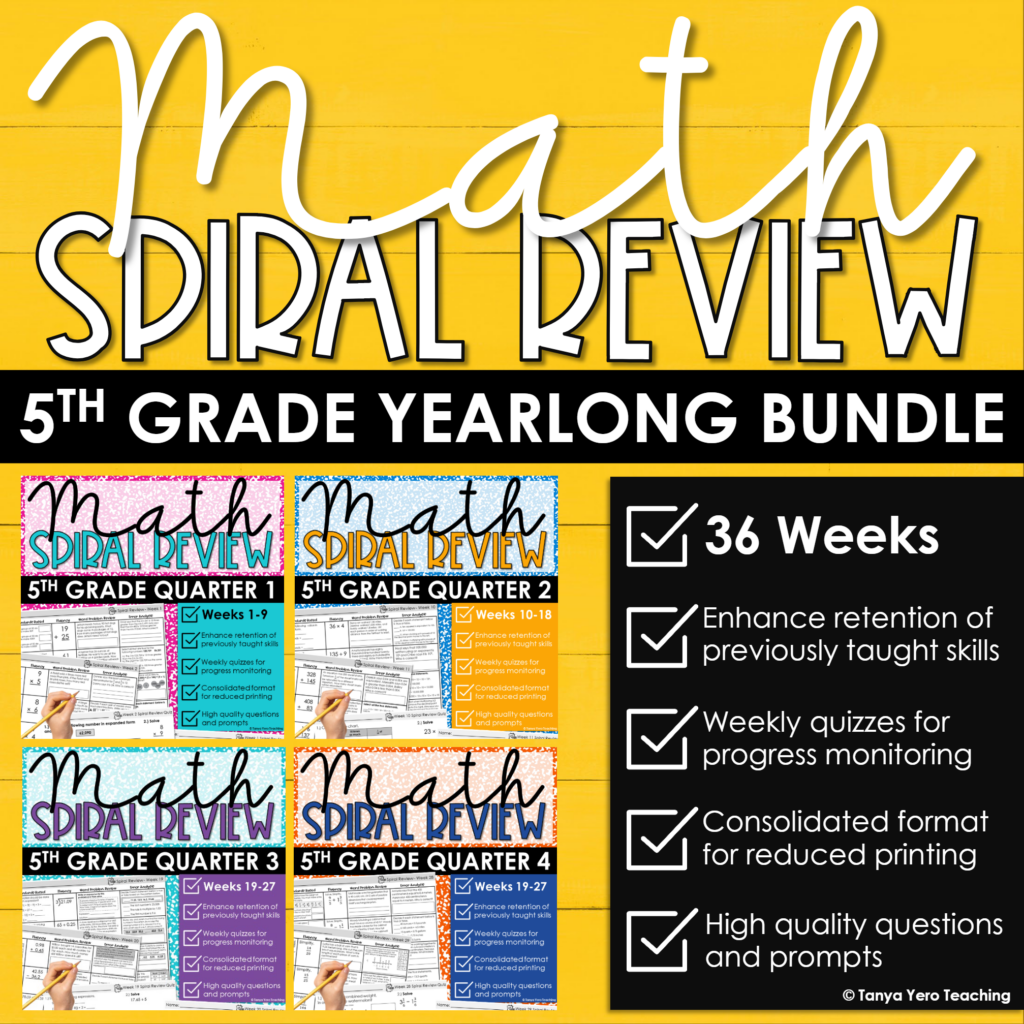
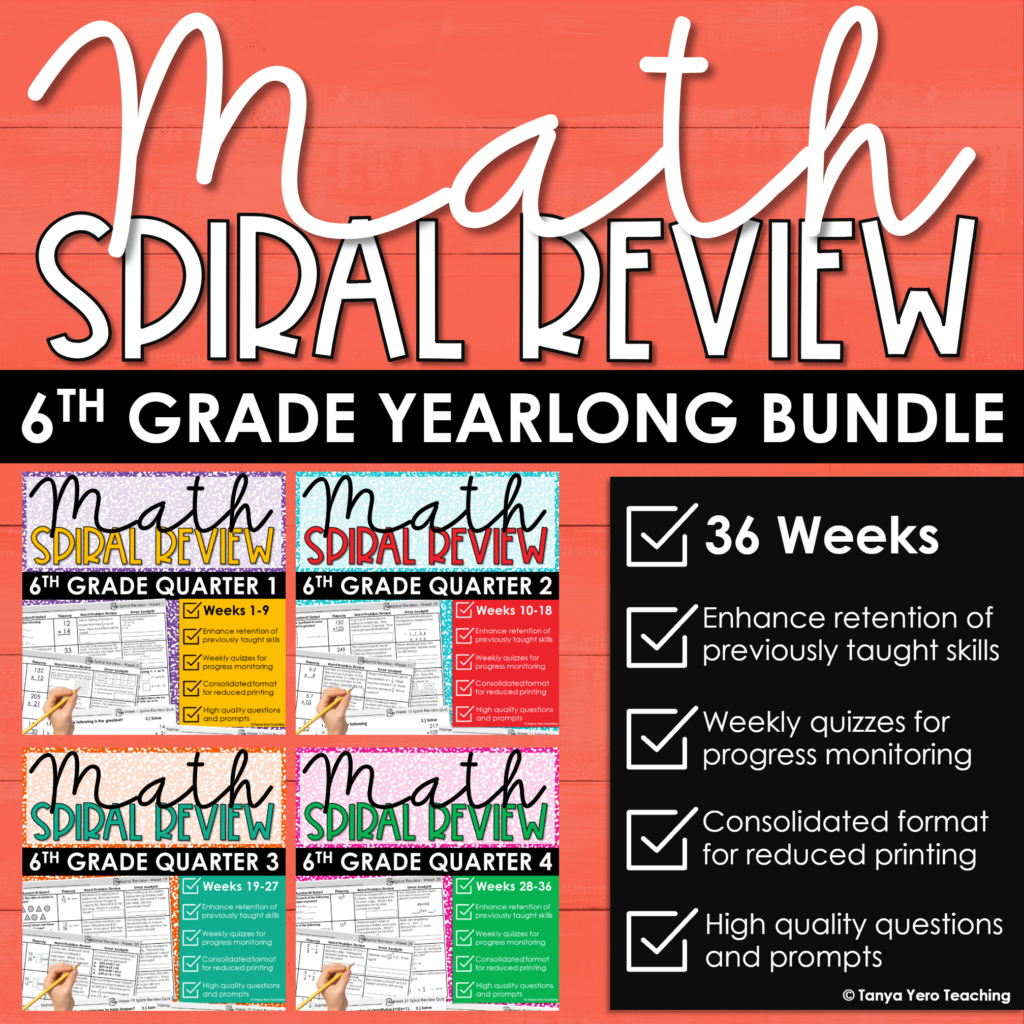
Want to see what this can look like in your classroom? My Math Spiral Review resources include weekly review mats with short daily prompts, so students can revisit important skills without taking over your math block.
The Problems With Some Spiral Review Routines
I had tried review activities before, but they did not always last.
When I created my own math spiral review routine, I wanted to avoid the three biggest problems I had experienced.
1. The Review Takes Too Much Time
Your spiral review should support your math instruction, not take over your entire math block.
If students spend 20 or 30 minutes completing a review page, you may not have enough time left for your current lesson.
That is why I recommend keeping spiral review to approximately 5–8 minutes each day.
A few focused questions are enough to get students thinking and give you valuable information about their understanding.
2. The Format Is Constantly Changing
When students have to learn new directions or figure out a different format every day, the review becomes less efficient.
A predictable structure allows students to get started independently.
They know where to find the questions, what they are expected to do, and what happens when they finish.
Instead of focusing on the directions, they can focus on the math.
3. The Preparation Is Not Sustainable
Let’s be honest. You do not need another resource that creates more work for you.
You should not have to spend your planning period searching for review questions, creating new worksheets, or trying to remember which skills you have already included.
A spiral review routine is only helpful if you can realistically maintain it.
It should be:
- Easy to prepare
- Simple to organize
- Consistent from week to week
- Low on printing
- Purposeful for students
I intentionally streamlined and consolidated my spiral review mats to keep printing demands low.
Consistency matters more than quantity.
A short routine you use throughout the year will be much more effective than a complicated routine you abandon after two weeks.
Need a no-prep routine you can actually stick with?
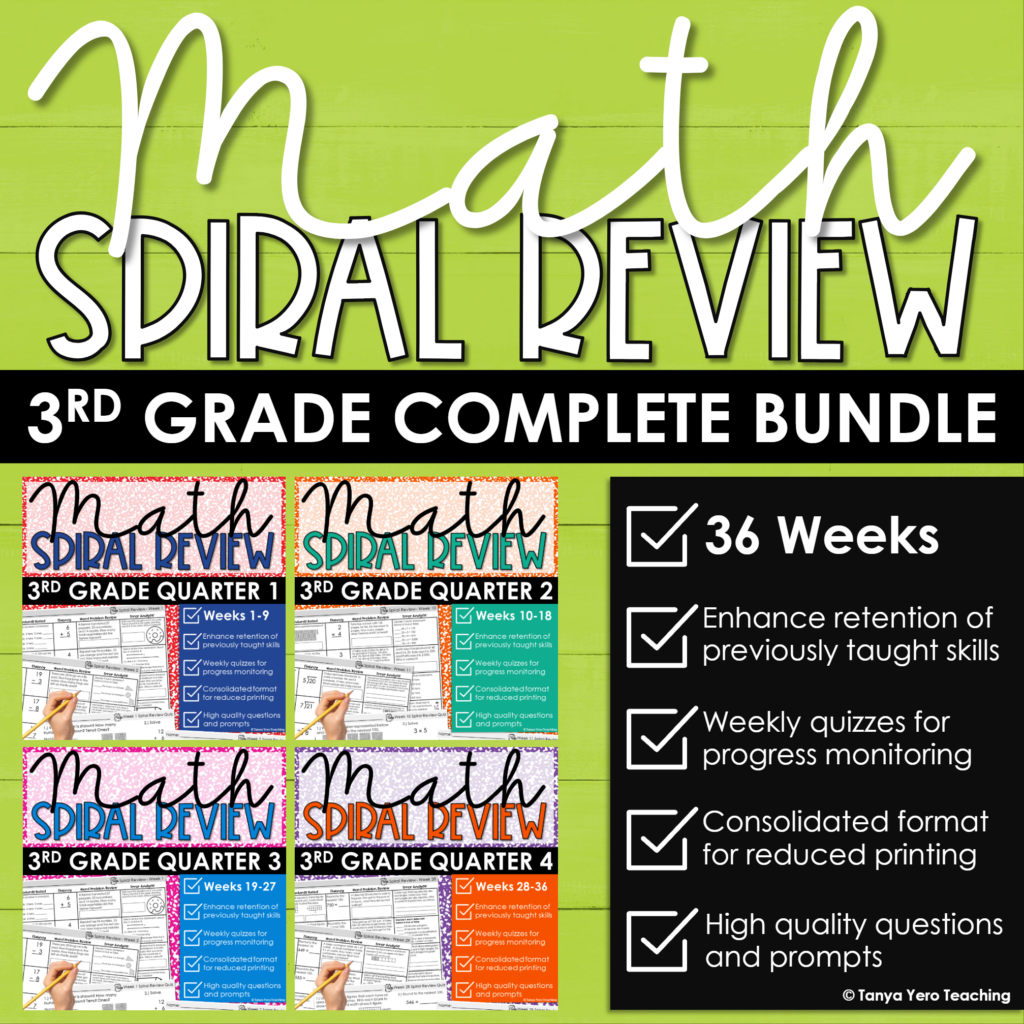
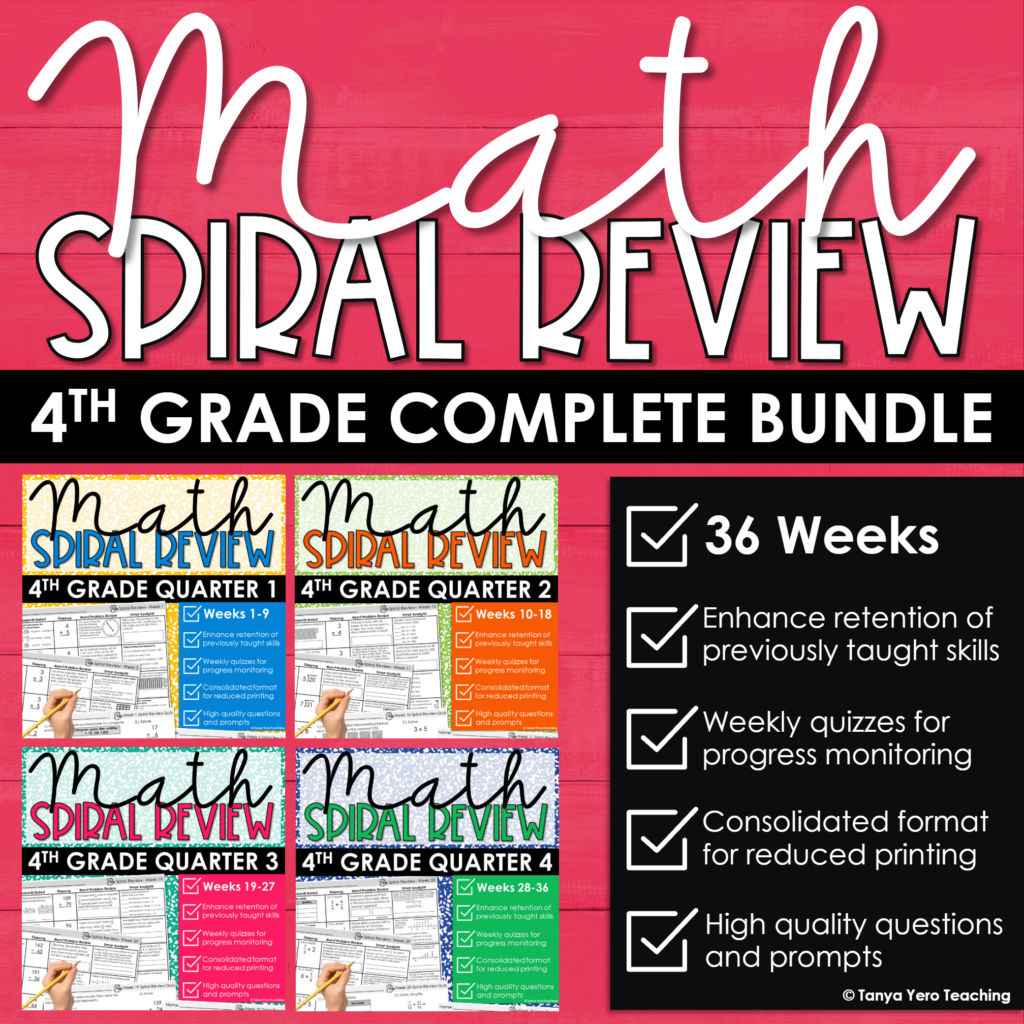
My Math Spiral Review resources for grades 3–6 were created to make daily review simple, consistent, and manageable. Each bundle includes weekly review mats, Friday mini quizzes, teacher overview pages, and answer keys, so you are not piecing together review questions on your own.
Shop Math Spiral Review Resources
What Should a Math Spiral Review Include?
An effective spiral review should include more than several problems that all look exactly the same.
Students need opportunities to decide:
- What type of problem they are solving
- Which strategy they should use
- What information is important
- Whether their answer is reasonable
- How the problem connects to something they have learned before
That type of thinking is very different from completing 20 nearly identical equations.
Try to include a combination of:
- Procedural practice
- Conceptual understanding
- Number sense
- Word problems
- Error analysis
- Mathematical reasoning
The questions do not have to be long or complicated.
One carefully selected problem can tell you a lot about how a student is thinking.
How Do You Start Spiral Review at the Beginning of the Year?
A common question teachers have is:
How can I review current grade-level skills when I haven’t taught them yet?
You don’t have to!
At the beginning of the year, start with skills from the previous grade level.
For example:
- Third-grade students can review second-grade concepts.
- Fourth-grade students can review third-grade concepts.
- Fifth-grade students can review fourth-grade concepts.
- Sixth-grade students can review fifth-grade concepts.
This is exactly how I designed the first quarter of my Math Spiral Review resources.
Quarter 1 reviews content from the previous grade level, so you can start using the mats right away.
You do not have to worry about giving students current grade-level content that you have not taught yet.
Starting with previous-grade skills also helps you:
- Ease students back into mathematical thinking
- Identify unfinished learning
- Find gaps in prerequisite skills
- Plan your first small groups
- See which concepts need a quick refresher
- Build student confidence
You are not using the review to grade everything students know.
You are using it to collect information that will help you make better instructional decisions.
Back-to-School Tip: Teach your spiral review routine just like any other classroom procedure. Show students where to find the materials, how much time they have, what to do when they finish, and how you will review their work.
Taking the time to teach the routine at the beginning of the year will save you so much time later.
Want a spiral review routine you can start right away?
My Math Spiral Review resources for grades 3–6 are designed to help you begin at the start of the year without worrying about whether you’ve taught the current grade-level standards yet. Quarter 1 reviews content from the previous grade level, making it perfect for back-to-school review, morning work, small groups, and early-year math data.
Shop Math Spiral Review for Grades 3–6
Find the Spiral Review for Your Grade:
5 Easy Ways to Use Math Spiral Review
One of my favorite things about spiral review is how flexible it is.
You can fit it into the part of your day that works best for you and your students.
1. Use It for Morning Work
Spiral review is perfect for morning work.
Students can begin working while they unpack and settle into the classroom.
Because the format stays consistent, students know exactly what to do. This gives you time to complete attendance, check folders, respond to messages, and handle all those little tasks that seem to appear every morning.
2. Use It as a Math Warm-Up
You can also use spiral review during the first few minutes of your math block.
Give students time to work independently, and then choose one question to discuss as a class.
You do not have to review every problem in detail.
Choose a question that reveals an important misconception, highlights an interesting strategy, or connects to the lesson you are about to teach.
3. Use It During Small Groups
Spiral review can help you identify the exact skills your students need to practice during small groups.
If several students are struggling with the same concept, pull that question into your small-group lesson.
Ask students to explain their thinking, compare strategies, or correct a common mistake.
You are already collecting valuable information from the review, so let that information help you plan your groups.
4. Use It in Math Centers or With Partners
Students can complete spiral review questions with a partner or during a math center.
Encourage them to explain:
- Which strategy they used
- Why they chose that strategy
- How they know their answer makes sense
- Whether their partner solved the problem differently
The correct answer matters, but the mathematical conversation is just as important.
5. Use It for Homework
A short spiral review can also be used for homework.
Instead of sending home a long page focused on one skill, students can practice a small mix of concepts they have previously learned.
This keeps homework manageable while continuing to build retention.
Use Mini Quizzes to See What Students Are Retaining
Daily practice is important, but you also need a simple way to see what is sticking.
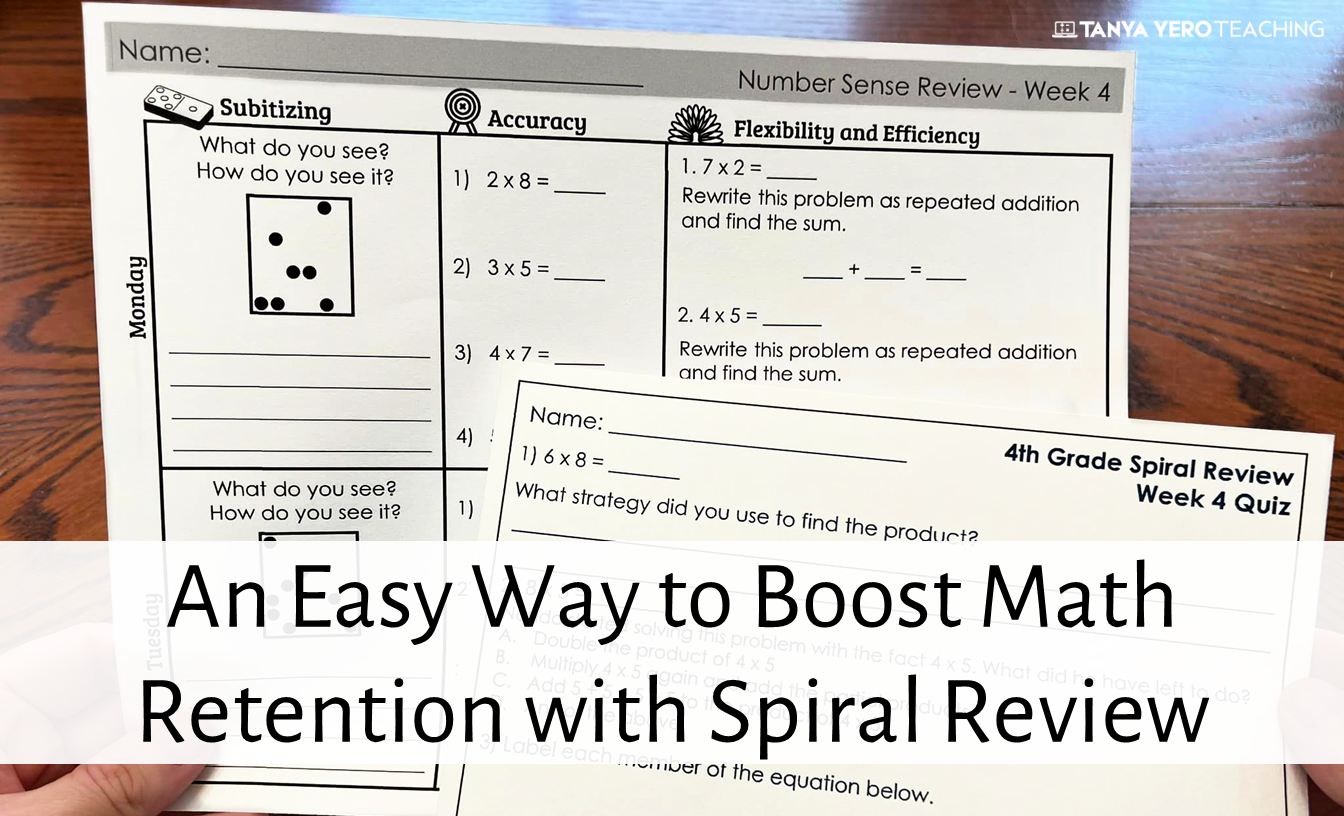
That is why I include Friday mini quizzes with my Math Spiral Review resources.
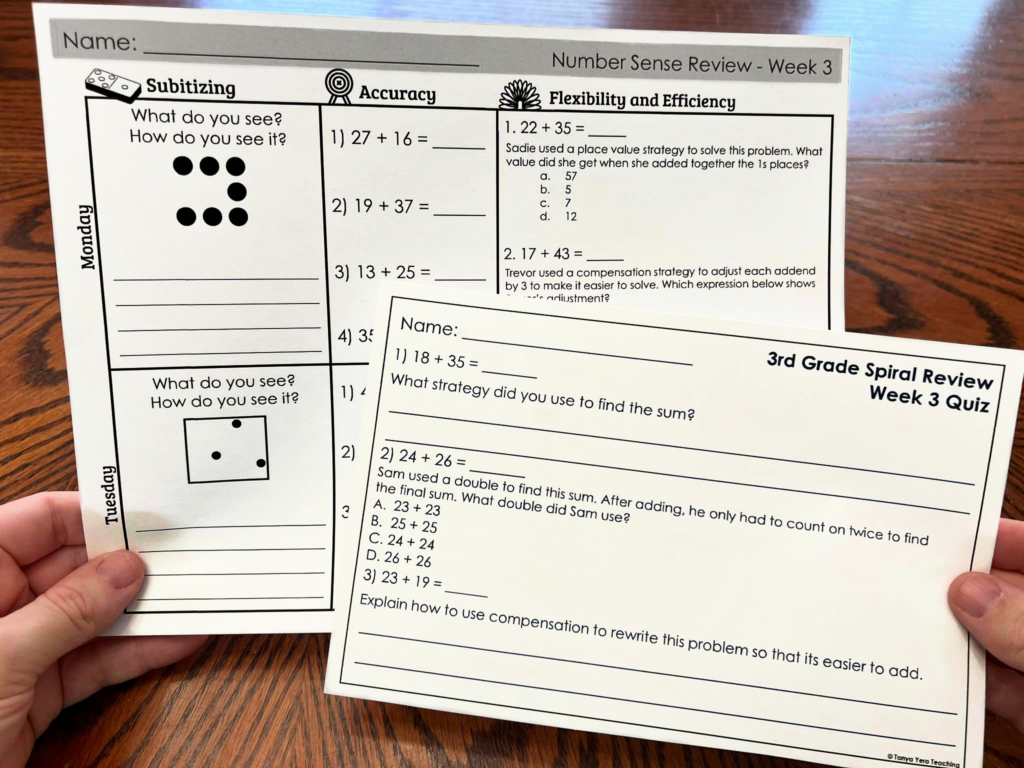
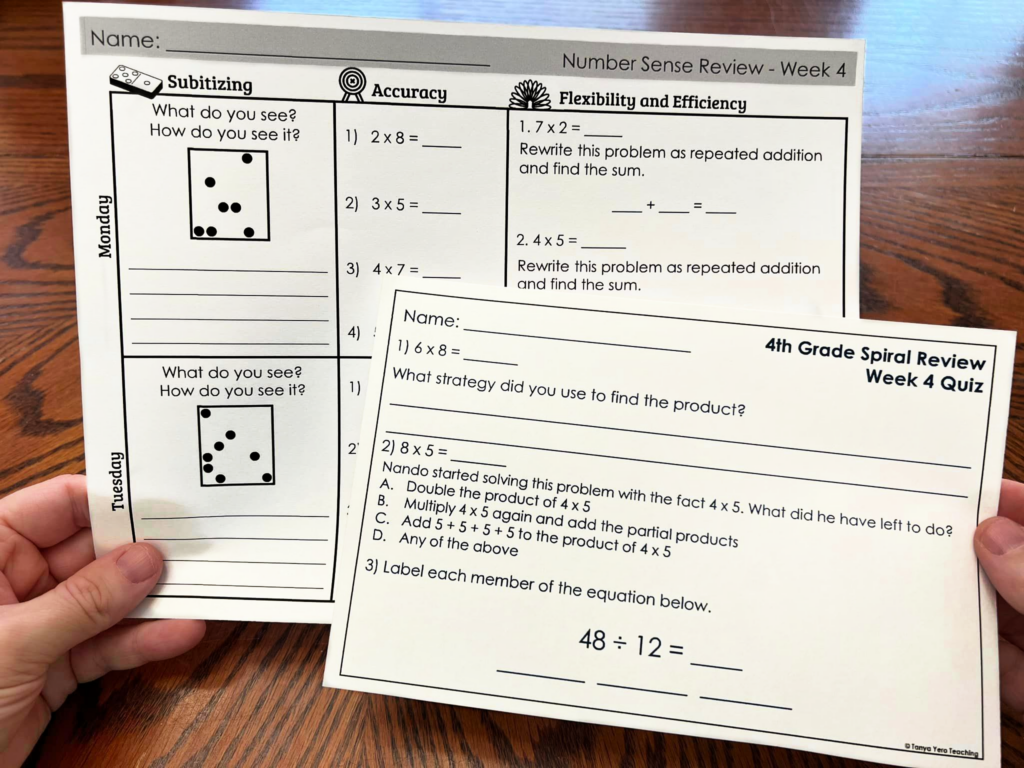
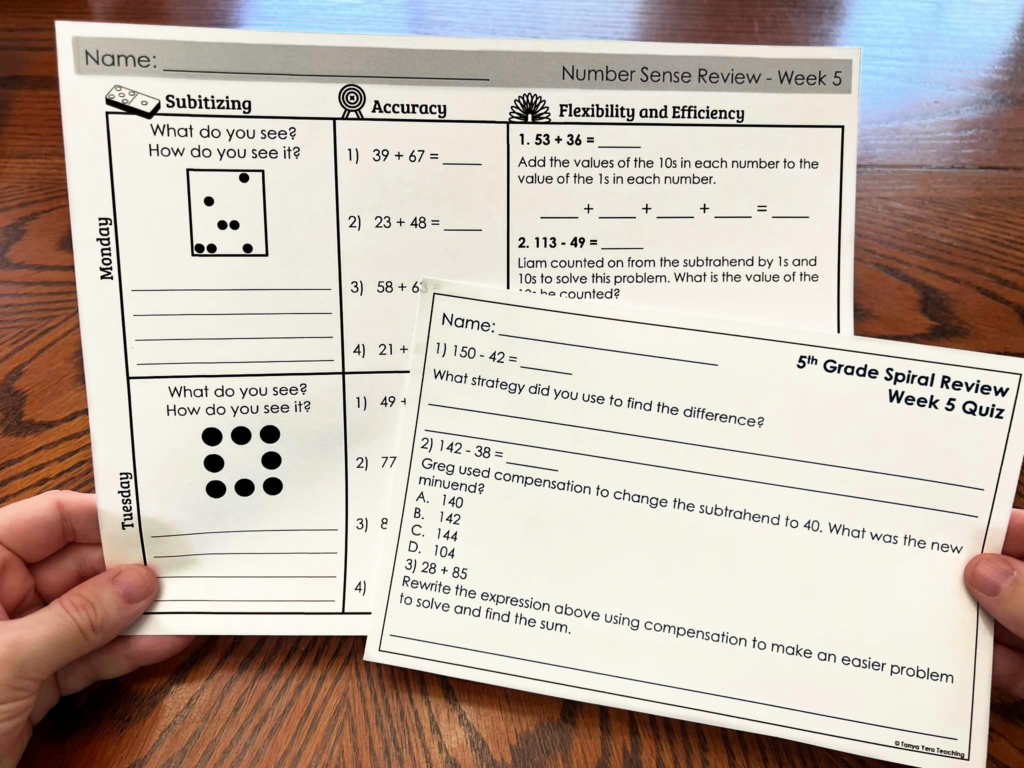
The quiz questions align with the skills students practiced during the week.
These do not have to be high-pressure, graded assessments.
Instead, use them as quick formative assessments to decide what your students need next.
If Most Students Understand a Skill
Continue spiraling it into future review.
If Several Students Struggle
Add the skill to a small-group lesson or math center.
If Most of the Class Struggles
Plan a short whole-group review.
If Students Select the Wrong Operation or Strategy
Model how to identify what the problem is asking before solving it.
If Students Understand the Concept but Make Calculation Errors
Add a little more number sense or fact fluency practice.
The goal is not to record every single mistake.
The goal is to notice patterns before small misunderstandings turn into larger learning gaps.
Keep Your Spiral Review Routine Simple
Spiral review should make your math block easier, not create another complicated task.
Here are a few ways to keep your routine manageable.
Use the Same Time Every Day
Choose a consistent time for spiral review.
Students are more likely to work independently when they know exactly when the routine will happen.
Keep It Short
Set a timer for 5–8 minutes.
When the time is up, move on.
You can revisit a skill during small groups or a future lesson if students need more support.
Do Not Discuss Every Problem
You do not need to spend ten minutes explaining every question.
Choose one or two problems that will lead to the most valuable discussion.
Look for Patterns
One incorrect answer does not always mean a student needs a full reteaching lesson.
Look for repeated mistakes, shared misconceptions, and skills that cause difficulty across multiple days.
Let the Results Help You Plan
Your spiral review can help you decide:
- What to teach during small groups
- Which skills to add to centers
- What needs a whole-group mini lesson
- Which students need additional support
- Which concepts students are ready to apply independently
That is one less instructional decision you have to make from scratch.
A Done-for-You Math Spiral Review Routine
I created my Math Spiral Review resources for grades 3–6 because I wanted a routine that was meaningful for students and realistic for teachers to use every day.
Each grade-level bundle includes:
- Weekly spiral review mats
- Four daily math prompts
- Friday mini quizzes
- Teacher overview pages
- Answer keys
- Previous-grade review during Quarter 1
- Current-grade review throughout the remaining quarters
The predictable format makes it easier for students to work independently.
The weekly layout also keeps printing and preparation to a minimum.
You can use the resources for:
- Morning work
- Math warm-ups
- Whole-group review
- Small-group instruction
- Math centers
- Partner practice
- Independent work
- Homework
- Test preparation
You can browse all Math Spiral Review resources for grades 3–6 here.
A Few Minutes Can Make a Big Difference
You may not be able to prevent students from forgetting every math skill.
But you can give them regular opportunities to retrieve, apply, and strengthen what they have already learned.
A few focused minutes each day can help you:
- Catch misunderstandings earlier
- Keep important skills fresh
- Build student confidence
- Plan more targeted small groups
- Reduce the amount of reteaching you need to do later
You do not need an elaborate routine.
You need something that is short, predictable, purposeful, and easy to maintain.
And you do not have to wait for a new school year, a new quarter, or testing season to begin.
You can introduce a short spiral review routine tomorrow and start learning more about what your students remember right away.
Whether you use spiral review for morning work, a math warm-up, small groups, centers, or homework, the most important thing is to start.
Your students do not need more busywork.
They need consistent opportunities to remember and apply what they have learned.
And sometimes, 5–8 intentional minutes a day can make all the difference.