Let’s face it. Mornings can get chaotic quickly.
Students walk through the door with all different energy levels. Some are ready to tell you every detail about their evening. Others are still waking up. A few cannot find their pencils, someone has a note from home, and at least one student needs to ask you a very important question the second you begin taking attendance.
Meanwhile, you are trying to:
- Take attendance
- Check folders
- Collect forms
- Respond to messages
- Handle lunch count
- Help students get settled
- Prepare everyone for the day
It is a lot!
That is why having a consistent morning routine can make such a difference.
When students know exactly what to do after they enter the classroom, you remove some of the uncertainty from the morning. Students can settle in, begin thinking, and prepare their brains for learning while you take care of everything else that needs your attention.
And when that routine is also paperless, engaging, and mathematically meaningful?
Even better.
Why Your Morning Routine Matters
The beginning of the school day sets the tone for everything that follows.
When students enter the classroom without a clear task, those first few minutes can easily turn into extra talking, repeated directions, and constant questions.
“What are we doing?”
“Do I need a paper?”
“Where do I put this?”
“What should I do when I’m finished?”
But when students see the same type of routine each morning, they know how to get started.
Consistency is the key to student buy-in.
Students thrive on routines. They like knowing what to expect, and a predictable structure helps them become more independent.
This does not mean your morning work needs to be boring or exactly the same every day.
The structure can stay consistent while the thinking changes.
That is exactly why I love using Paperless Math Prompts as part of a morning routine.
Students know they will begin with a math prompt, but the type of problem changes throughout the week. This creates a routine that feels familiar without becoming another repetitive worksheet.
What Makes an Effective Math Morning Routine?
An effective morning routine should make the beginning of your day easier, not add another complicated task to your list.
I look for a few important things when choosing morning work.
It Needs to Be Easy to Start
Students should not need a long list of instructions every morning.
Once you have taught the routine, they should be able to look at the displayed prompt, gather the materials they need, and begin working.
The less time you spend explaining directions, the more time students can spend actually thinking.
It Needs to Be Manageable
Morning work should not take half of your math block to complete or review.
A strong prompt can get students thinking without requiring an entire page of problems.
Sometimes, one meaningful question leads to more mathematical thinking than 20 repetitive problems.
It Needs to Have a Purpose
Morning work should be more than something that keeps students occupied.
It can help students:
- Review previously taught skills
- Strengthen number sense
- Practice mathematical reasoning
- Explain their ideas
- Build confidence
- Prepare for the day’s learning
It Needs to Be Sustainable
You should not have to make stacks of copies, prepare new materials every night, or spend your morning searching for something students can do.
A routine only works if you can realistically maintain it.
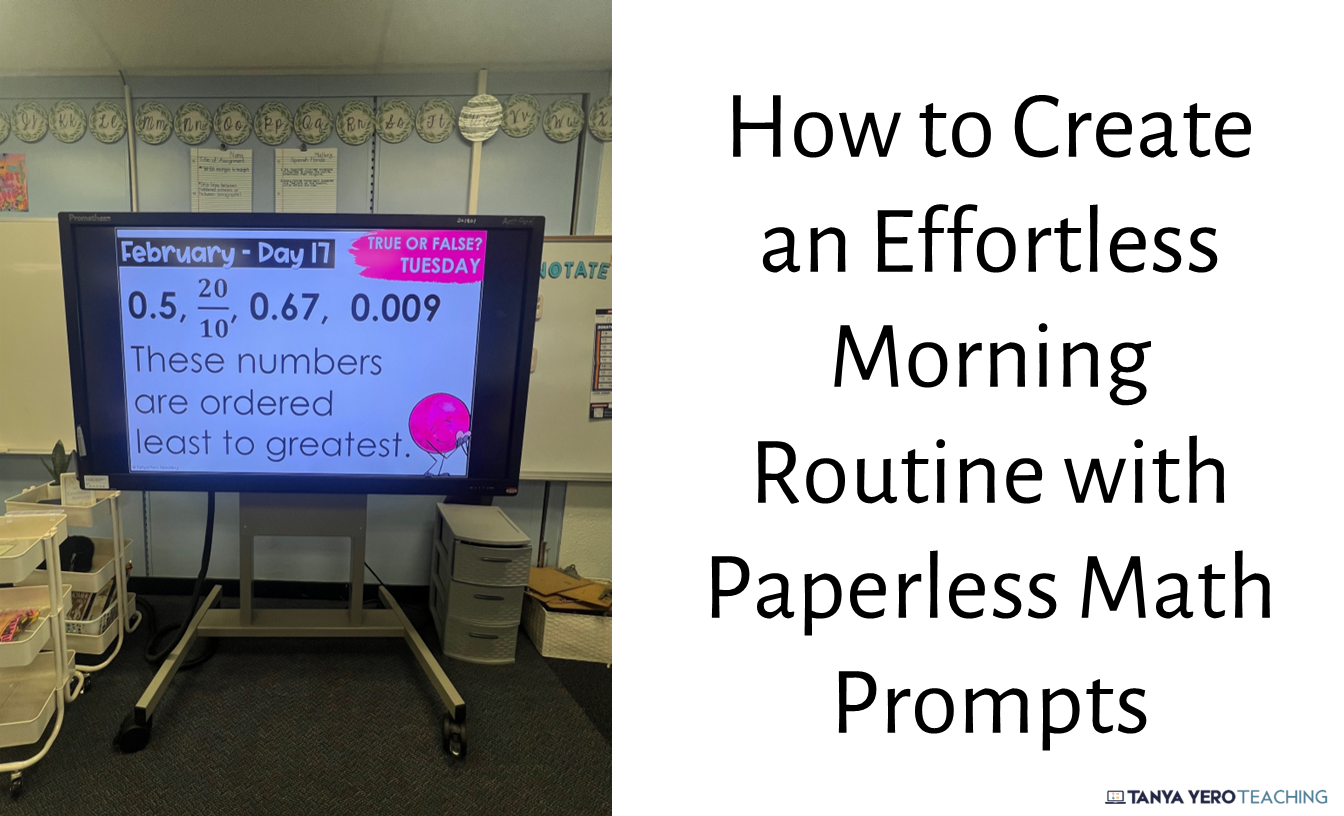
That is why paperless, ready-to-display prompts are so helpful. You can display the question, give students time to think, and begin the discussion.
No copies. No cutting. No standing at the copier first thing in the morning.
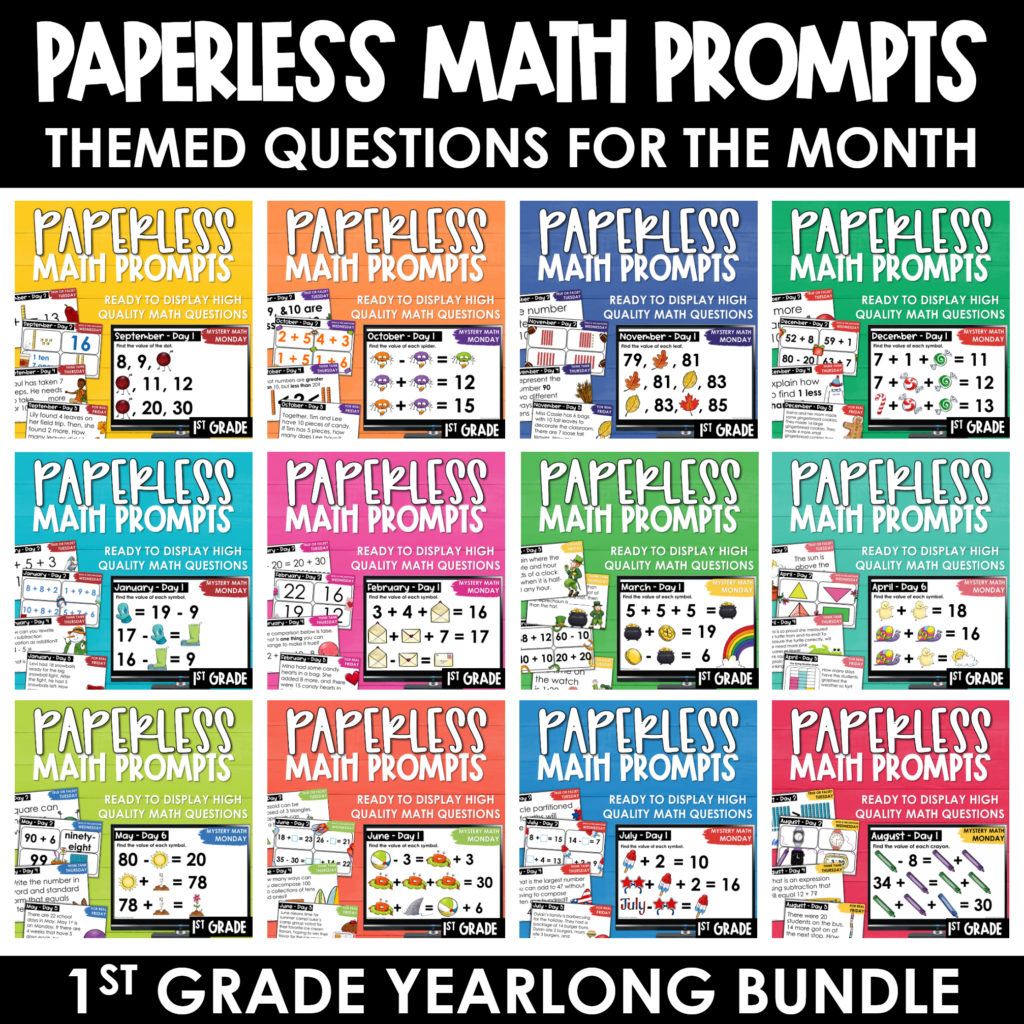
If you want a ready-to-display option, my Paperless Math Morning Work bundles give you a full year of themed math prompts that are easy to project and use right away. Find Your Grade-Level Paperless Math Bundle
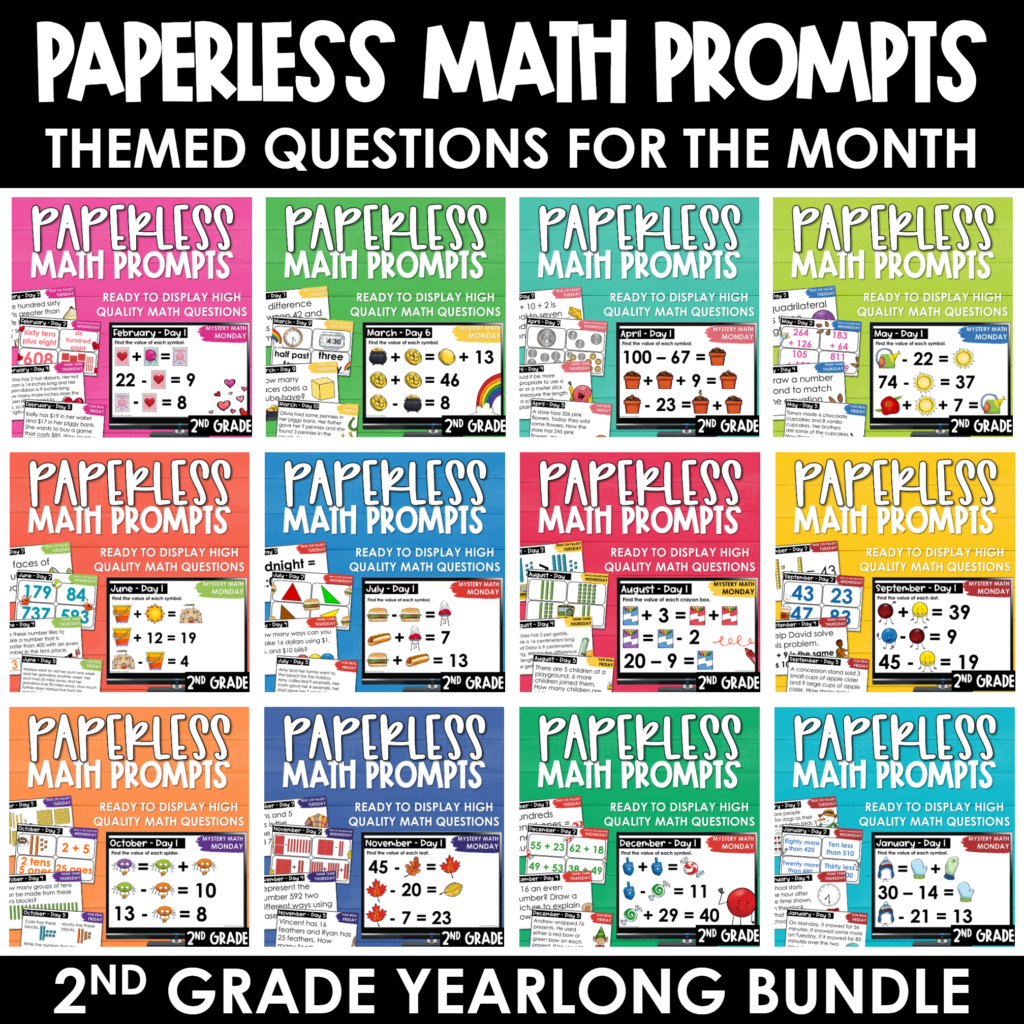
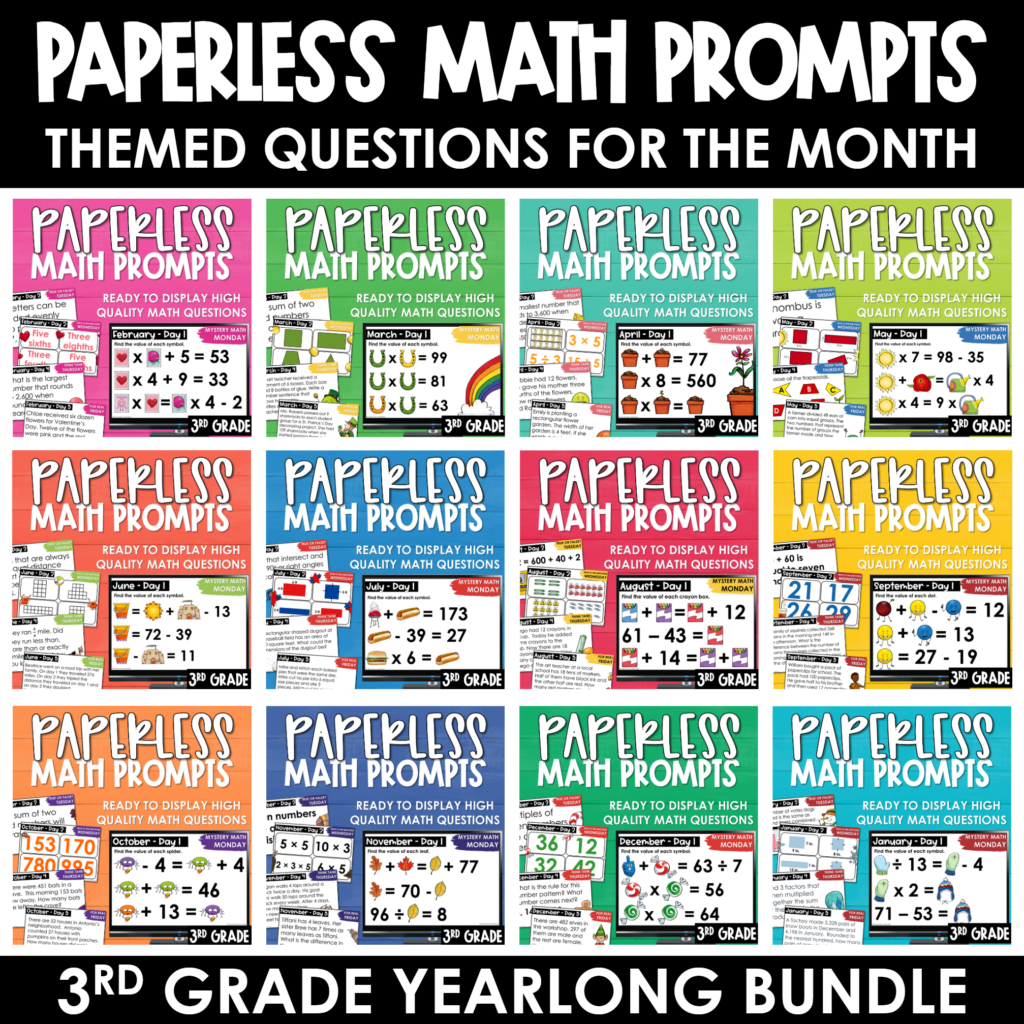
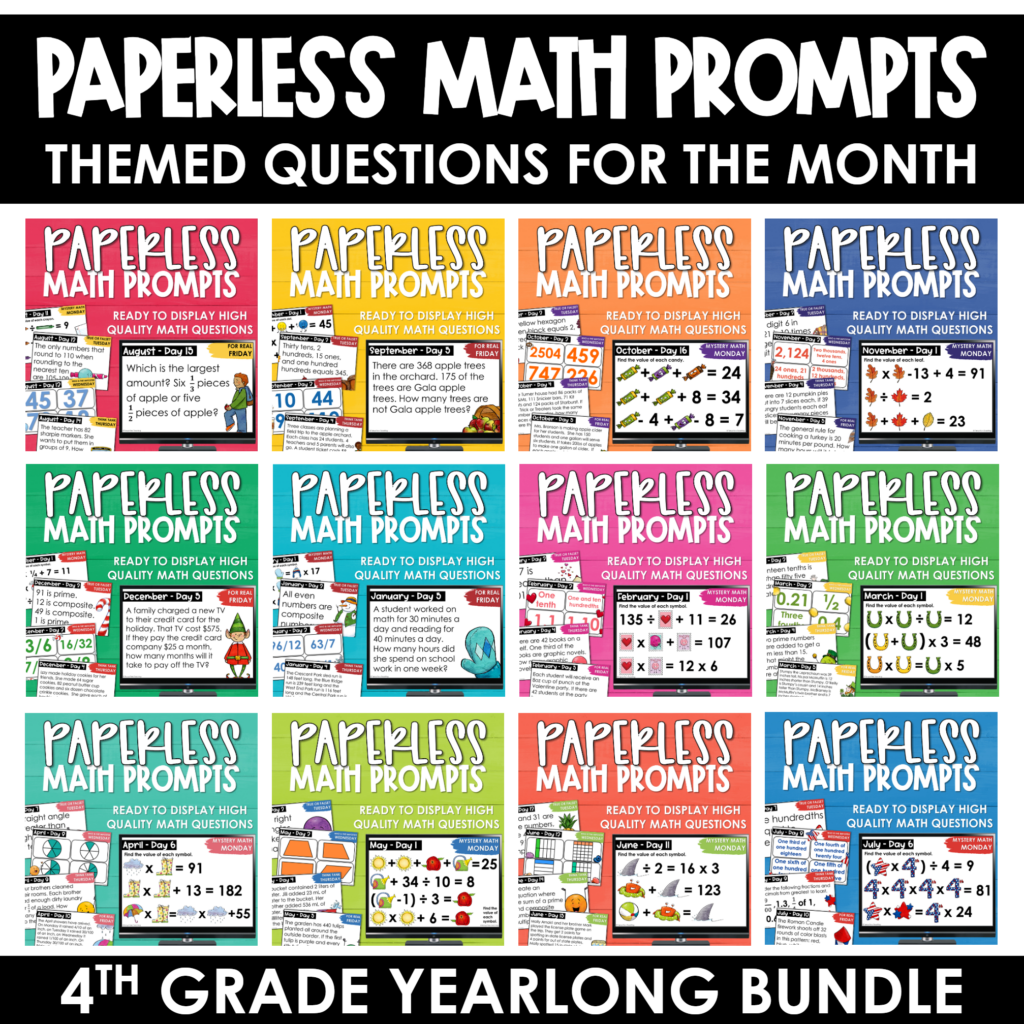
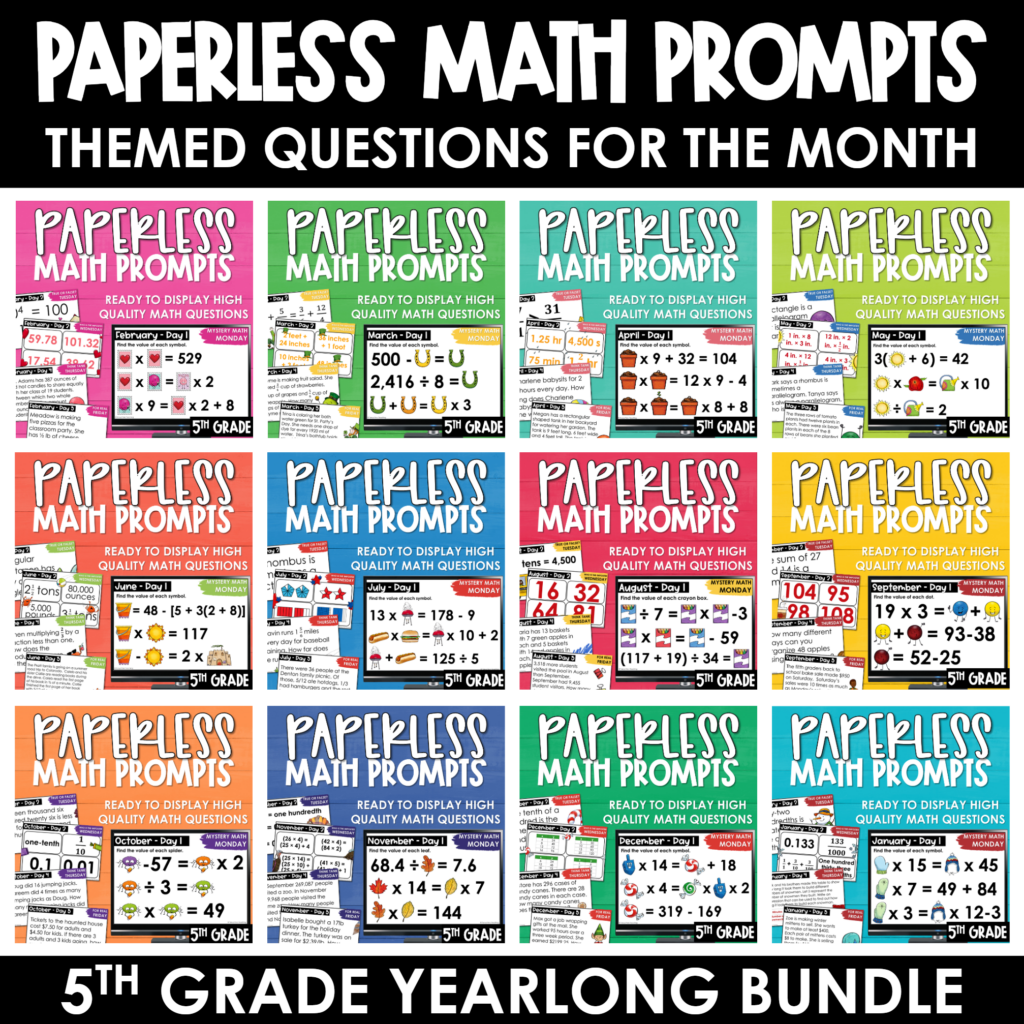
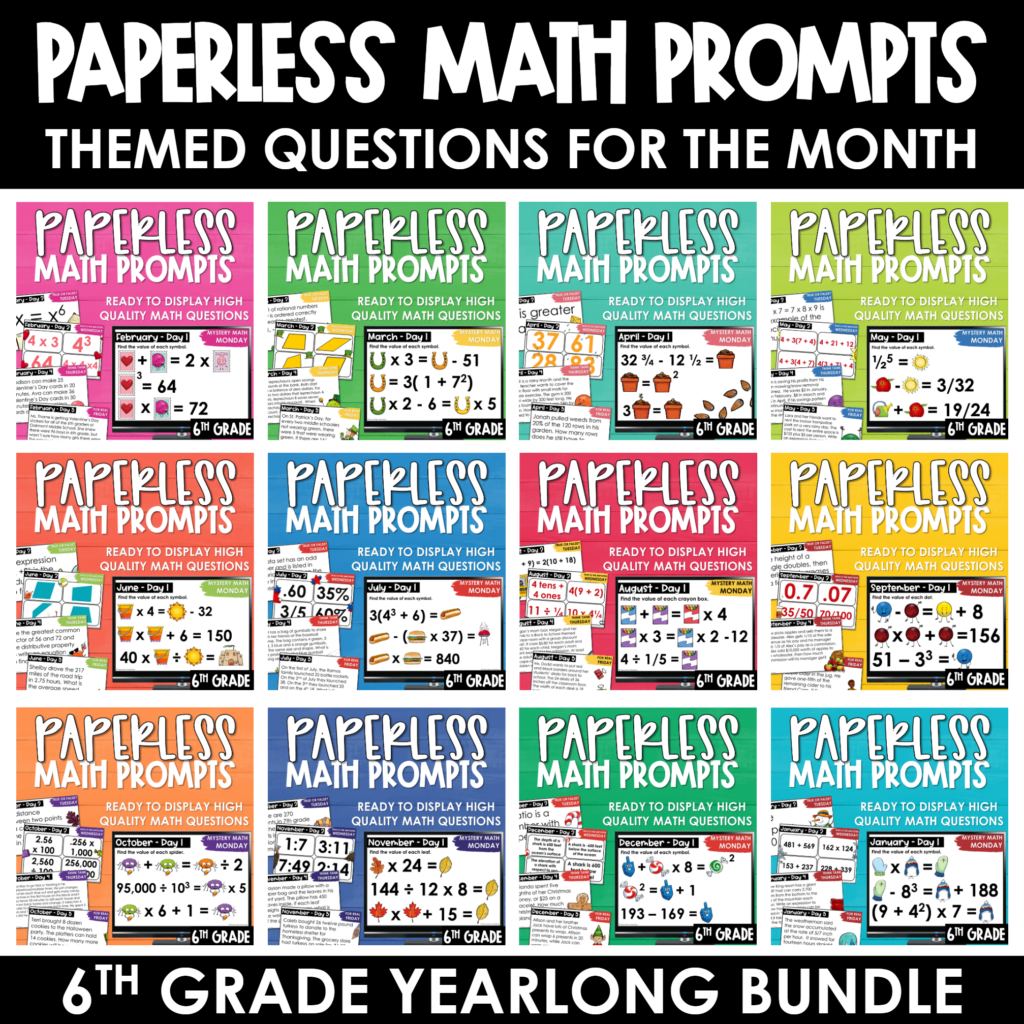
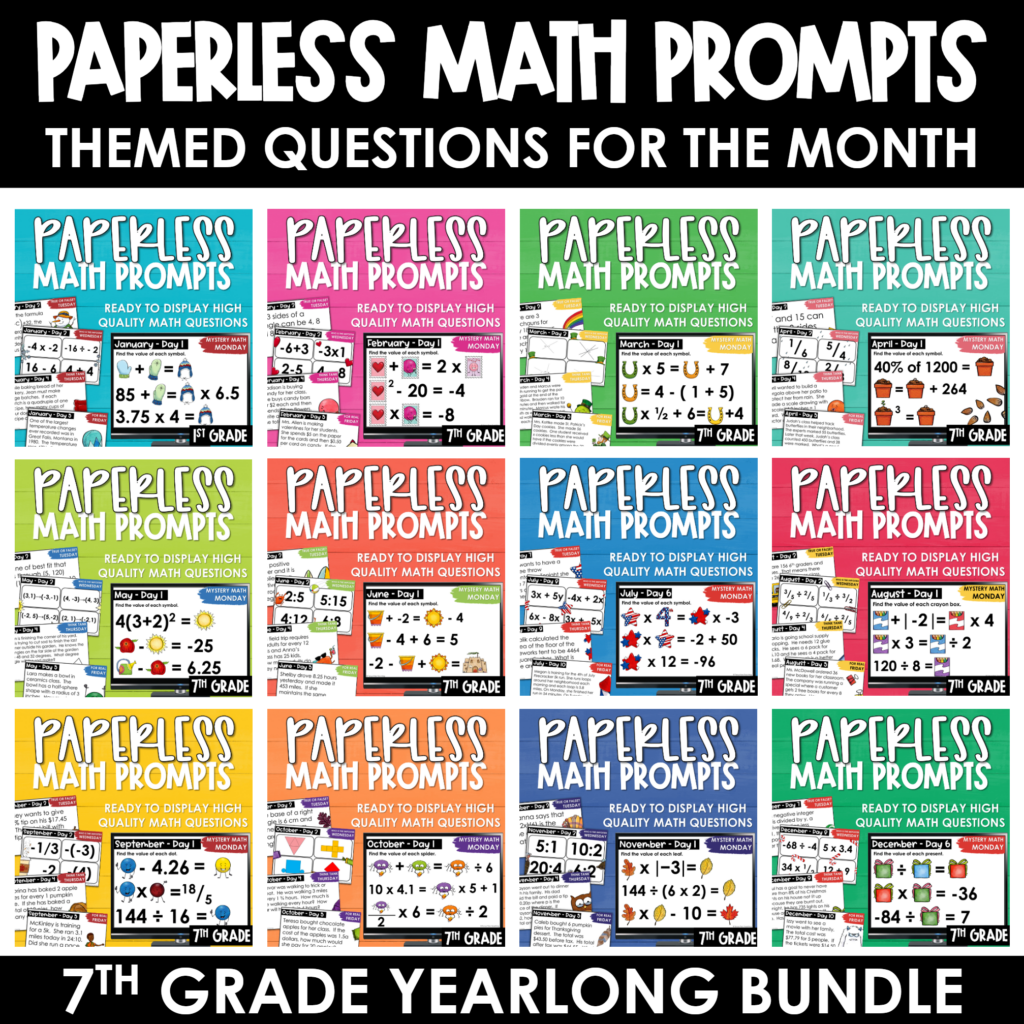
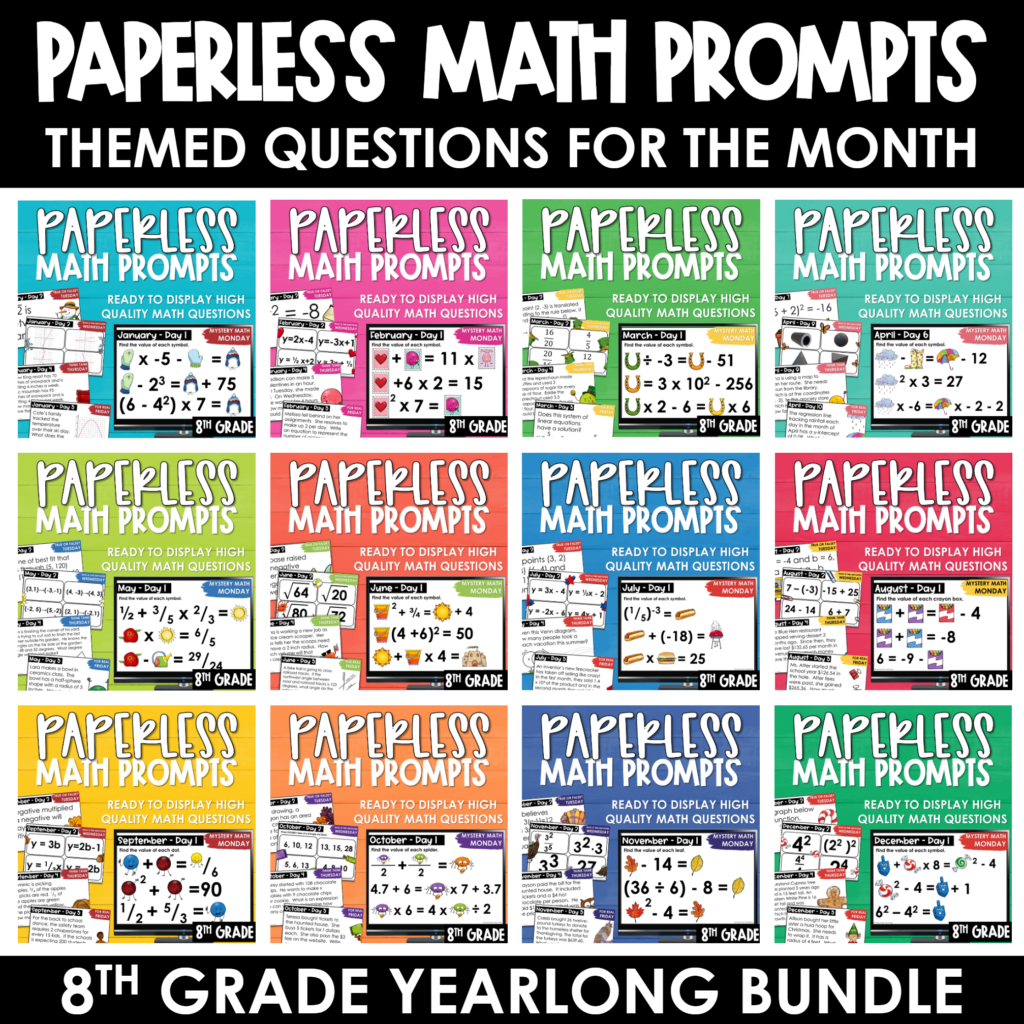
Add Variety With a Prompt for Every Day of the Week
One of my favorite parts of using Paperless Math Prompts is that each day has its own category.
The routine stays predictable, but students practice a different type of mathematical thinking each day.
And do not be surprised when your students start walking into the classroom and announcing:
“It’s Mystery Math Monday!”
Or:
“Today is Think Tank Thursday!”
Here is what the week looks like.
Mystery Math Monday
On Mystery Math Monday, students use deductive reasoning to determine the value of different symbols within a set of equations.
These prompts encourage students to look for patterns, use what they know, and think through a problem step by step.
Mystery Math Monday is also a great opportunity to remind students that solving a problem is not always about working as quickly as possible.
Encourage them to ask:
- What information do I already know?
- Which equation should I begin with?
- What can I determine first?
- How can I check my answer?
After students have time to work, invite them to explain how they approached the mystery.
You may discover that two students reached the same answer using completely different strategies.
That conversation is where so much of the learning happens!
True or False Tuesday
On True or False Tuesday, students decide whether a mathematical statement is true or false.
But they cannot stop there.
Students should also explain why they believe the statement is true or false.
This is important because a correct answer does not always mean a student fully understands the concept.
A student may guess correctly. They may also follow a procedure without understanding why it works.
Asking students to justify their answer gives you a clearer picture of their thinking.
You can follow up with questions such as:
- How do you know?
- Can you prove it?
- Can you show another example?
- What would make this statement false?
- Does anyone have a different explanation?
This helps students learn that math is about more than finding an answer. It is also about communicating and defending their reasoning.
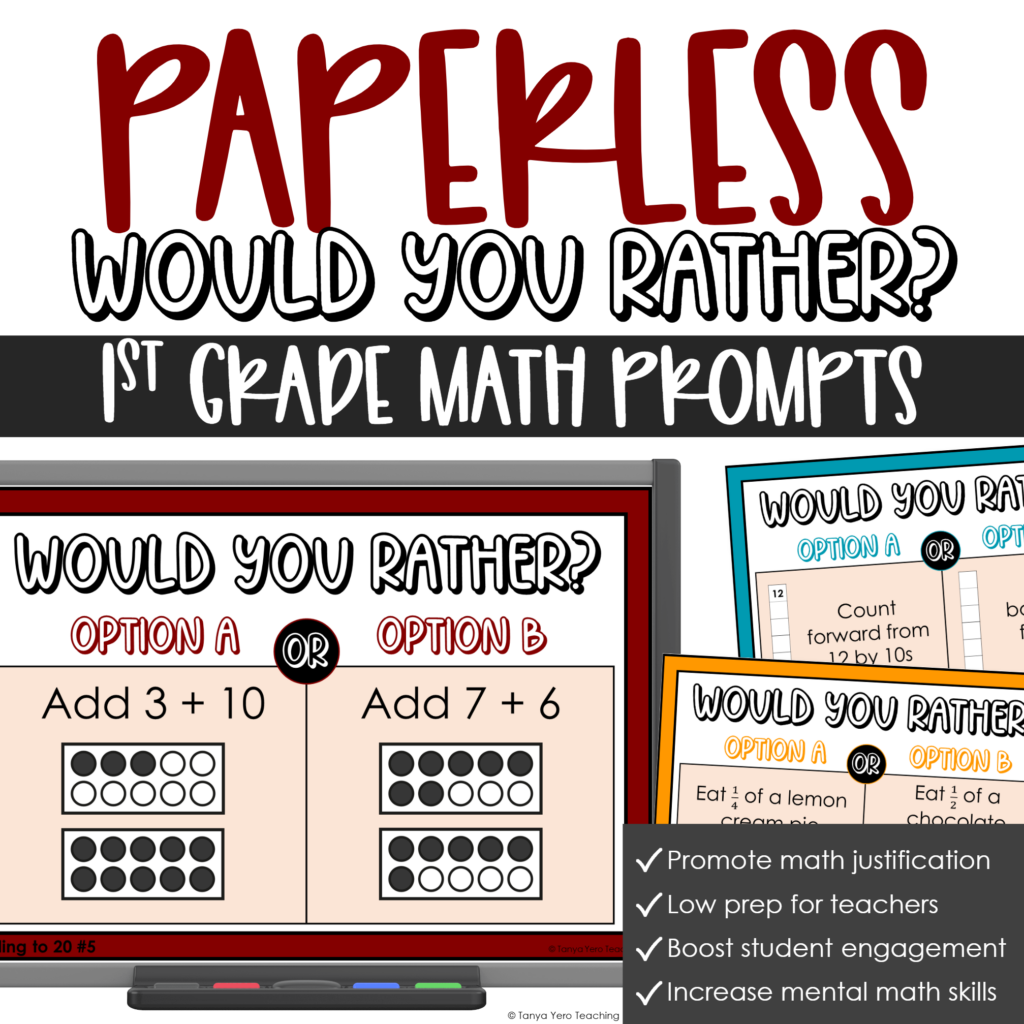
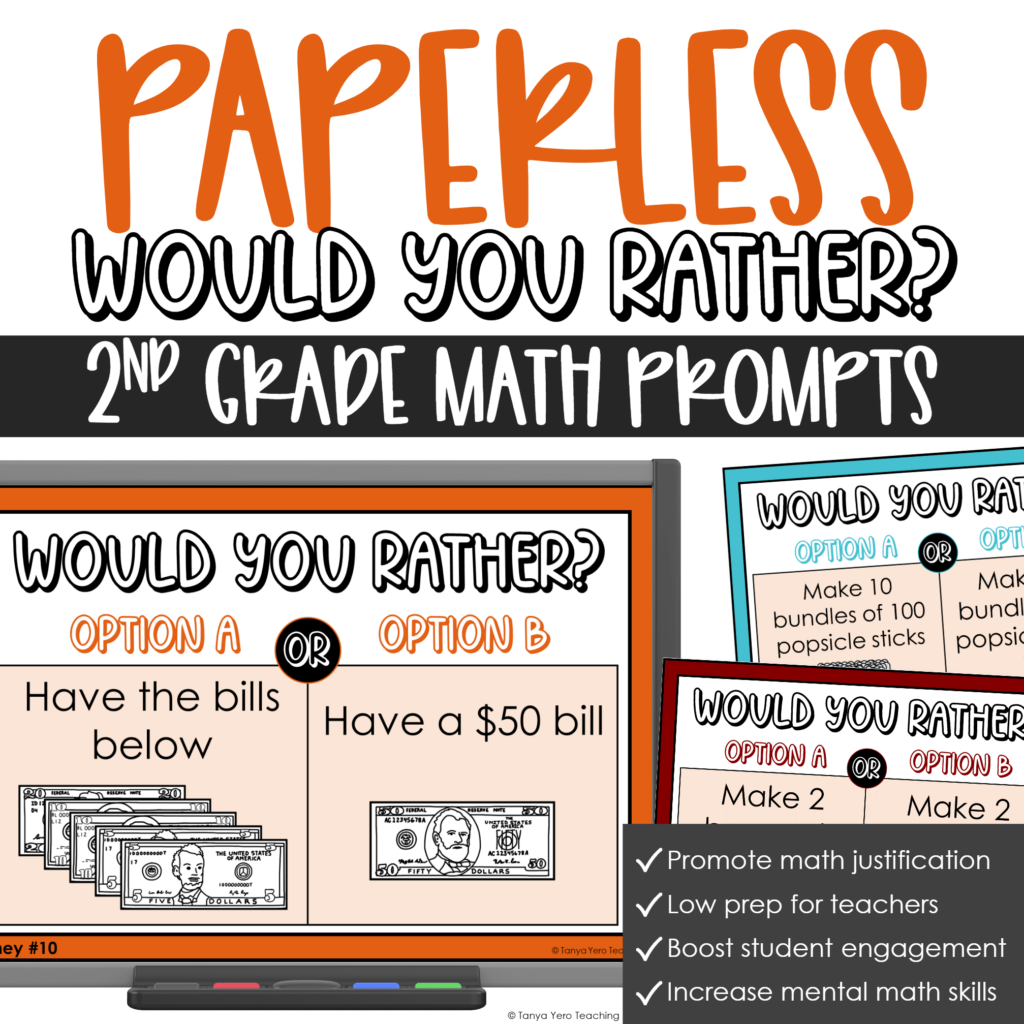
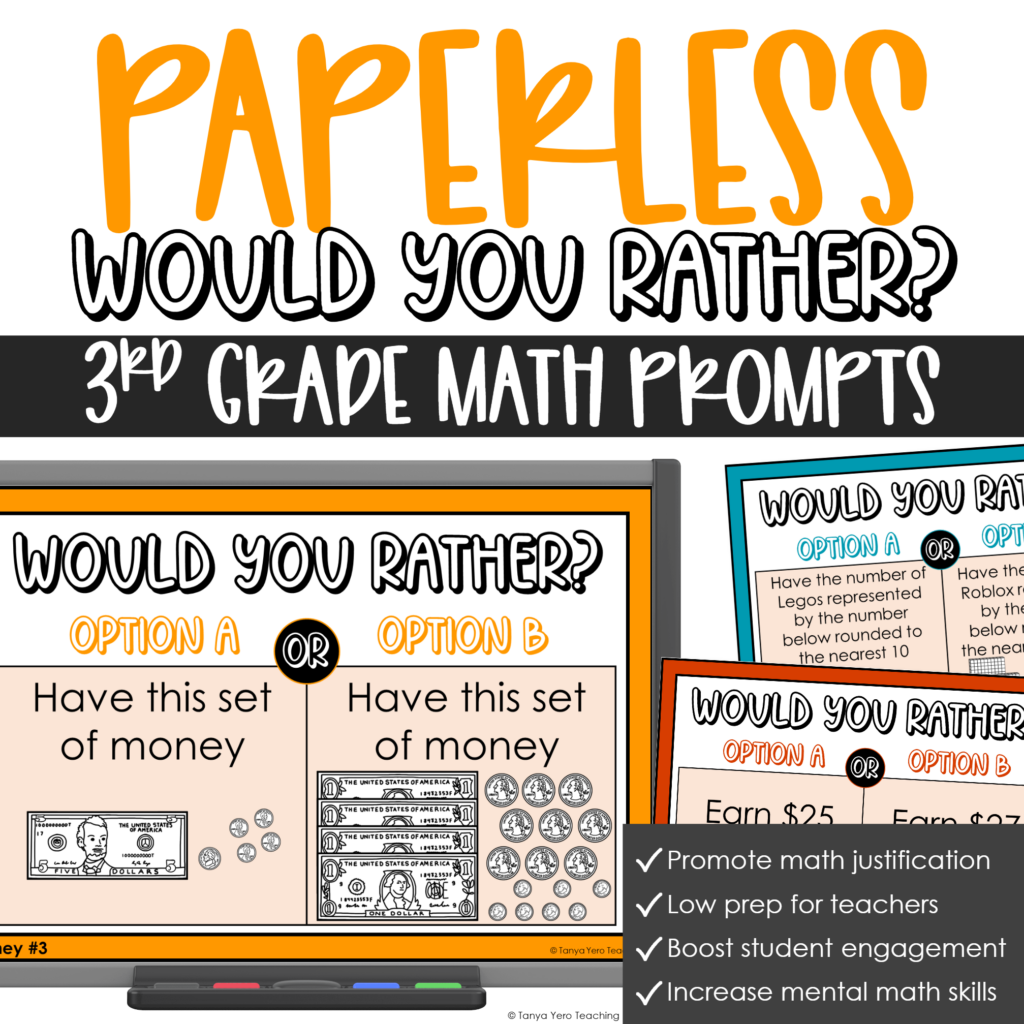
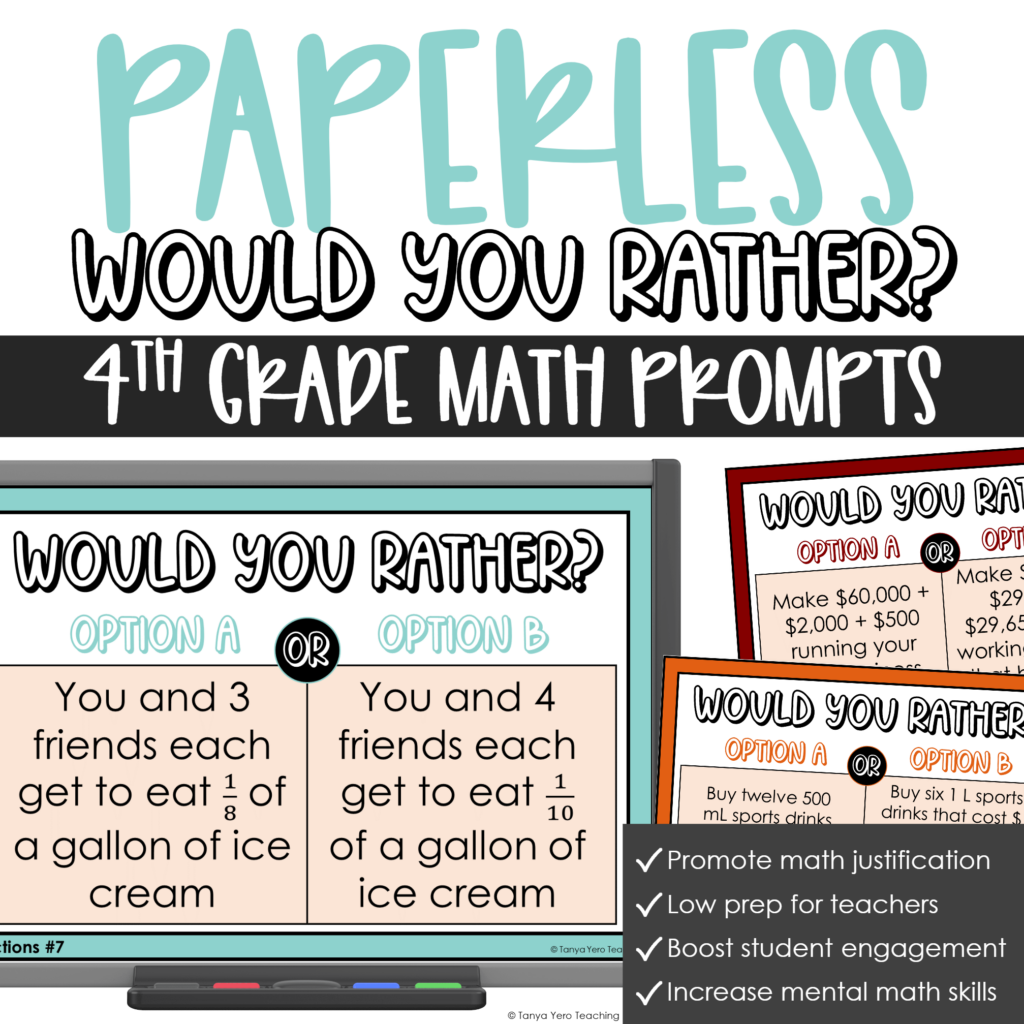
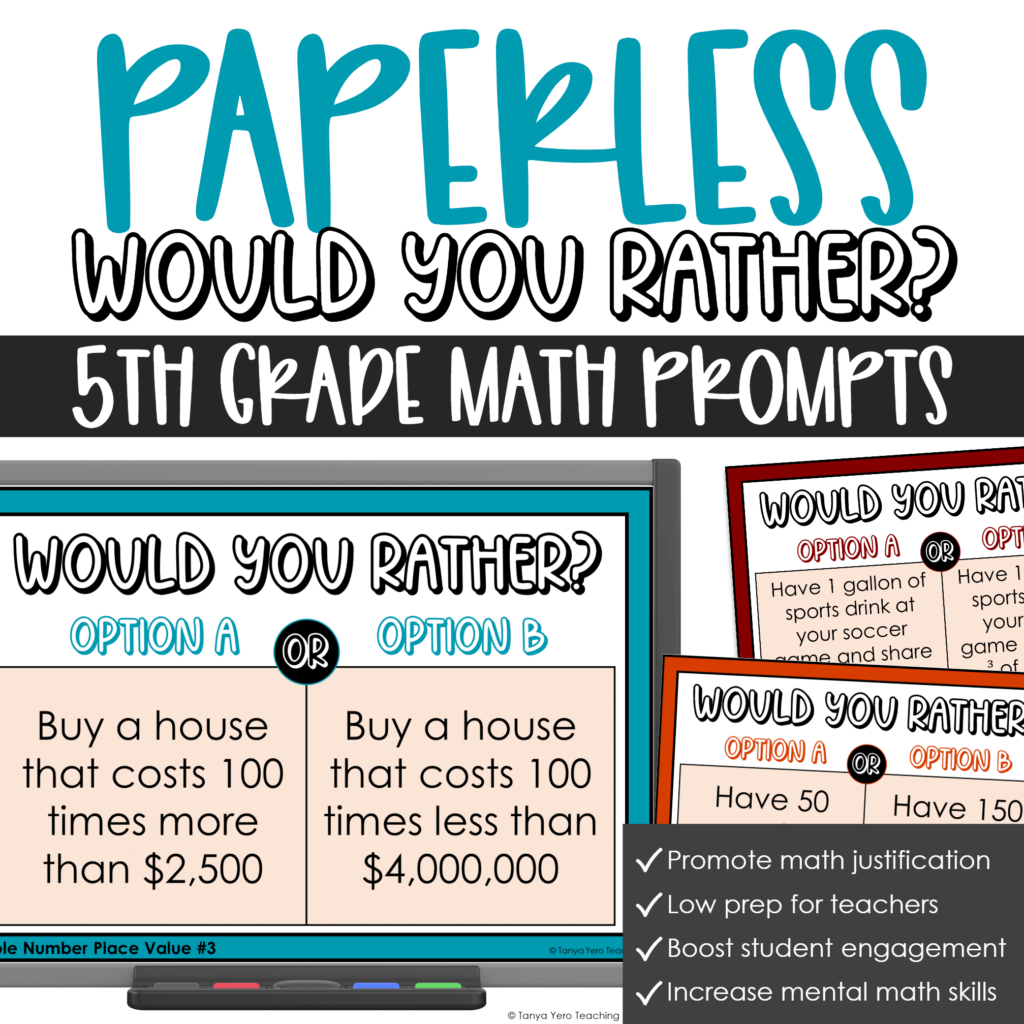
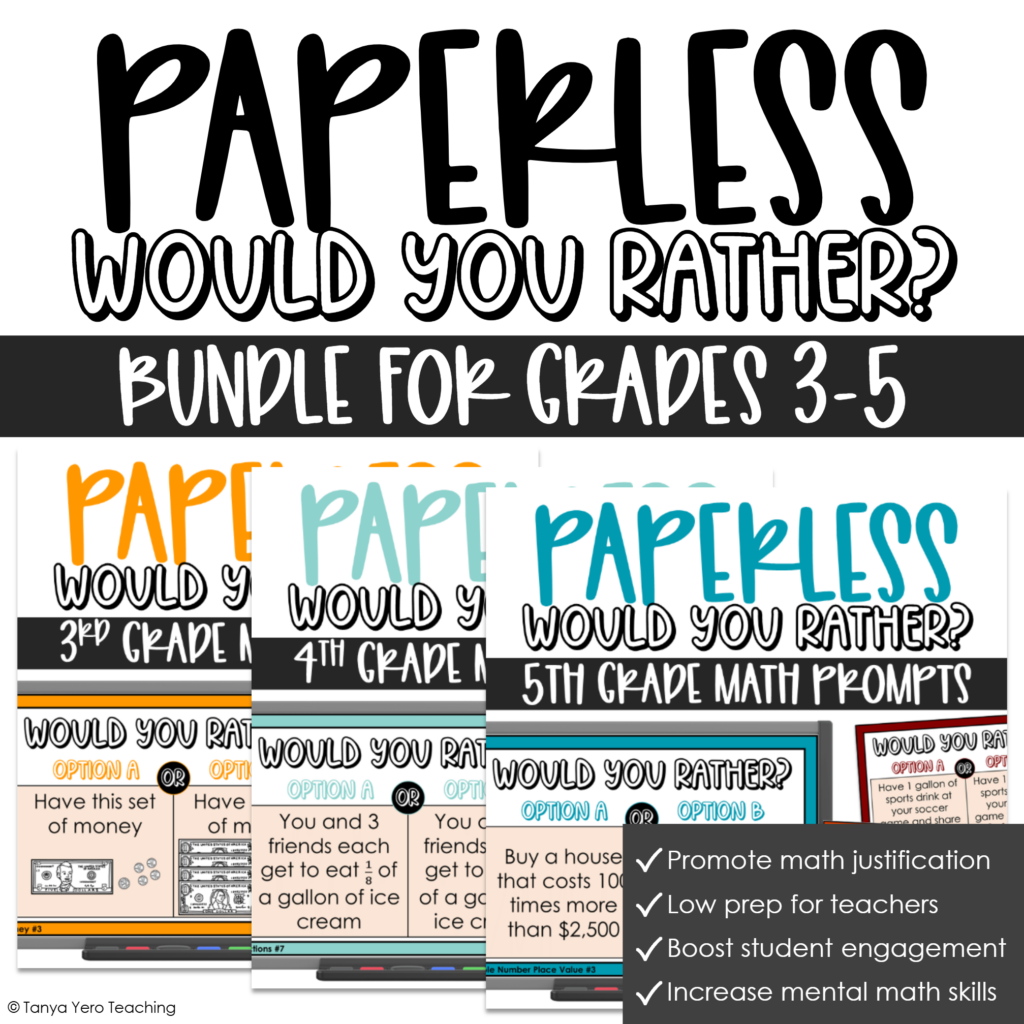
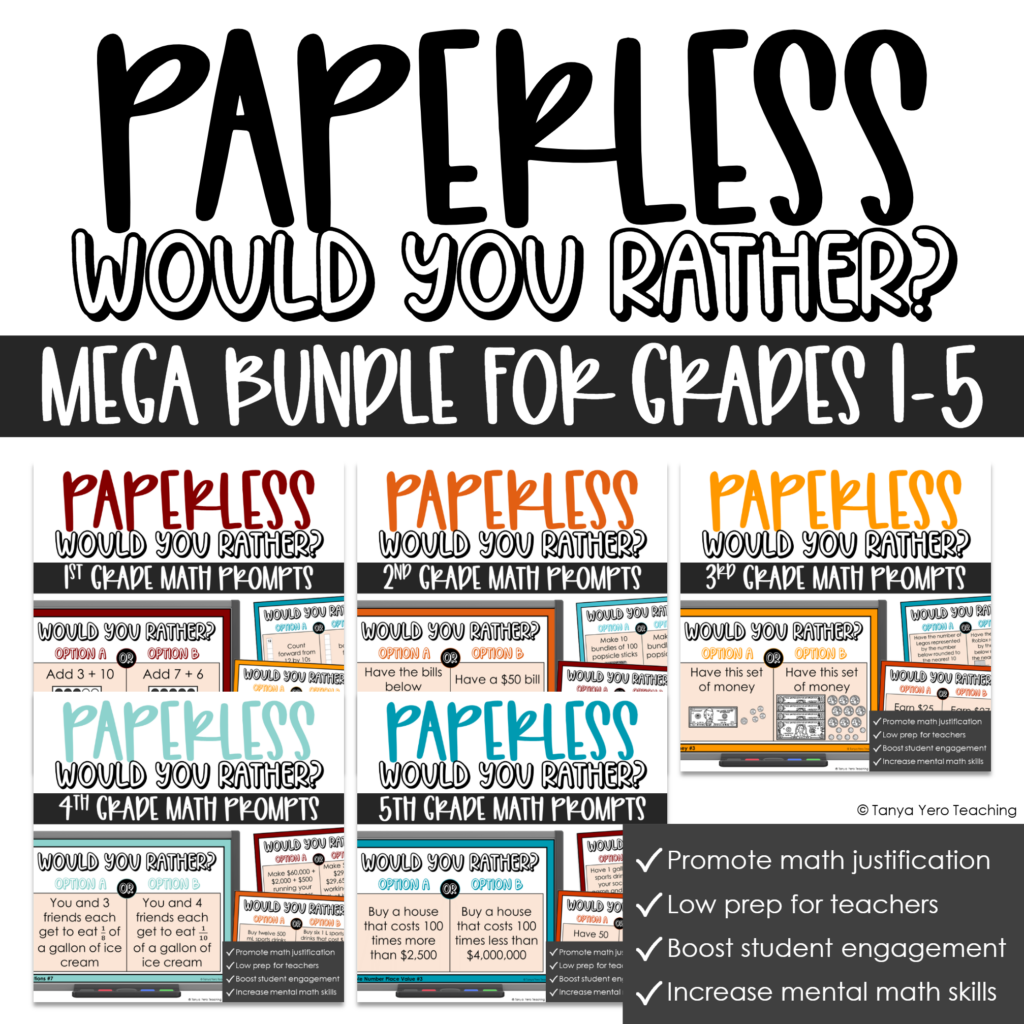
If you want even more practice with math justification, Would You Rather Math Prompts are another easy paperless option. Students compare two choices, solve, and explain which option they would choose.
Who Is the Imposter Wednesday
On Who Is the Imposter Wednesday, students decide which number or item does not belong in a group.
Here is the best part:
There may be more than one reasonable answer.
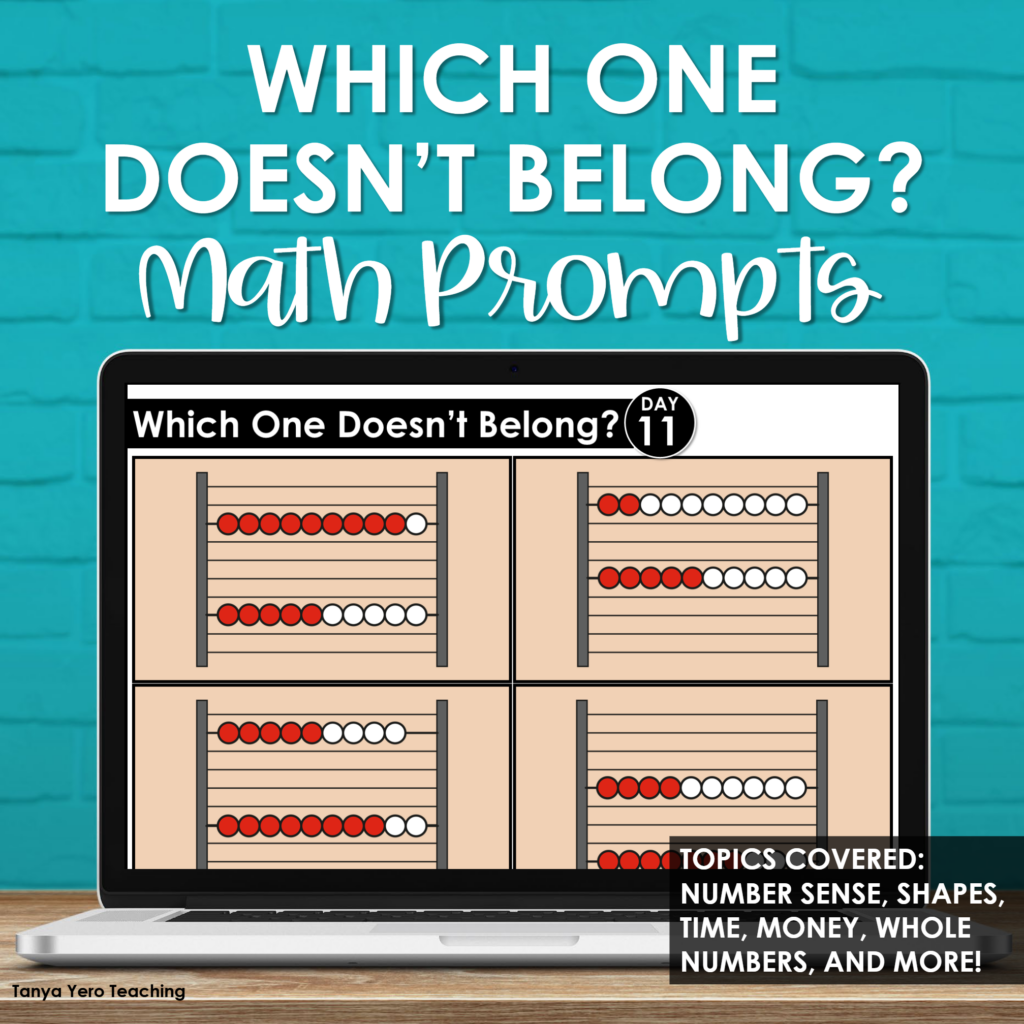
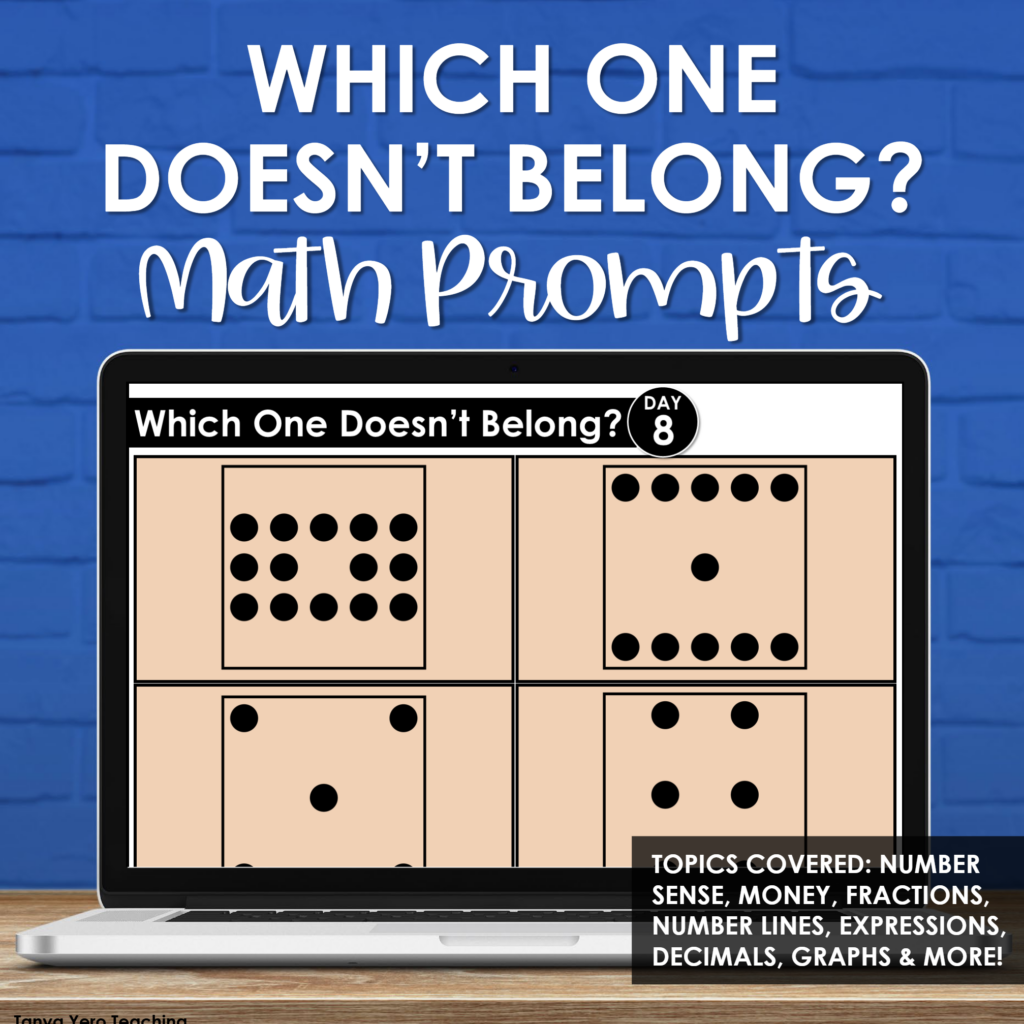
If your students love these types of discussions, my Which One Doesn’t Belong Paperless Math Prompts are another great way to build critical thinking and math conversations.
Anything goes, as long as students can mathematically justify their choice.
One student may select a number because it is odd. Another may choose a different number because it is not a multiple of five. Someone else may notice a place value, fraction, factor, or operation pattern.
This type of open-ended prompt shows students that math does not always have one path to a solution.
It also makes mathematical discussion more accessible.
Students who might hesitate to share during a traditional problem may feel more confident because there are multiple ways to enter the conversation.
The goal is not for every student to choose the same imposter.
The goal is for students to notice mathematical characteristics and clearly explain their reasoning.
Think Tank Thursday
On Think Tank Thursday, students work through a themed word problem.
Word problems can be challenging because students have to do more than calculate.
They need to:
- Understand the situation
- Identify important information
- Decide what the question is asking
- Choose an operation or strategy
- Solve the problem
- Determine whether the answer makes sense
Think Tank Thursday gives students a consistent opportunity to practice these skills.
The prompts relate to the season or monthly theme, which helps make the problems feel more interesting and relevant.
Before students begin calculating, encourage them to explain what is happening in the problem.
Ask:
- What do we know?
- What are we trying to find?
- Is there any information we do not need?
- Which strategy might help?
- What should our answer represent?
These questions help students focus on understanding the problem instead of immediately searching for numbers to combine.
For Real Friday
On For Real Friday, students solve prompts connected to real-world situations.
Students are often more engaged when they can see how math applies outside of a workbook or classroom lesson.
Real-world prompts give students opportunities to think about how math may be used when:
- Shopping
- Planning an event
- Comparing prices
- Measuring
- Managing time
- Traveling
- Sharing items
- Making decisions
For Real Friday is also a great way to end the week because students can apply skills in a practical context.
Ask students whether they might encounter a similar problem outside of school.
You can also challenge them to create their own real-world problem using the same mathematical concept.
5 Benefits of Using Paperless Math Prompts
These prompts may only take a few minutes, but they can support several important parts of your math instruction.
1. They Create an Easy Math Warm-Up
A paperless prompt gives students something meaningful to begin as soon as they enter the classroom or math block.
You can simply display the prompt and allow students to get started.
No paper and no complicated preparation.
2. They Provide Ongoing Spiral Review
Students need regular opportunities to revisit previously taught concepts.
The prompts allow you to circle back to important skills so they stay fresh throughout the year.
This also gives students repeated opportunities to apply what they have learned in different ways.
3. They Build Number Sense
Number sense grows through frequent conversations about numbers, relationships, strategies, and patterns.
Daily prompts give students opportunities to think flexibly and compare different approaches.
Over time, students begin to see that there may be several ways to solve a problem.
4. They Prepare Students’ Brains for Learning
Beginning the day with a short problem gives students time to shift into learning mode.
Instead of immediately beginning a full lesson, students can warm up their mathematical thinking with one focused task.
5. They Strengthen Conceptual Understanding
Students need more than procedures.
They need to understand why strategies work, how concepts are connected, and how to explain their reasoning.
Prompts that ask students to justify, compare, analyze, and apply their ideas help build that deeper understanding.
Want to try paperless math prompts for free? CLICK HERE to grab your FREE Paperless Math Prompts!
How to Introduce Your Morning Math Routine
At the beginning of the school year, do not assume students will automatically know how you want the routine to work.
Take time to teach it just like you would teach any other classroom procedure.
Show students:
- Where the prompt will be displayed
- What materials they should use
- Where they should record their thinking
- How much time they will have
- What to do if they finish early
- How they will share their ideas
- What respectful math discussions sound like
During the first few days, model your expectations.
You may solve a prompt together and think aloud as you work.
You can say things such as:
“I notice that these two numbers are both even.”
“I am not sure which operation I need yet, so I am going to reread the question.”
“I chose this number as the imposter because…”
“I disagree with that statement because…”
Students need to hear the language of mathematical reasoning before they can confidently use it themselves.
Once the routine is established, you can gradually step back and allow students to take more ownership.
Keep the Routine Quick and Simple
You do not need to turn every morning prompt into a 30-minute lesson.
Some days, students may solve the prompt independently and discuss it with a partner.
Other days, you may ask two or three students to share their strategies.
When a prompt reveals an important misconception, you can spend a little more time discussing it.
But you do not have to analyze every possible strategy every morning.
A simple routine might look like this:
- Display the prompt.
- Give students quiet thinking time.
- Let students record or discuss their ideas.
- Invite a few students to share.
- Highlight one important strategy or connection.
- Move into the rest of your day.
The goal is to build consistency, not create another lengthy lesson.
More Ways to Use Paperless Math Prompts
Although these prompts work beautifully for morning work, that is not the only way to use them.
Try them as:
- A math warm-up
- A bell ringer
- A number talk
- A small-group discussion
- An early-finisher activity
- A transition between lessons
- A quick activity when you have five extra minutes
- A whole-class problem-solving challenge
- A review before beginning a related lesson
Because the prompts are ready to display, you can use them whenever you need a meaningful math activity without pulling together extra materials.
A Done-for-You Paperless Math Routine
I created my Paperless Math Prompts because I wanted a morning routine that would be engaging for students and effortless for teachers to use.
Each month includes themed prompts for every day of the school week:
- Mystery Math Monday
- True or False Tuesday
- Who Is the Imposter Wednesday
- Think Tank Thursday
- For Real Friday
The prompts are designed to encourage problem-solving, mathematical reasoning, spiral review, number sense, and meaningful math conversations.
You can display the question and go.
No printing. No prep. No searching for a last-minute morning activity.
The consistent format helps students build independence, while the changing daily categories keep the routine interesting.
You can find the yearlong Paperless Math Prompt bundles and individual themed resources here:
Browse Paperless Math Prompts from Tanya Yero Teaching
Make Your Mornings Easier From the Start
Your morning routine does not need to be complicated.
It does not need to involve stacks of worksheets or hours of preparation.
It just needs to give students a clear, consistent way to enter the classroom and begin thinking.
A simple paperless math prompt can help students:
- Settle into the day
- Review important concepts
- Strengthen number sense
- Practice problem-solving
- Explain their mathematical thinking
- Build confidence
At the same time, it gives you a few valuable minutes to handle the many tasks competing for your attention each morning.
That is a win for everyone.
Start by teaching the routine, keeping it simple, and giving students time to become comfortable sharing their thinking.
Before long, you may hear them walk through the door and announce:
“It’s Mystery Math Monday!”
And instead of scrambling to find morning work, all you have to do is display the prompt and begin.
Start your effortless Paperless Math morning routine here.