Math intervention sounds simple until you are the one trying to make it work.
Identify the gaps.
Pull the groups.
Teach the skills.
Track the data.
Adjust instruction.
Easy, right?
Except in a real classroom, it can feel like you are trying to build the plane while flying it.
You have students who need extra support. You have students who are ready to move on. You have district screeners, small groups, pacing guides, lesson plans, and about fifteen other things pulling for your attention.
And somewhere in the middle of all of that, you are supposed to create a math intervention system that actually works.
No pressure.
But here is the good news:
Math intervention does not have to feel like a guessing game.
When you have a simple, repeatable system, intervention becomes much easier to manage. You know where to start. You know what data to look at. You know how to group students. You know when to reteach and when to move forward.
A strong math intervention system helps you stop guessing and start making instructional decisions with purpose.
Let’s break down what that can look like in your classroom.
Step 1: Start With the Right Students
Before you can plan math intervention, you need to know who needs support.
That sounds obvious, but this is where many teachers get stuck. There can be so much data available that it becomes hard to know what actually matters.
You might have:
- Beginning-of-year assessments
- District screeners
- Classroom observations
- Exit tickets
- Quick checks
- Unit tests
- Small group notes
- Student work samples
That is a lot of information.
Instead of trying to use everything at once, start by looking for patterns.
Which students are consistently struggling?
Which students are missing prerequisite skills?
Which students seem to understand during the lesson but struggle independently?
Which students are making the same types of mistakes over and over again?
You do not have to wait until a student is completely lost before starting intervention.
In fact, you should not.
Math intervention works best when we catch gaps early and respond with targeted support.
That does not mean every student needs a full intervention plan. It means you are watching for the students who need more than whole group instruction to be successful.
Sometimes that is a student who is far below grade level.
Sometimes it is a student who is only missing one important building block.
Both students need support, but they may not need the same support.
That is why the next step matters so much.
Step 2: Find the Specific Skill Gap
One of the biggest mistakes teachers can make with math intervention is starting with a problem that is too broad.
Saying “this student struggles in math” is true, but it is not specific enough to guide instruction.
Math is too big.
You need to know the actual skill gap.
For example, is the student struggling with:
- Place value
- Basic operations
- Fractions
- Measurement
- Geometry
- Word problem solving
- Number sense
- Math vocabulary
- Multi-step problems
Those are very different needs
A student who struggles with fractions may need visual models, number lines, and opportunities to compare parts of a whole.
A student who struggles with place value may need base-ten blocks, expanded form, and work with number relationships.
A student who struggles with word problems may understand the operation but need help making sense of what the problem is asking.
That is why targeted intervention matters.
The more specific the gap, the more effective your instruction can be.
This is also where your math intervention resources should match the need. If you know a group of students is struggling with place value, you can pull a place value intervention resource. If students need support across multiple domains, a grade-level intervention binder may be a better fit.
Looking for targeted support by grade level or skill? Browse Math Intervention resources here.
Step 3: Use Screening Data, But Don’t Stop There
District screeners can be helpful.
They can show you which students may need support. They can give you a broad picture of student performance. They can help you identify students who are below benchmark.
But here is the part teachers know all too well:
Screeners do not always tell you exactly what to teach next.
A screener might tell you a student is struggling in math, but it may not clearly show whether the breakdown is with number sense, computation, place value, fractions, or problem solving.
And when you are sitting down to plan small groups, you need more than a broad score.
You need instructional information.
You need to know:
- What skill does this student need help with?
- What part of the skill is breaking down?
- Can the student solve it with support?
- Is this a conceptual misunderstanding or a procedural mistake?
- How will I know if the student is making progress?
That is where quick checks, pre-assessments, and standards-based progress monitoring are so helpful.
You do not need a giant assessment every week.
Actually, please do not do that to yourself.
You just need a simple way to check whether students understand the skill you are teaching.
A few focused problems can tell you a lot.
If students get it, you can move forward.
If students are still confused, you can reteach.
If some students understand and others do not, you can regroup.
That is the power of using data in a way that actually helps you teach.
Need help turning your data into small groups? Start with a grade-level Math Intervention Binder.


Step 4: Group Students by Need, Not Just Level
Once you know the skill gaps, you can start forming groups.
But here is an important reminder:
Intervention groups should not be permanent labels.
They are temporary support systems.
A student may need support with fractions, but be strong in geometry. Another student may struggle with place value but do well with basic operations. Another student may understand the math conceptually but need more practice with fluency.
That is why grouping students only by “high, medium, and low” does not always give you the clearest picture.
Instead, group students by what they need right now.
For example:
- A group working on understanding place value
- A group practicing addition and subtraction within 20
- A group reviewing multiplication strategies
- A group comparing fractions
- A group working on measurement conversions
- A group solving multi-step word problems
These groups can and should change.
As students grow, your groups shift.
That is a good thing.
It means your intervention system is responding to students instead of locking them into a level.
Flexible grouping makes math intervention more targeted, more efficient, and more helpful.
Step 5: Teach With Explicit Instruction and Mental Imagery
Once your groups are formed, it is time to teach.
This is where we have to be careful.
Math intervention should not just be giving students more problems and hoping it clicks.
If students did not understand the skill the first time, they likely need clearer instruction, stronger models, and more opportunities to talk through the math.
That is where explicit instruction matters.
During intervention, students need you to:
- Model the skill
- Think aloud
- Show each step
- Use visuals and models
- Ask intentional questions
- Guide practice before expecting independence
They also need help building mental imagery.
In math, students should be able to picture what is happening.
When students understand numbers only as symbols on a page, math can feel abstract and confusing. But when they can visualize the math, they are more likely to understand the meaning behind the steps.
That might look like using:
- Base-ten blocks
- Number lines
- Ten frames
- Arrays
- Fraction strips
- Area models
- Place value charts
- Drawings or quick sketches
The goal is not to keep students dependent on manipulatives forever.
The goal is to help them move from concrete understanding to visual understanding to abstract reasoning.
That progression matters, especially for students who need intervention.
You want students to understand the math, not just memorize a procedure.
So instead of only asking, “What is the answer?” try asking:
- How do you know?
- Can you show it another way?
- Does that answer make sense?
- What strategy did you use?
- Where did you get stuck?
- What do you notice?
Those questions help you see what students are thinking.
And once you know what they are thinking, you can teach more effectively.
Step 6: Track Progress Without Making It Complicated
Progress monitoring is what turns intervention from extra help into intentional instruction.
But progress monitoring does not need to take over your life.
You do not need a complicated spreadsheet.
You do not need a full test every Friday.
You do not need to track every single math skill at once.
You need a simple way to know:
- Is the student improving?
- Is this strategy working?
- Does the student need more support?
- Is the student ready to move forward?
- Do I need to adjust the group?
That is it.
Track one skill at a time.
Use a quick check. Look for patterns. Make a decision.
If students are showing progress, keep going.
If students are stuck, reteach with a different model.
If students are ready, move them forward.
Progress monitoring should help you make decisions, not create more paperwork just for the sake of paperwork.
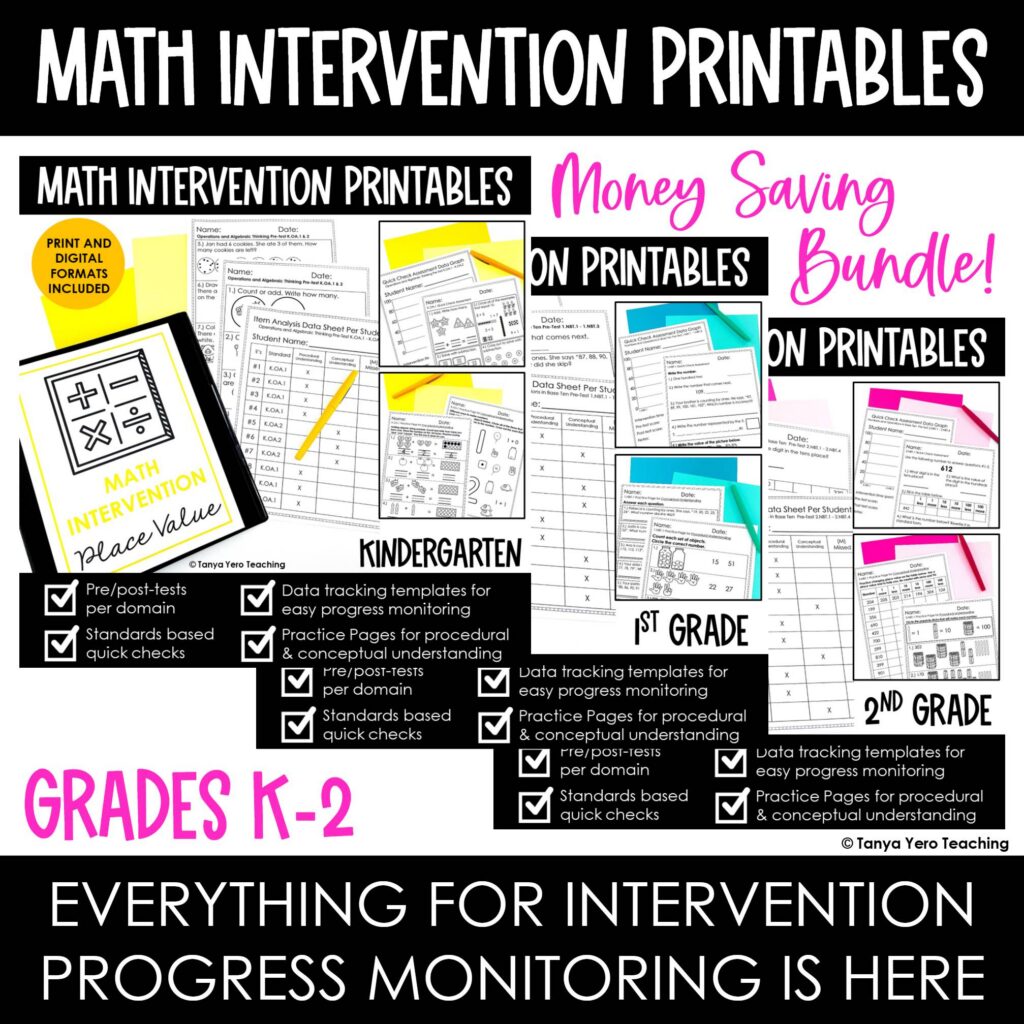
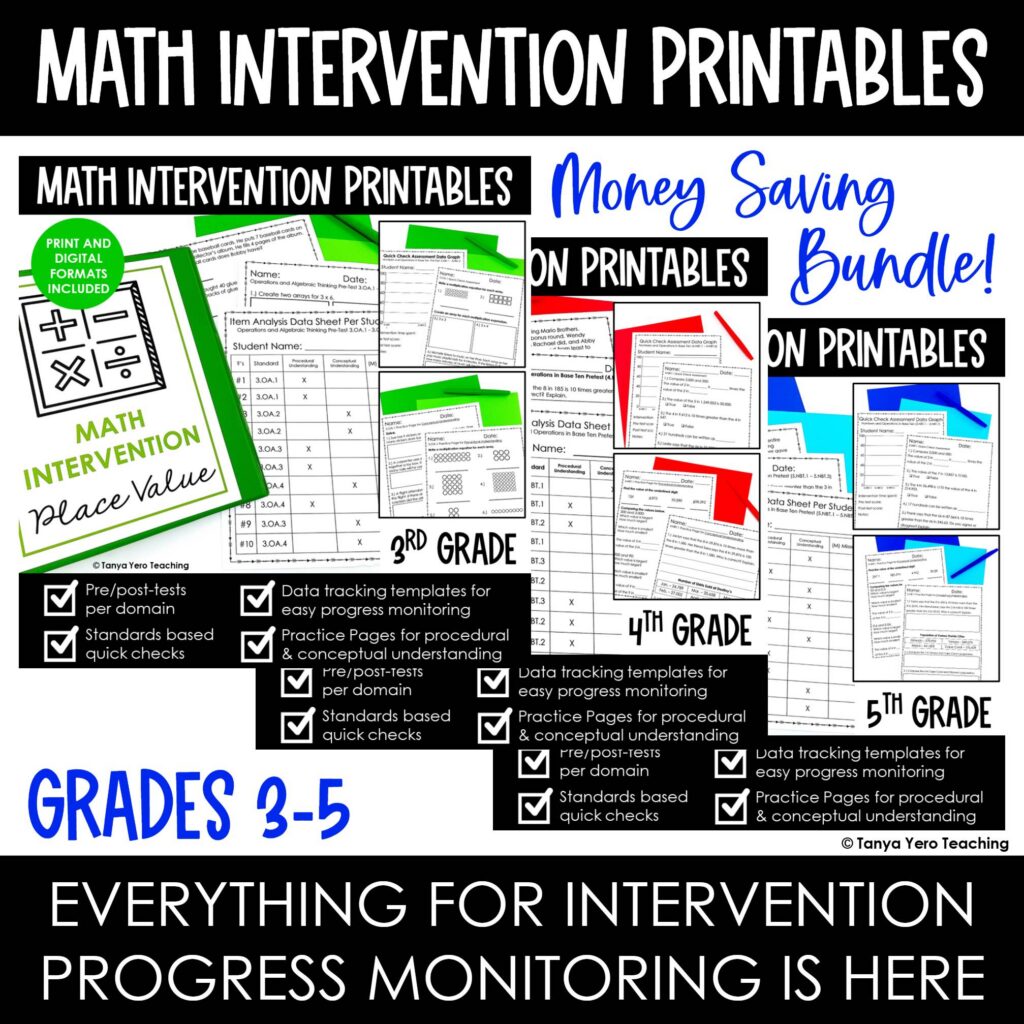
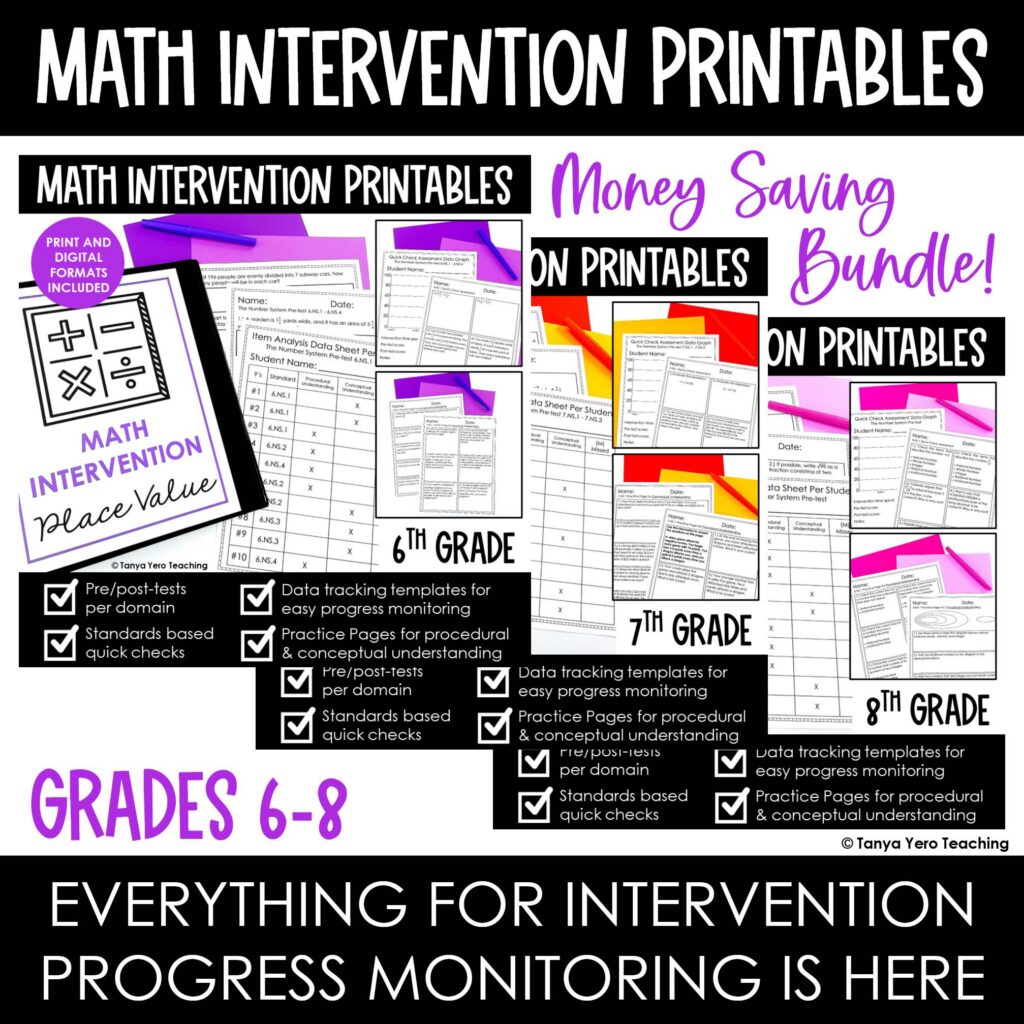
Want progress monitoring tools already organized for you? Check out these multiple grade-level Math Intervention Progress Monitoring Bundles.
Step 7: Adjust Instruction Based on the Data
This is the part that matters most.
Data should not just sit in a binder.
It should help you decide what to do next.
After you teach a skill and check student progress, ask yourself:
- Do they understand it?
- Are they making the same mistake?
- Did the model help?
- Do they need more guided practice?
- Are they ready for independent practice?
- Should this group stay together or change?
Then use that information to adjust.
You might need to:
- Reteach the skill with a different model
- Pull a smaller group
- Give more guided practice
- Move students to independent practice
- Regroup based on new data
- Move on to the next skill
This is what makes intervention a cycle.
You are not just teaching random lessons and hoping they work.
You are teaching, checking, adjusting, and teaching again.
That is how student growth happens.
Want Help Building Your Math Intervention System?
If you are ready to stop piecing things together and want a clear framework for math intervention, my Math Intervention Masterclass is designed to walk teachers through the process of building a more organized, data-driven, and manageable intervention system.
This is a great next step if you want help thinking through:
- How to identify students for intervention
- How to use data without overcomplicating it
- How to create meaningful groups
- How to teach with purpose
- How to monitor progress
- How to make intervention feel more manageable
Learn more about the Math Intervention Masterclass.

Math intervention does not have to be perfect to be powerful.
You do not need to overhaul your entire math block tomorrow.
Start with a simple system:
- Identify the students who need support
- Find the specific skill gap
- Use data, but do not stop with broad screeners
- Group students by need
- Teach with explicit instruction and visuals
- Track progress with quick checks
- Adjust instruction based on what students need next
That is a system you can repeat.
And when you have a system, intervention starts to feel less overwhelming.
You are no longer guessing.
You are no longer scrambling.
You are no longer trying to fix every gap at once.
You are making one purposeful decision at a time.
And that is what makes math intervention manageable.
Ready to Make Math Intervention Easier?
Do not try to fix your entire intervention block at once.
Start by choosing one skill, one group, and one way to track progress.
A strong math intervention system is built one repeatable step at a time.
If you want ready-to-use tools to help organize your math intervention block, check out my Math Intervention resources. They are designed to help teachers identify skill gaps, support small groups, monitor progress, and make data-driven instructional decisions without building everything from scratch.
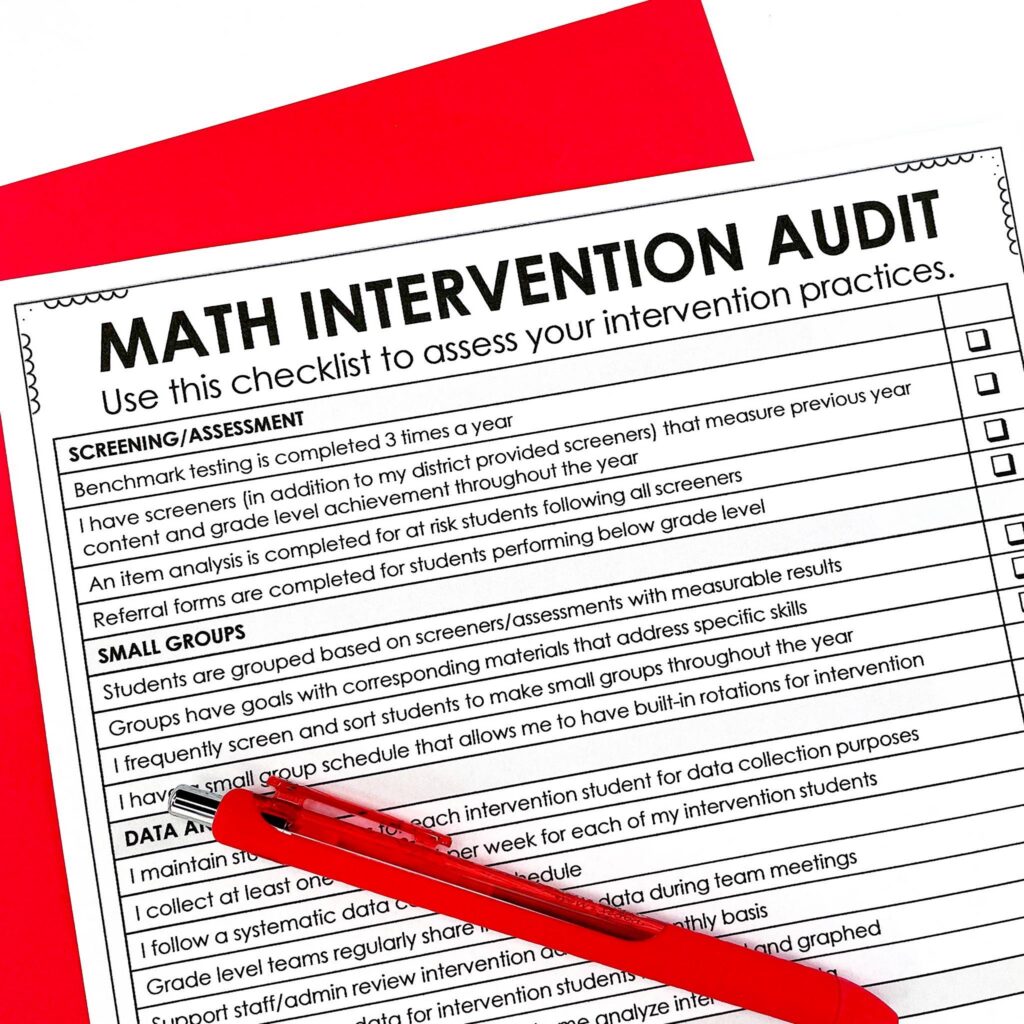
Need a starting point before building your full intervention system?
Download your FREE Math Intervention Audit