Math intervention can feel like one of those things everyone agrees is important, but nobody hands you a simple, realistic plan for actually doing it.
You know your students need support.
You know the data matters.
You know small groups are important.
But between whole group instruction, lesson planning, assessments, grading, meetings, and everything else on your plate, math intervention can start to feel impossible.
And if we are being honest, it can also feel overwhelming because there are so many opinions about what intervention should look like.
Should it be separate from your math block?
Should it only happen during RTI time?
Should you wait for district data?
Should every student have a perfectly customized plan?
Whew. No wonder teachers feel stuck.
But sometimes the problem is not math intervention itself.
Sometimes the problem is the myths we have believed about what intervention has to look like.
Let’s clear up a few of those myths so you can make math intervention feel more doable, purposeful, and helpful for your students.
Myth #1: I Don’t Have Enough Time for Math Intervention
This is probably the most common reason teachers feel stuck with math intervention.
And honestly? It makes sense.
There are only so many minutes in a school day. Your math block already has a lot packed into it. You have standards to teach, lessons to get through, students who need enrichment, students who need reteaching, and students who somehow need you at your small group table all at the same time.
It is a lot.
But here is the thing:
Math intervention does not always have to be a huge, separate block of time.
Sometimes intervention looks like pulling a small group for 10 minutes while the rest of the class works independently.
Sometimes it looks like using a quick check to find one skill that needs reteaching.
Sometimes it looks like reviewing place value, number sense, or basic operations with a small group before moving into the next lesson.
Small and consistent is better than perfect and occasional.
If you wait until you have the perfect intervention schedule, the perfect groups, and the perfect data, you may never start.
Instead, start small.
Choose one skill.
Choose one group.
Choose one way to check for understanding.
That counts.
Ready to save time? Start with these grade-level Math Intervention Binders.


Myth #2: Pull-Out Services Are Enough
Pull-out services can be incredibly helpful. Many students benefit from additional support outside of the classroom, especially when they need more intensive instruction.
But pull-out services should not be the entire intervention plan.
Students still need support during regular math instruction. They still need their classroom teacher to notice patterns, respond to confusion, and provide targeted instruction when a skill is not clicking.
Math intervention is not only about remediation.
It is also about differentiation and prevention.
That means we do not want to wait until students are completely lost before we step in. We want to notice the gaps early and provide support before those gaps grow wider.
Intervention is not just about catching students after they struggle.
It is also about noticing what they need before the gap gets bigger.
That might look like:
- Pulling a quick group after a lesson
- Reviewing prerequisite skills before teaching a new concept
- Using visuals or models when students need a different way to understand the math
- Giving a short progress check to see who is ready to move on
The classroom teacher plays a huge role in math intervention because you see your students every day.
You notice the hesitation.
You hear the explanations.
You know who is guessing.
You know who is relying on memorized steps.
You know who almost has it but needs one more push.
That information matters.
Myth #3: My District Screener Gives Me All the Data I Need
District screeners can be helpful. They can show you which students may need support and give you a broad picture of student performance.
But most screeners do not tell you everything you need to know for daily instruction.
A screener might tell you that a student is below grade level in math, but it may not tell you exactly where the breakdown is happening.
Is the student struggling with place value?
Basic operations?
Fractions?
Problem solving?
Math vocabulary?
Number sense?
That is the information you need when you are planning intervention.
Because “this student struggles in math” is too broad.
You need to know the specific skill gap so you can choose the right instruction.
That is where targeted assessments, quick checks, and progress monitoring come in.
You do not need a huge assessment every week. You just need a simple way to answer these questions:
- What skill does this student need help with?
- Has the student improved after instruction?
- Do I need to reteach this skill another way?
- Is the student ready to move forward?
- Should this group change?
When your data is specific, your instruction becomes more purposeful.
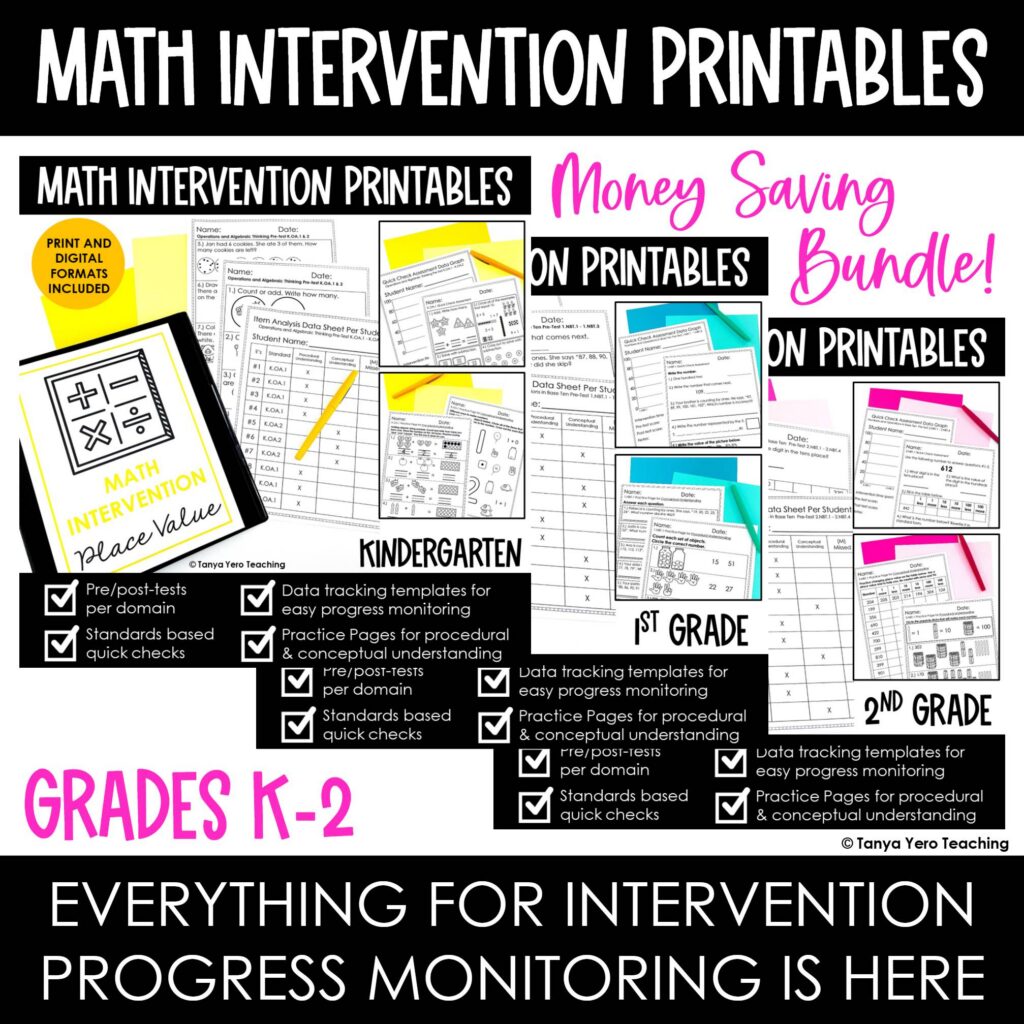
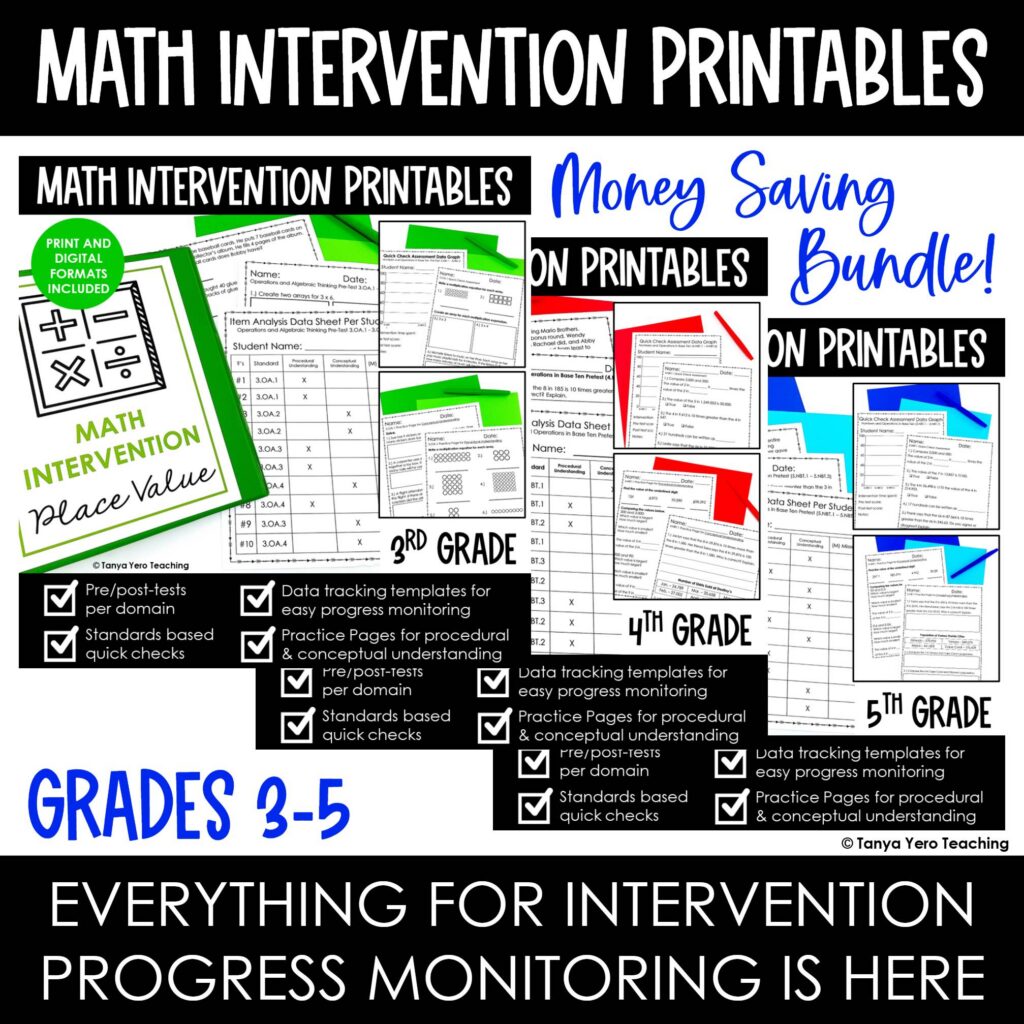
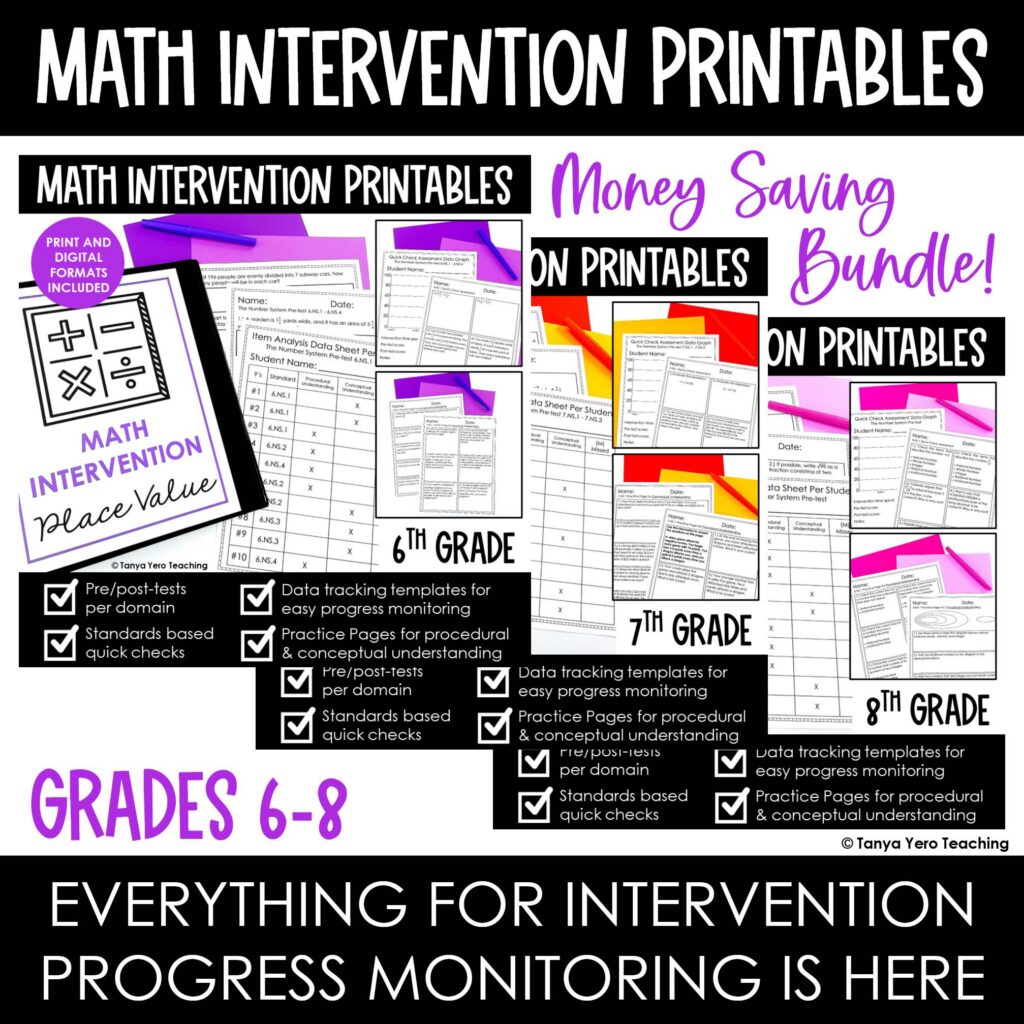
Need help finding the exact skill gap? These Math Intervention Progress Monitoring Bundles can help organize your data and small groups.
Myth #4: Math Intervention Means More Worksheets
This one is important.
Math intervention should not just be more of the same.
If a student did not understand the skill during whole group instruction, giving them another page of similar problems may not fix the issue.
Sometimes extra practice helps, but only if the student understands what they are practicing.
Intervention needs to be targeted.
It needs to help students understand the math, not just complete more problems.
That might mean using:
- Visual models
- Manipulatives
- Number lines
- Base-ten blocks
- Fraction models
- Math conversations
- Step-by-step teacher modeling
- Guided practice with feedback
It also means asking better questions.
Instead of only asking, “What is the answer?” try asking:
- How do you know?
- Can you show it another way?
- Does that answer make sense?
- What strategy did you use?
- Where did you get stuck?
Those questions help you see what students understand and where they are still confused.
Sometimes students can get the right answer without understanding the math.
Other times, they get the wrong answer, but their thinking shows they are closer than you realized.
That is why teacher questioning is such a powerful part of intervention.
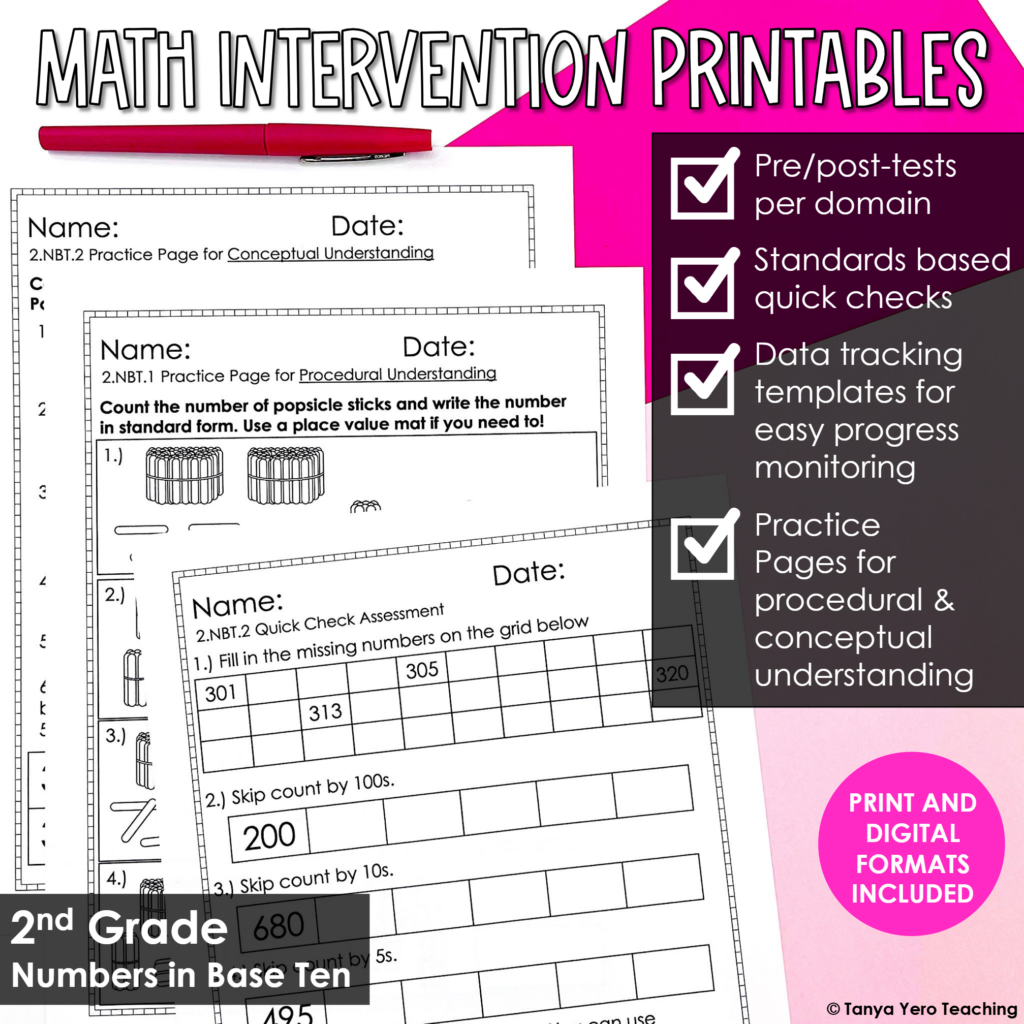
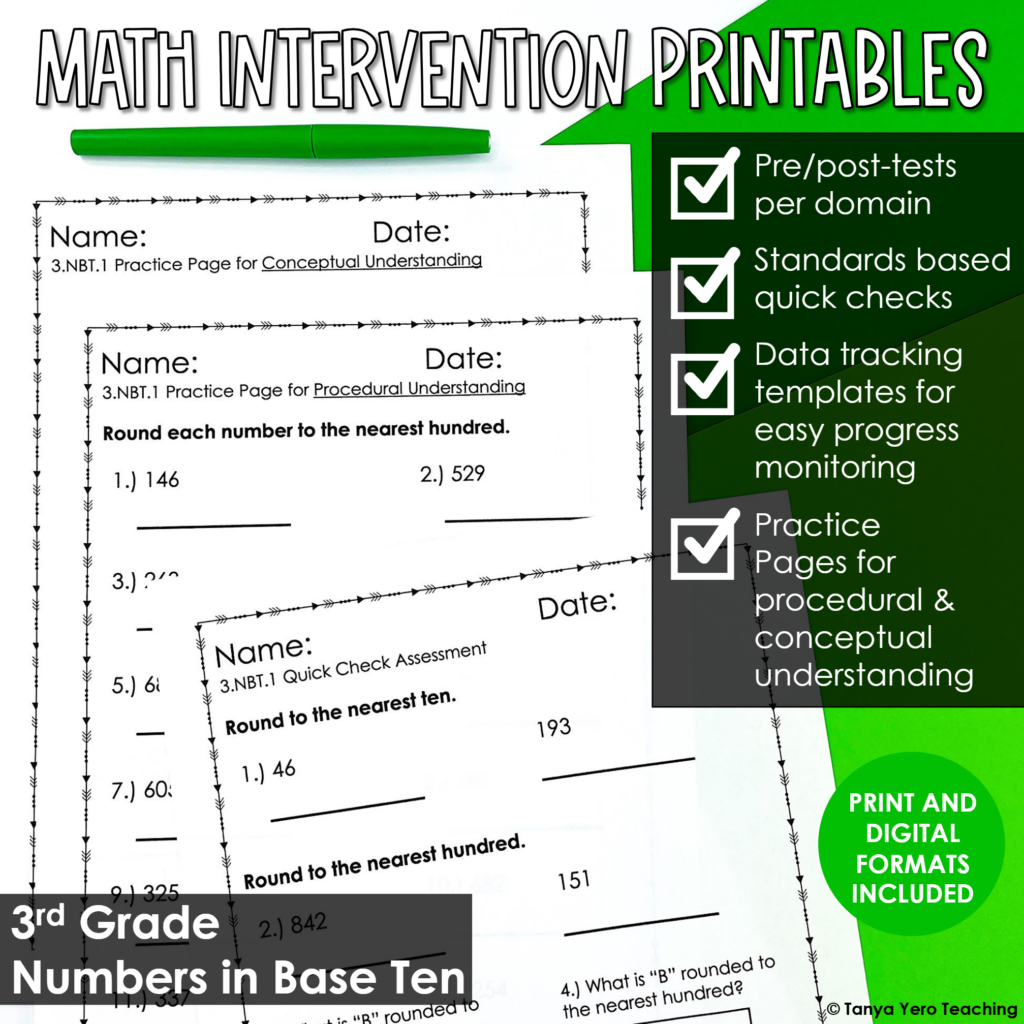
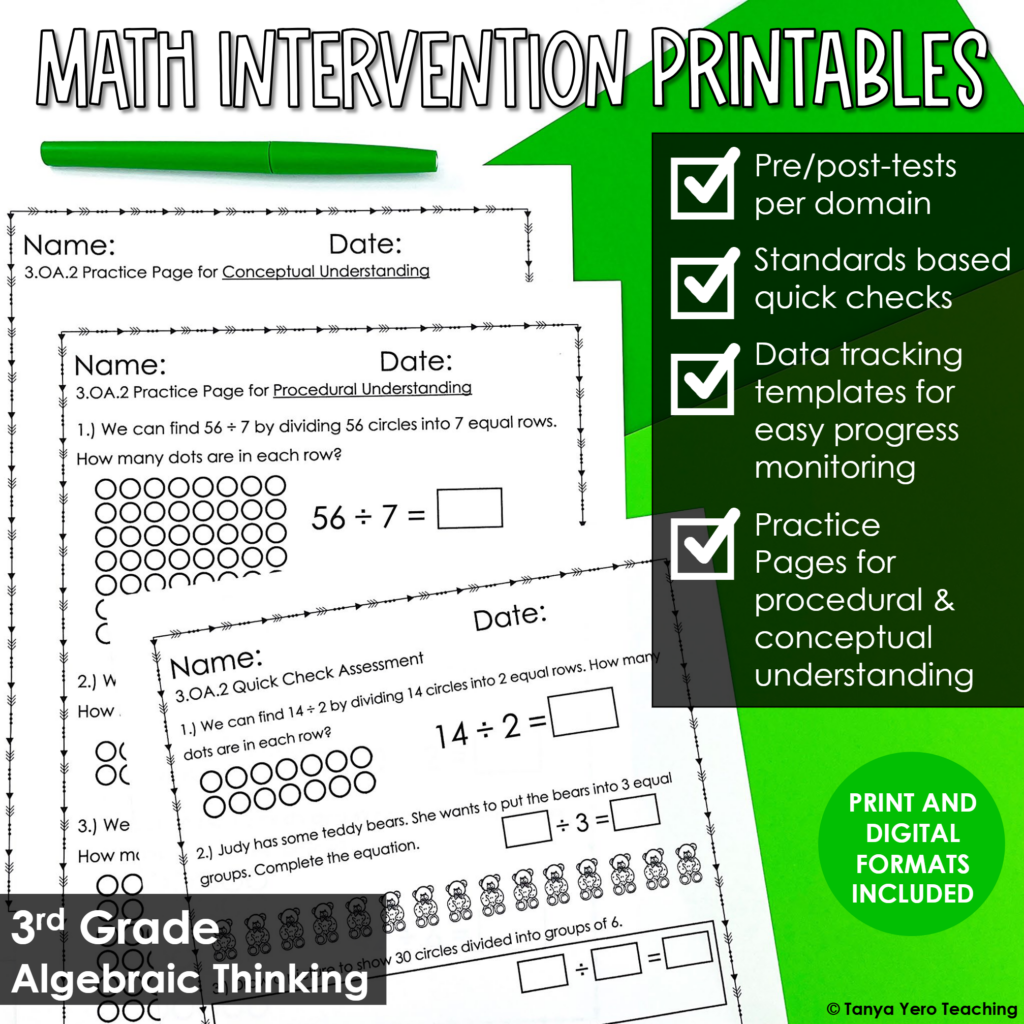
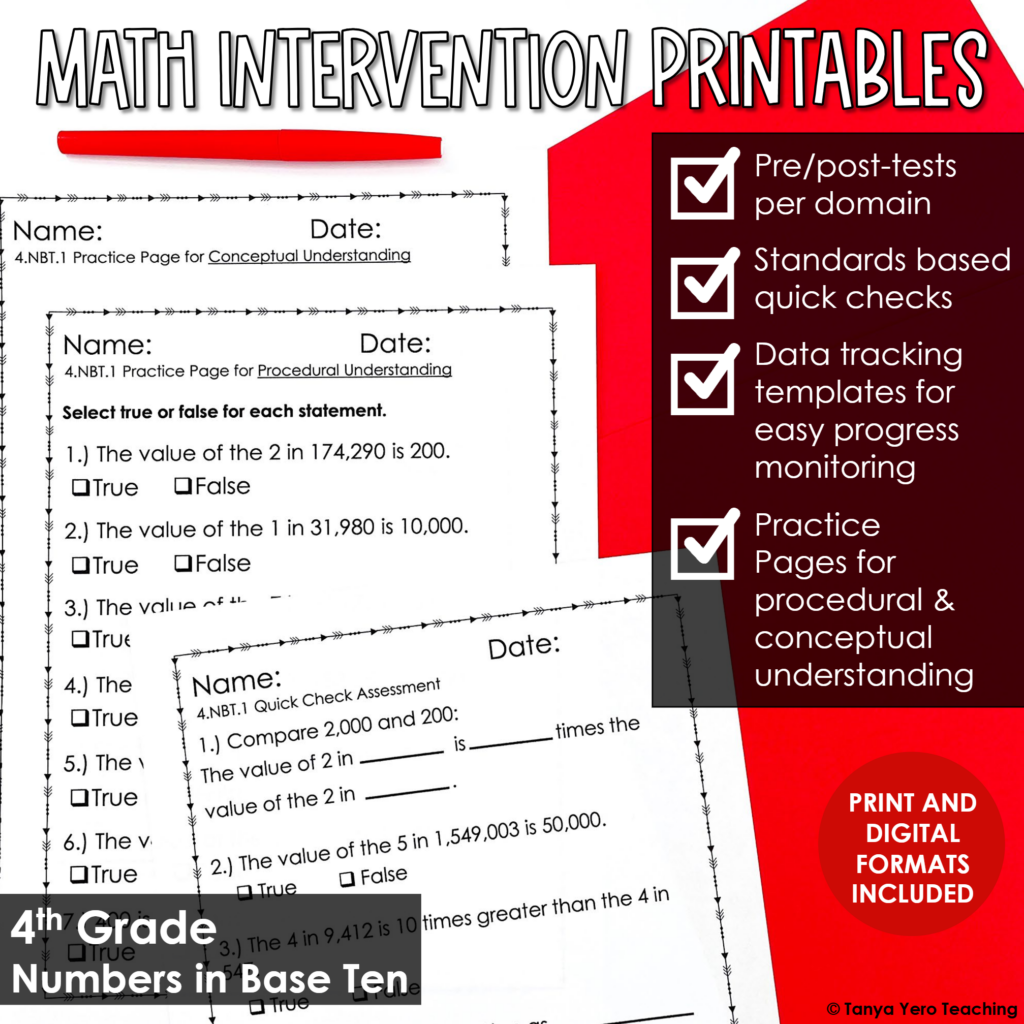
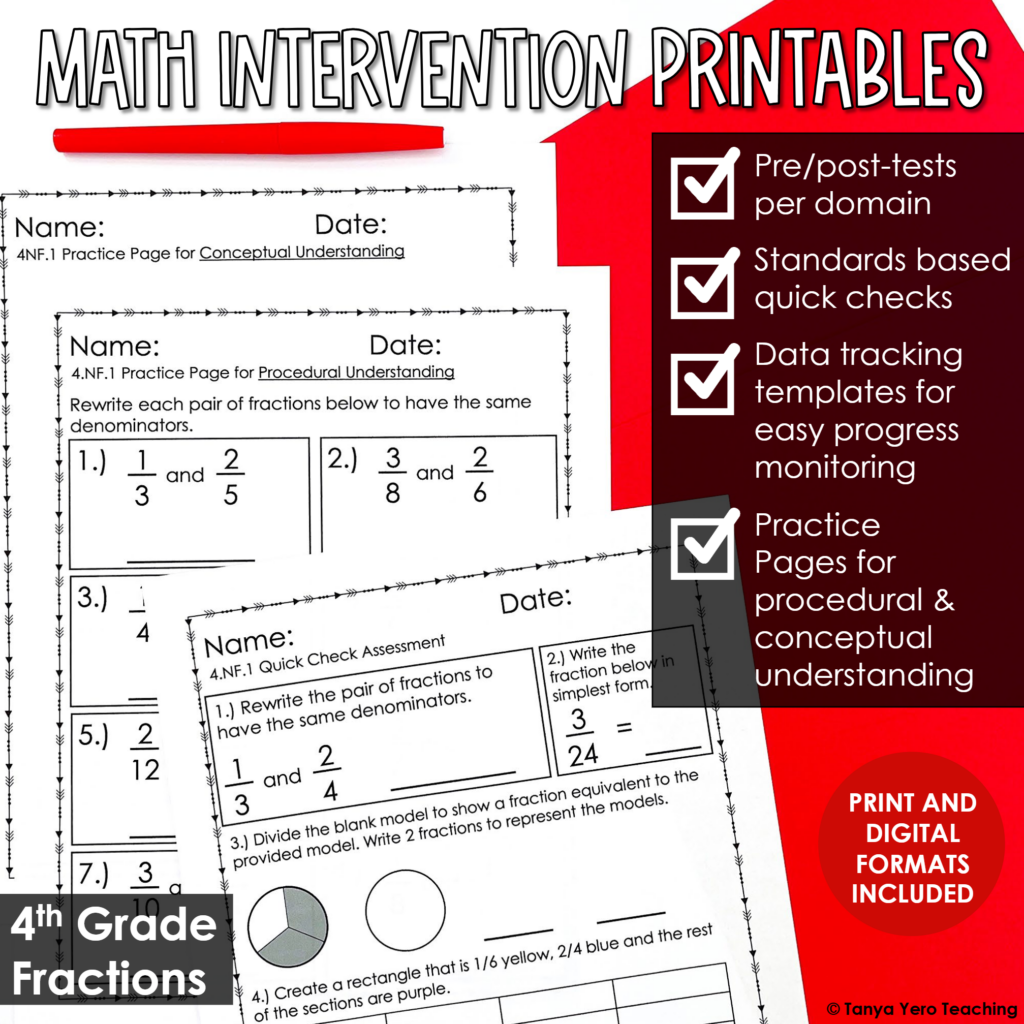
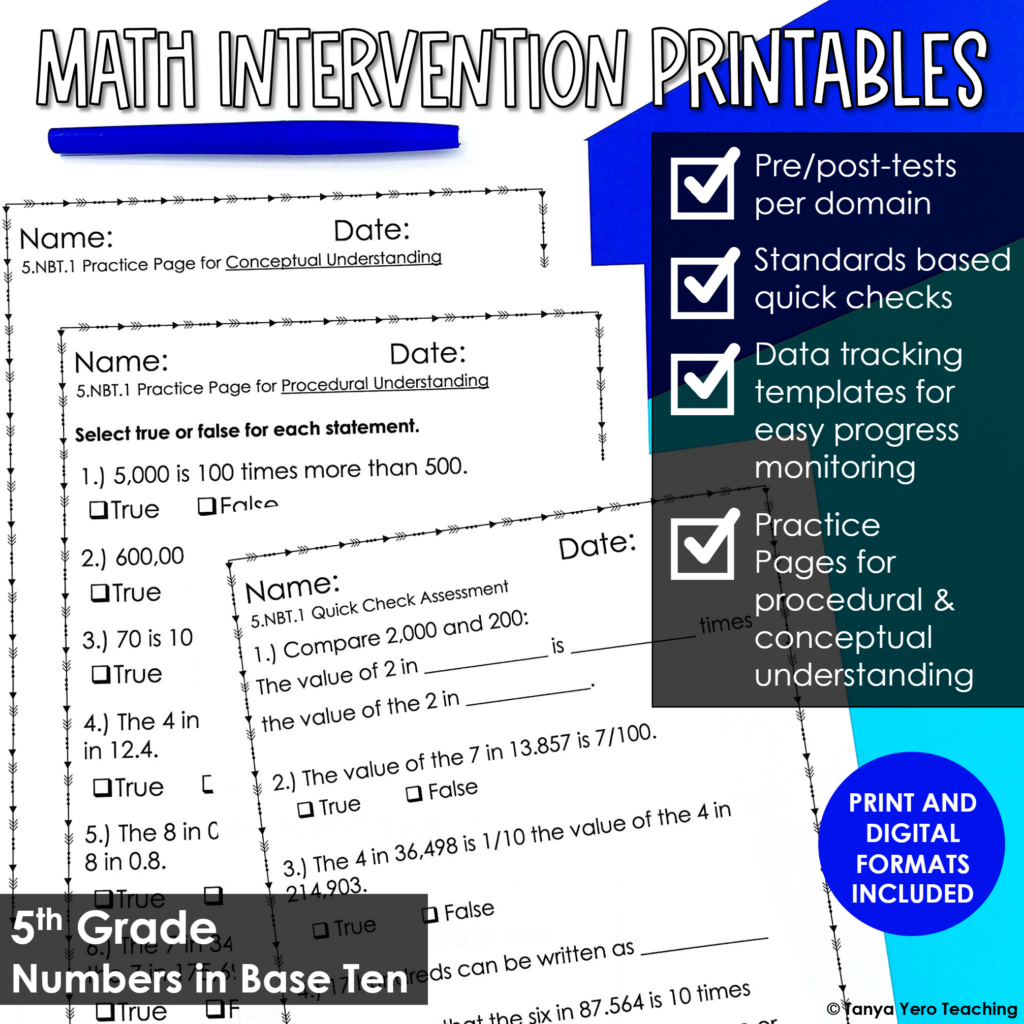
If your students need targeted support in one specific skill area, try one of these domain-specific Math Intervention packs.
Myth #5: Intervention Has to Be Complicated to Work
Math intervention does not need to be complicated to be effective.
In fact, the more complicated the system is, the harder it is to keep up with.
A strong intervention system needs a clear, repeatable process.
That is it.
Here is a simple framework you can use:
1. Identify the Skill Gap
Start by figuring out what students actually need.
Be specific.
Instead of saying, “They struggle with math,” identify the exact skill.
For example:
- Comparing fractions
- Understanding place value
- Solving word problems
- Adding and subtracting within 20
- Multiplying multi-digit numbers
The more specific you are, the easier it is to teach.
2. Group Students by Need
Intervention groups should be flexible.
A student may need support with fractions but be strong in geometry. Another student may struggle with place value but do well with computation.
Groups should be based on the skill, not a permanent label.
3. Teach the Skill Explicitly
Students need clear instruction.
Model the skill.
Think aloud.
Show the steps.
Use visuals when needed.
Let students hear your thinking so they can build their own.
4. Practice With Support
Students need time to practice while you are still there to guide them.
This is where you can catch mistakes early, ask questions, and correct misunderstandings before they become habits.
5. Progress Monitor
Use a quick check to see if the intervention is working.
This does not need to be long or complicated.
A few targeted problems can give you valuable information.
6. Adjust Instruction
This is the part that matters most.
If students understand the skill, move forward.
If they are still confused, reteach it another way.
If some students are ready and others are not, regroup.
Intervention is not a one-time lesson.
It is a cycle.
You teach, check, adjust, and keep going.
Math Intervention Can Be Manageable
If math intervention has felt overwhelming, you are not alone.
But it does not have to be an all-or-nothing system.
You do not need to fix every math gap in one week.
You do not need perfect groups.
You do not need a complicated spreadsheet with 47 tabs.
You need a starting point.
Start with one skill.
Pull one group.
Use one quick check.
Make one instructional decision from that data.
That is how a manageable math intervention system begins.
And once you have a simple system in place, intervention starts to feel less like one more thing and more like a natural part of your math block.
Ready to Make Math Intervention Easier?
If you want support planning targeted, data-driven math intervention, check out my Math Intervention resources.
They are designed to help teachers:
- Identify skill gaps
- Provide meaningful practice
- Monitor progress
- Track student data
- Support students without building everything from scratch
Math intervention does not have to be overwhelming.
Start small, stay consistent, and let the data guide your next step.
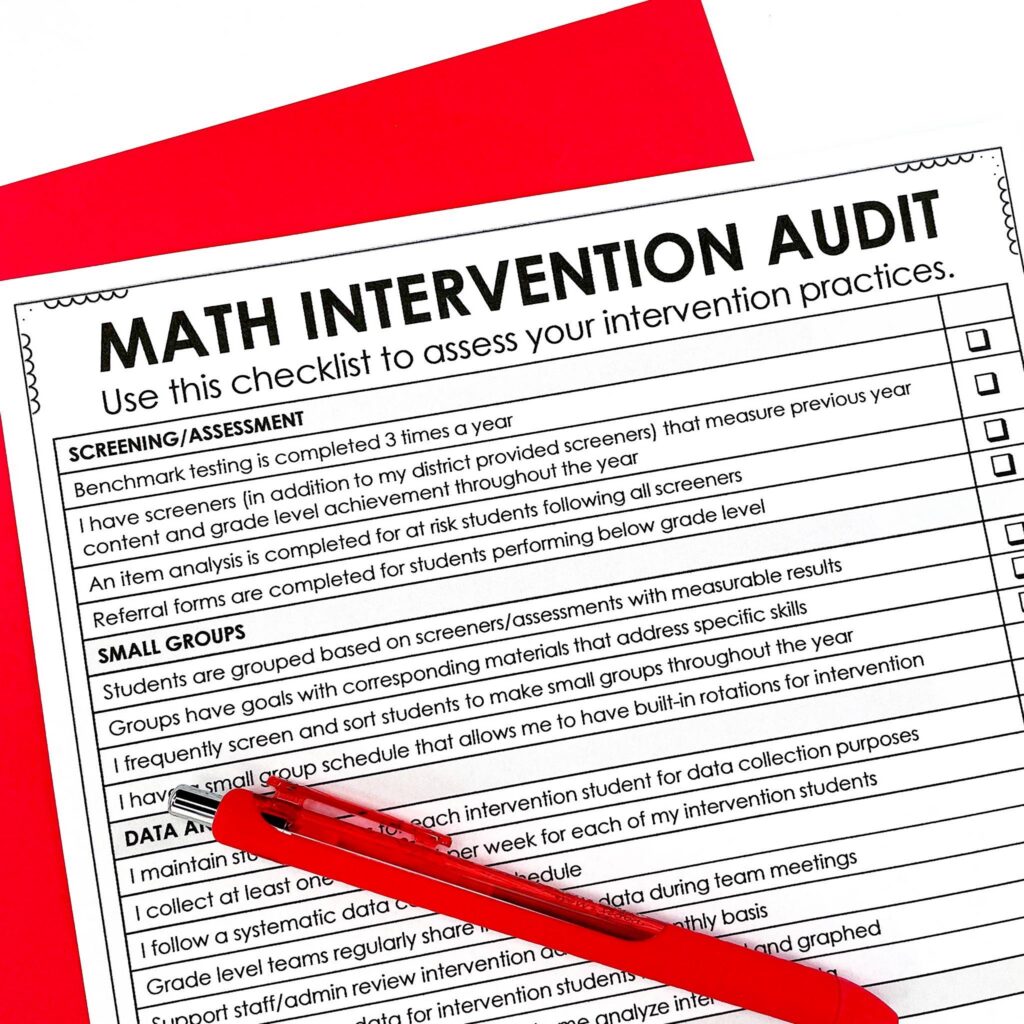
How does your current Math Intervention program stack up?
Take the FREE Math Intervention Audit and see!