Flash cards have been used in classrooms for years.
And I get why.
They are quick.
They are easy to use.
They give students repeated practice with math facts.
But traditional flash cards have one big problem.
They are usually only symbolic.
Students see something like:
6 x 4
8 + 7
24 ÷ 6
Then they are expected to recall the answer.
For some students, that works. They memorize the facts, move on, and everything feels fine.
But for many students, those symbols do not create enough meaning. They may memorize a fact for a short time, but they do not truly understand what is happening in the operation.
And when students do not understand the math, fact fluency becomes much harder to build.
That is exactly why visual math flash cards can be such a powerful tool.
Students Need to See the Math
Children do not learn from symbols alone.
They learn from experiences, hands-on activities, conversations, and visuals.
Before students can confidently manipulate numbers, they need opportunities to see and understand quantities. They need to build mental images of numbers and operations.
Think about it this way.
If a student sees 5 + 3, that is a symbolic representation.
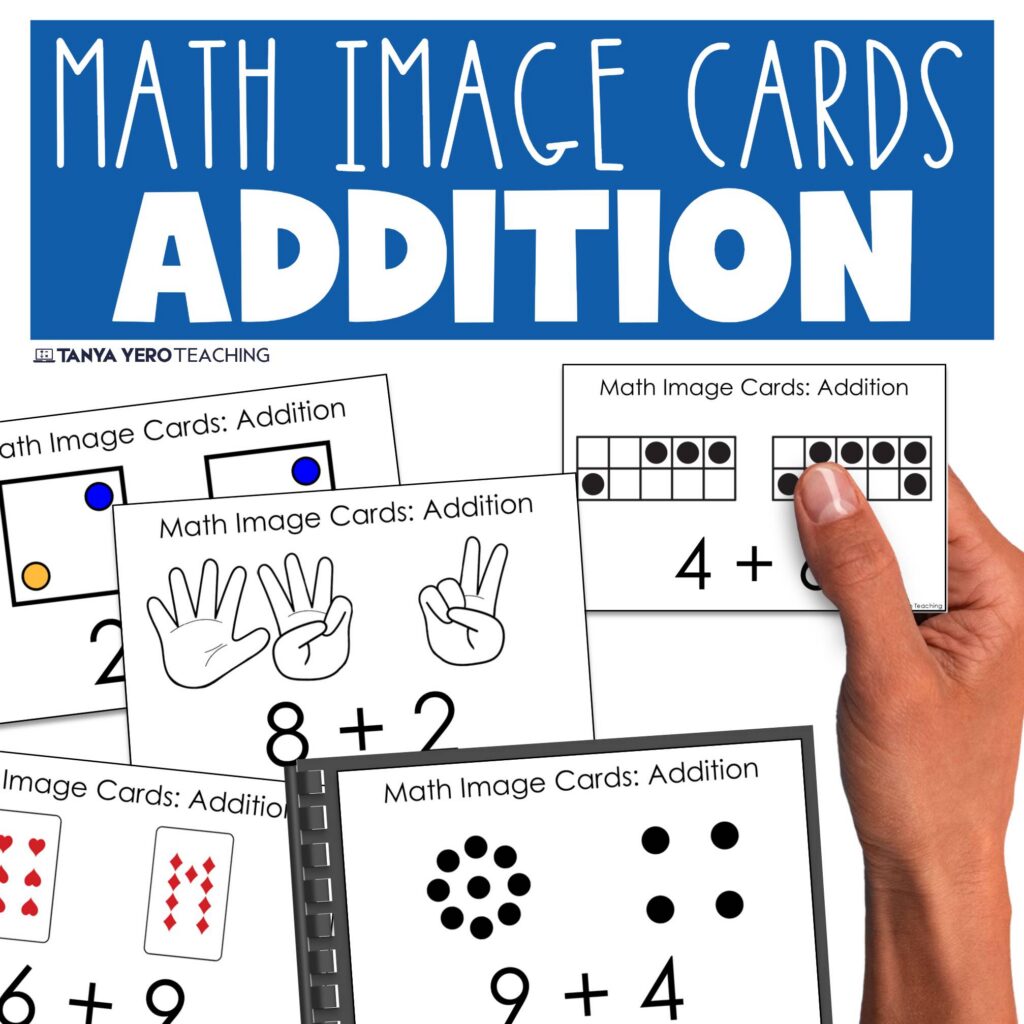
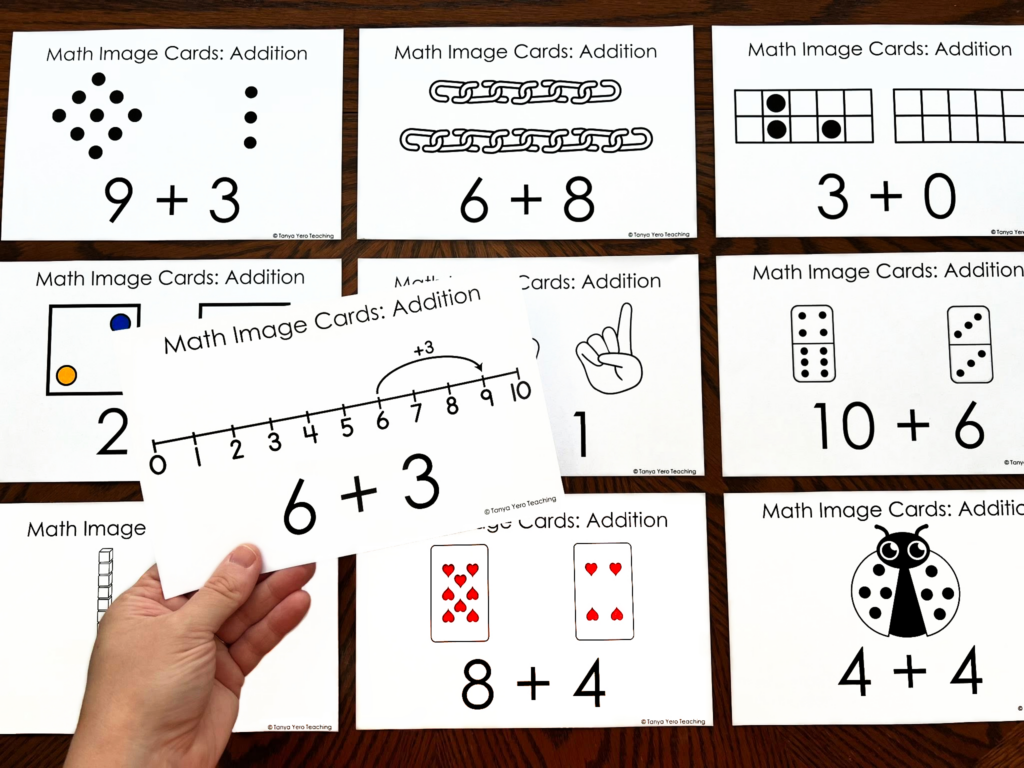
But if that same student sees five dots and three more dots, they can begin to subitize, count on, make a group, or compose the total.
If a student sees 6 x 4, that is symbolic.
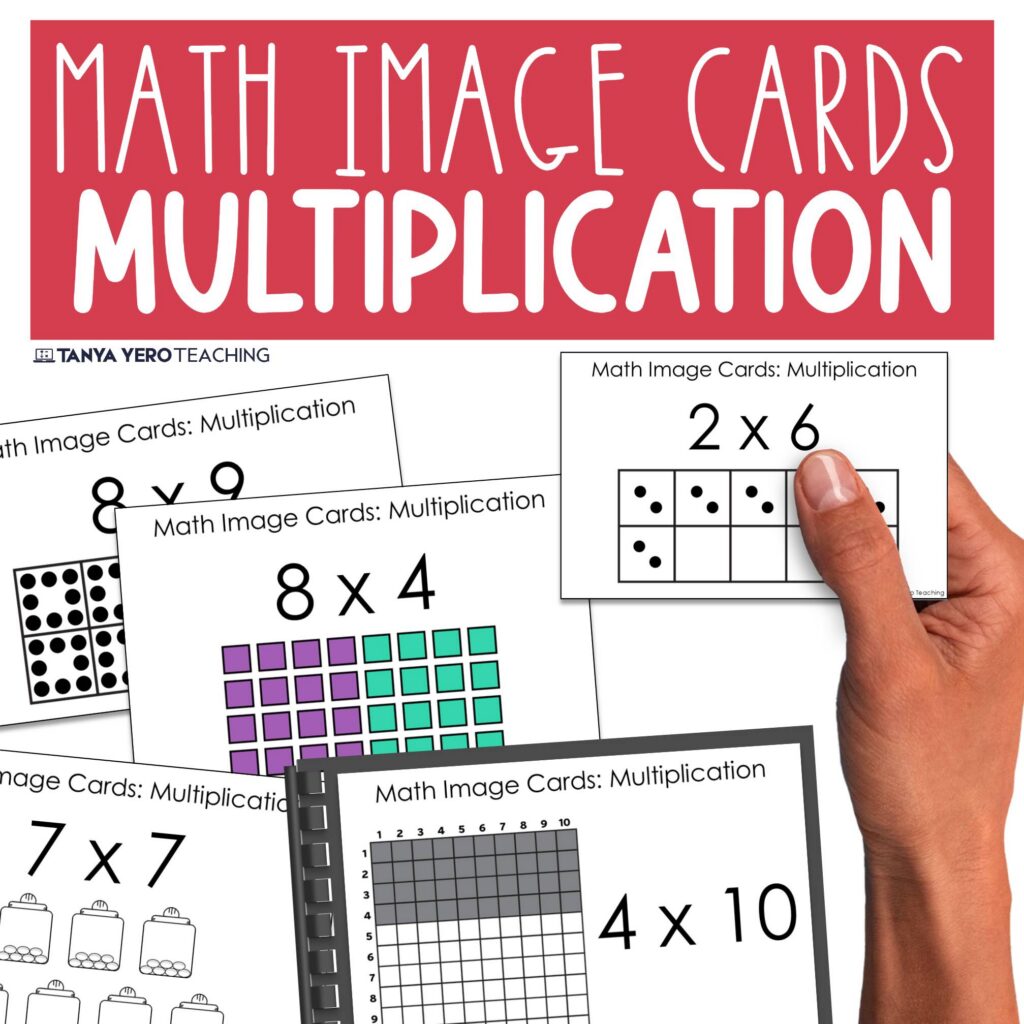
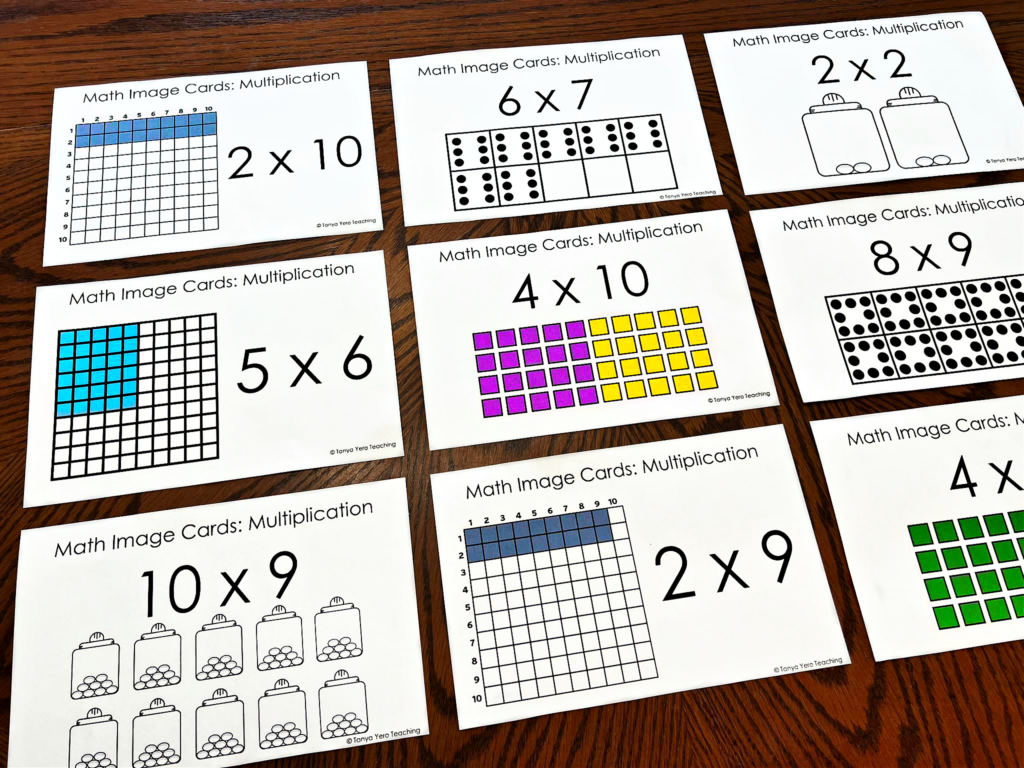
But if they see an array with 6 rows of 4, they can begin to understand multiplication as equal groups.
If a student sees 24 ÷ 6, that is symbolic.
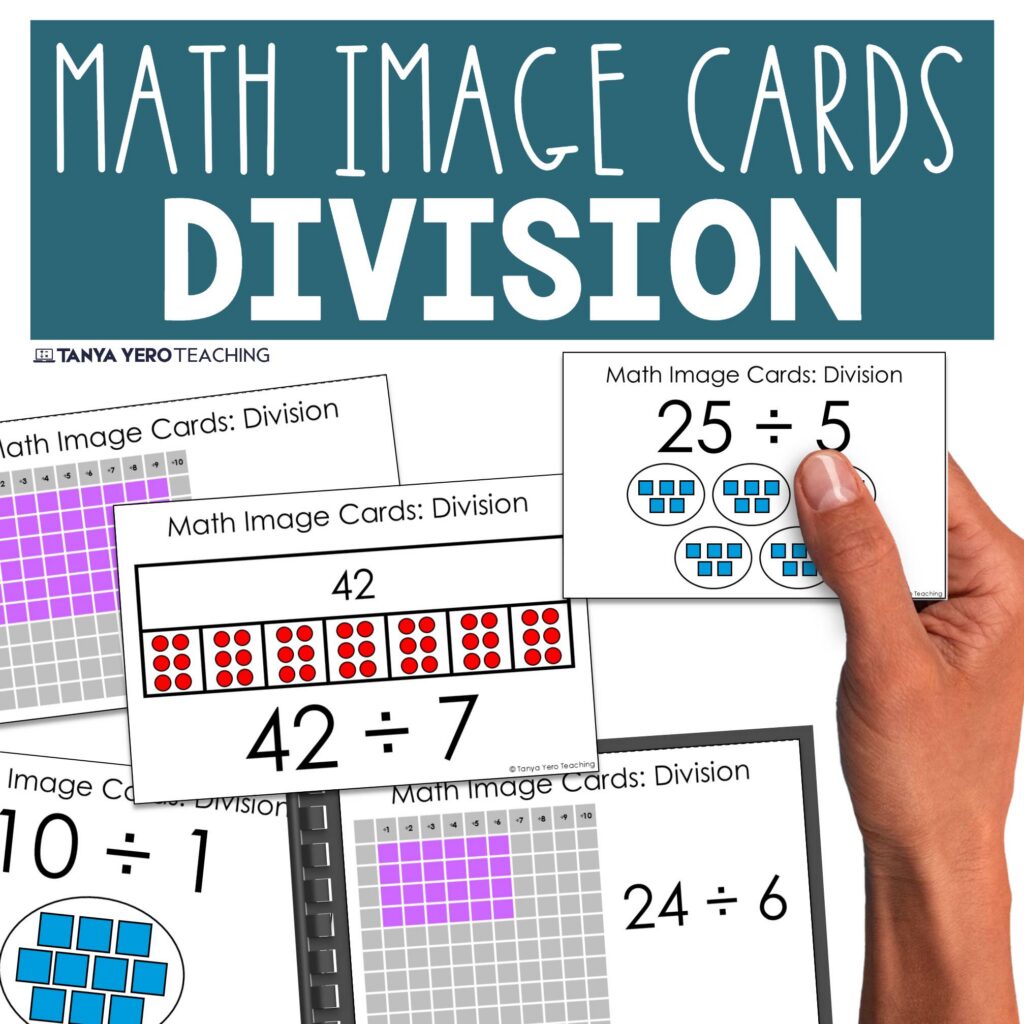
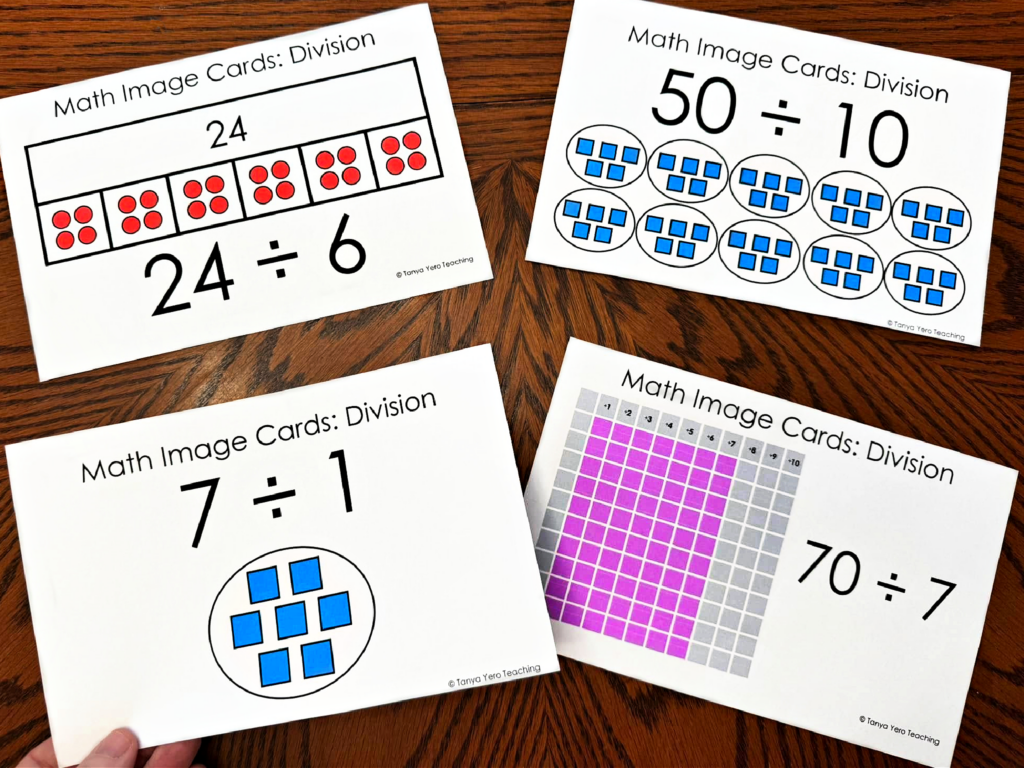
But if they see 24 objects split into 6 equal groups, they can begin to understand division as fair sharing or grouping.
Visuals make the math come alive.
And when students can see the math, they are more likely to understand it.
This is exactly why visual math cards work so well. Instead of asking students to memorize symbols in isolation, students get repeated exposure to the image, the value, and the operation at the same time.
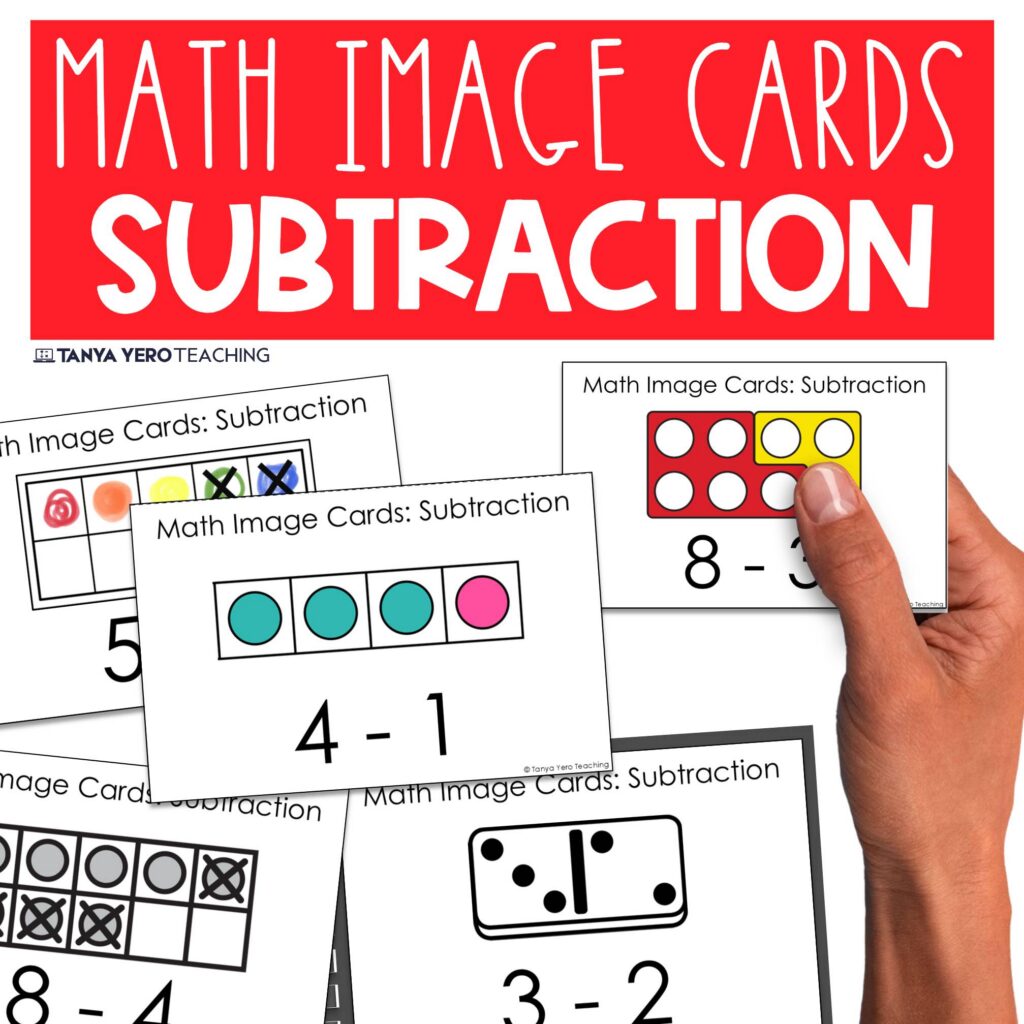
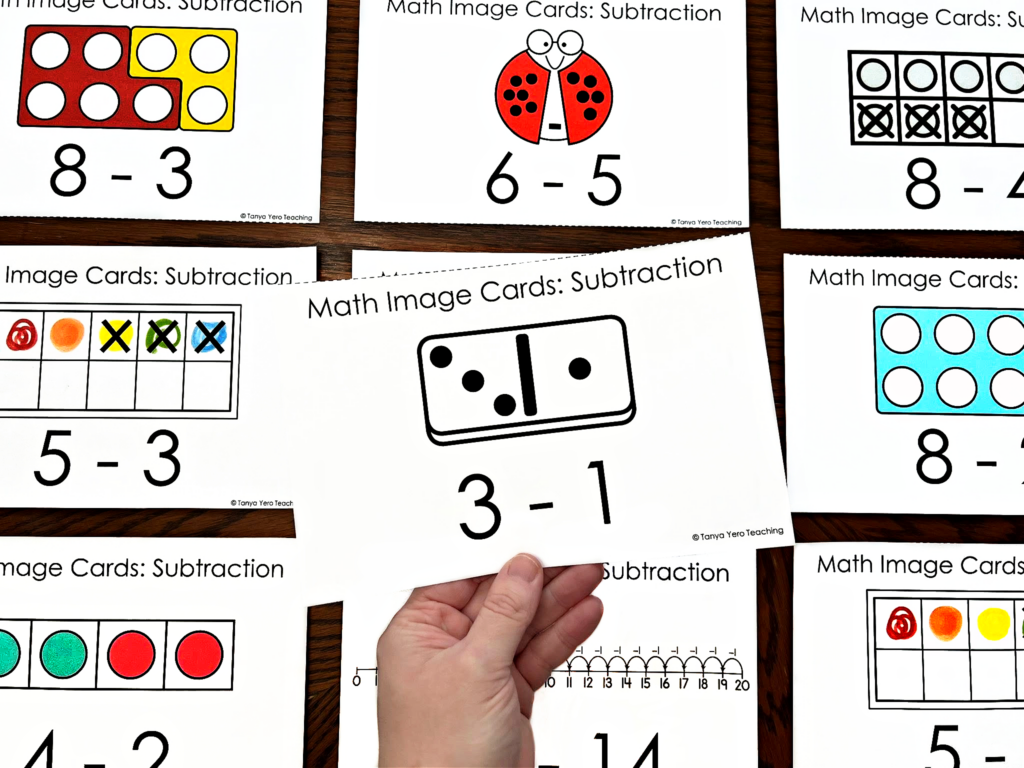
For younger students building addition and subtraction fluency, start here:
What Makes Visual Flash Cards Different?
Visual math flash cards are not your typical flash cards.
Traditional flash cards usually show only the equation.
Visual flash cards show the operation through an image.
That means students are not just practicing recall. They are building connections between the symbolic part of math and the conceptual part of math.
They can see:
- Addition as combining quantities
- Subtraction as separating or finding the difference
- Multiplication as equal groups or arrays
- Division as sharing or grouping
- Numbers as values, not just digits
- How quantities can be composed and decomposed
This matters because symbols and digits do not hold much value if students cannot mentally visualize what they represent.
A student may memorize that 8 x 7 equals 56.
But if they can also picture 8 groups of 7, an array, or a related fact, they have a stronger foundation.
That is the kind of fluency we want.
If you teach upper elementary, the multiplication and division visual math cards are especially helpful because students can actually see arrays, groups, and division models instead of only memorizing facts.
Visual Flash Cards Support Mental Math
One of the biggest benefits of visual flash cards is that they help students create mental images.
And mental images are powerful.
When students can picture quantities, they can start using strategies instead of relying only on memorization.
For example, a student looking at a visual for 9 + 6 might think:
“I can make a ten.”
“I can move one from the 6 to the 9.”
“That makes 10 + 5.”
“So the answer is 15.”
That student is building flexibility.
A student looking at a multiplication array may think:
“I know 5 x 4 is 20.”
“One more group of 4 makes 24.”
“So 6 x 4 is 24.”
That student is using a known fact to solve an unknown fact.
This is how students begin to move from counting to reasoning.
And reasoning is what makes fact fluency stick.
Want to help students explain how they see the math?
This would be a great place to offer a simple student page with prompts like:
- I see…
- The equation is…
- My strategy is…
- Another way to solve it is…
Visual Flash Cards Help Students Build Conceptual and Procedural Understanding
In math, students need both procedural understanding and conceptual understanding.
Procedural understanding helps students know the steps or recall the facts.
Conceptual understanding helps students know why the math works.
Some classrooms focus first on procedures. Others focus first on concepts.
But students benefit when they are exposed to both at the same time.
That is especially true with multiplication and division.
Students need to know the fact, but they also need to understand what the fact represents.
For multiplication, they need to see equal groups, arrays, repeated addition, and patterns.
For division, they need to see equal groups, sharing, related multiplication facts, and how quantities can be separated.
Visual flash cards allow students to practice facts while still seeing the meaning behind the operation.
That is a win.
Ways to Use Visual Flash Cards in Your Classroom
Visual flash cards are low prep and easy to use, which is exactly what busy teachers need.
Here are a few simple ways to add them to your math block.
1. Use Them as a Daily Warm-Up
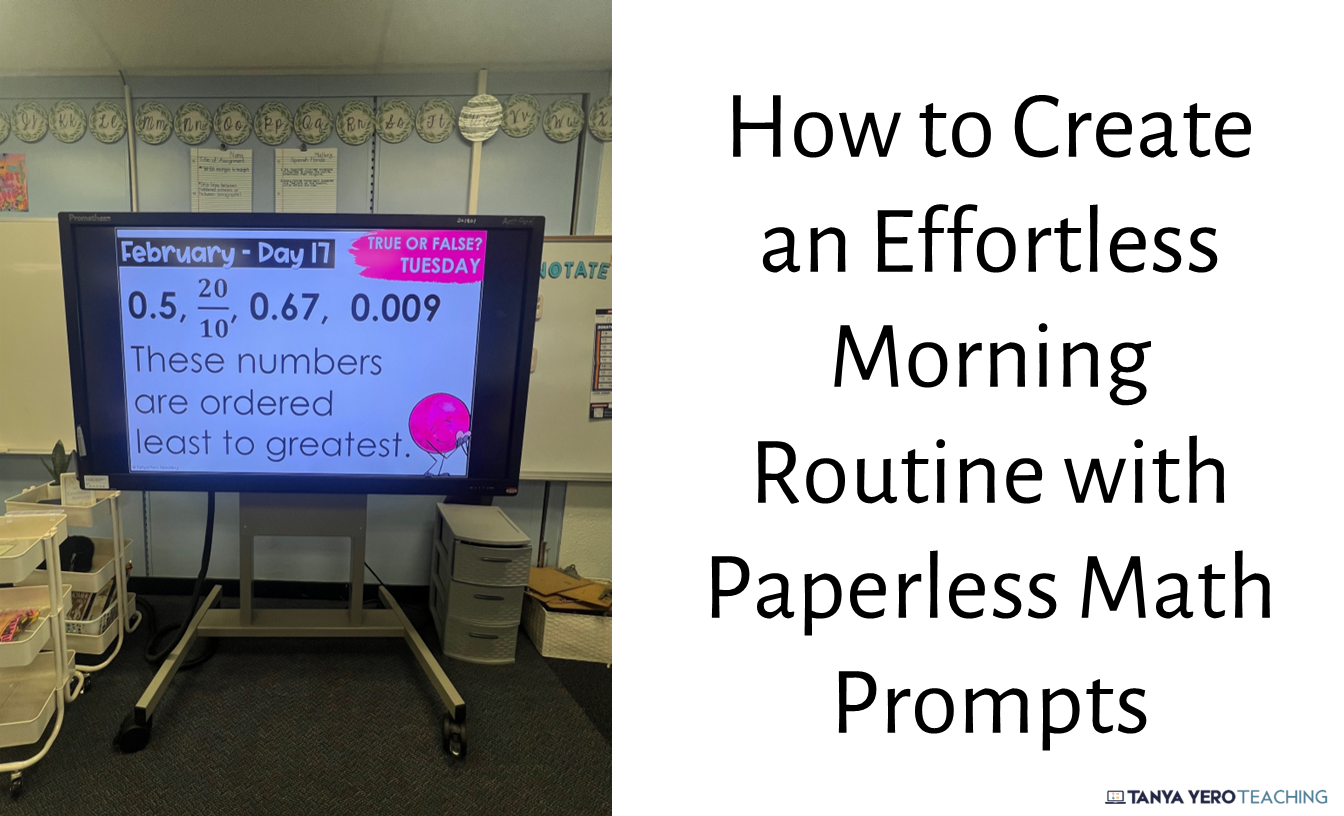
Display one visual flash card at the beginning of your math block.
Ask students:
“What do you notice?”
“What equation matches this image?”
“How do you see the total?”
“Can you solve it another way?”
This turns a quick warm-up into a number sense routine.
2. Use Them During Small Groups
Visual flash cards are perfect for small group instruction.
You can use them to target specific facts, operations, or strategies.
For students who need support, focus on connecting the visual to the equation. For students who are ready for more, ask them to explain multiple strategies or write related facts.
Small group is also a great time to choose cards based on the operation your students need most.
3. Use Them for Partner Practice
Students can work with a partner and take turns explaining what they see.
One student can hold up the card, while the other explains the equation, strategy, and answer.
This gives students practice with both fluency and math language.
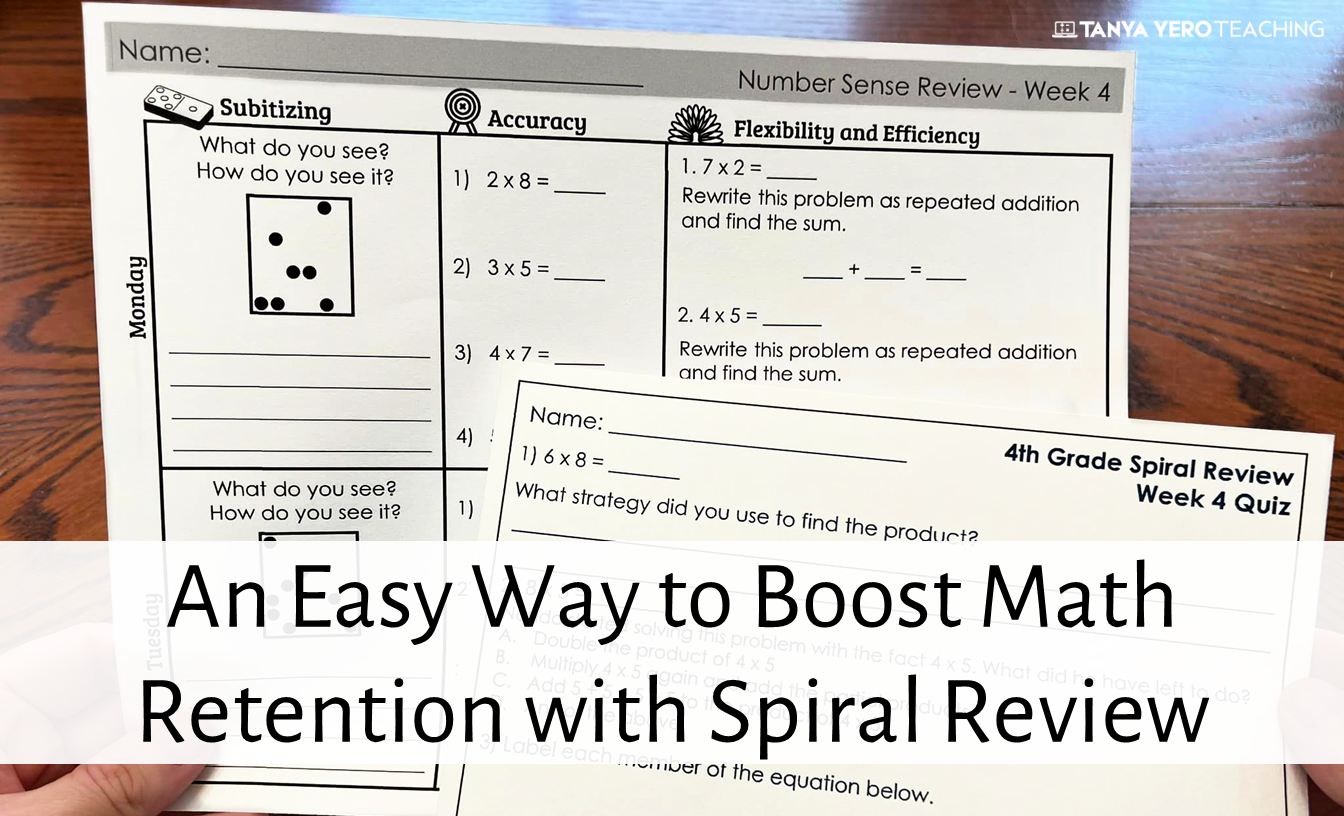
If your students need help naming and organizing their number sense strategies, pair partner practice with this free flipbook.
4. Use Them for Math Centers
Add visual flash cards to a fact fluency center.
Students can sort cards by strategy, match images to equations, write related facts, or record their thinking on a response sheet.
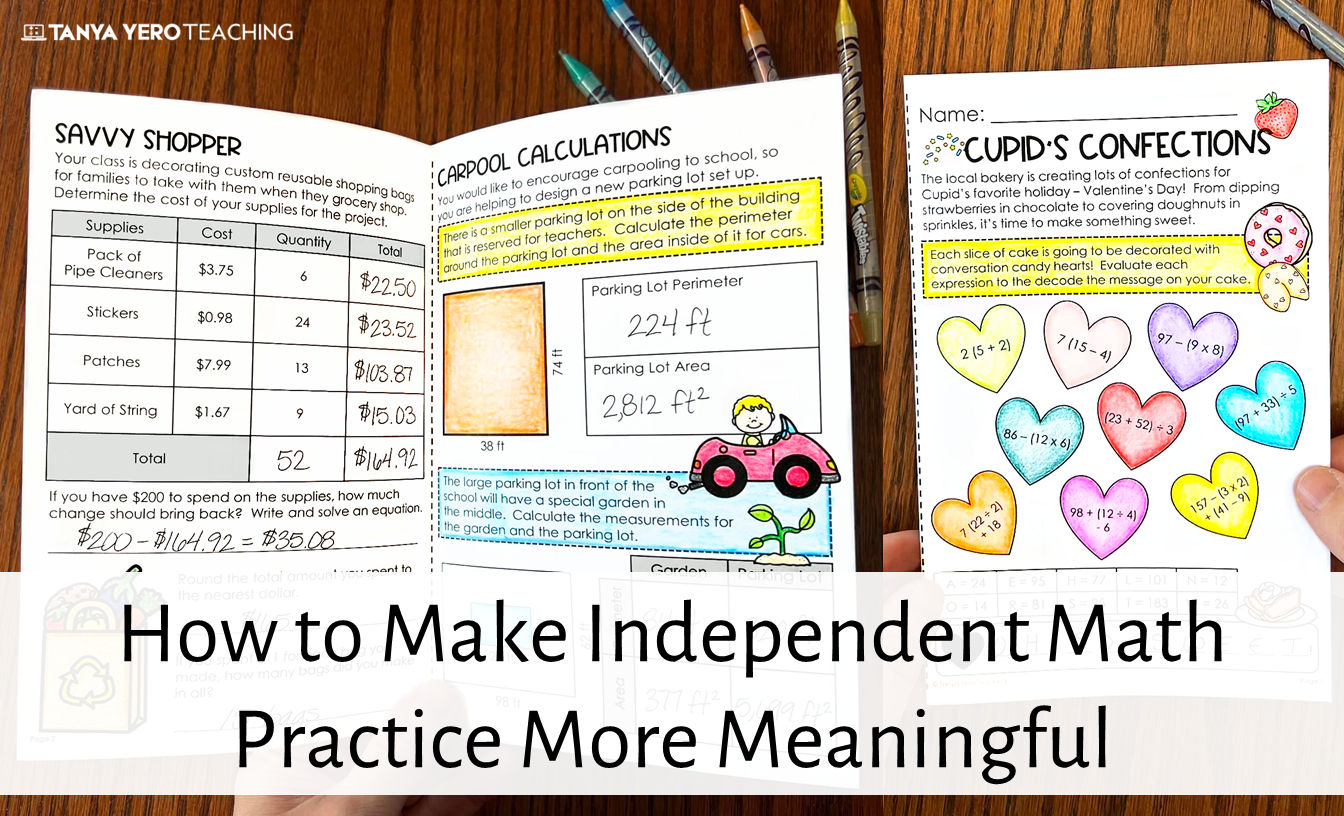
If you want students to keep building visual fact fluency during independent practice, pair the cards with fluency booklets. The booklets give students repeated exposure to visuals like arrays, subitizing images, bar models, and number bonds.
5. Use Them to Build Math Conversations
Instead of asking only, “What is the answer?”
Try asking:
“How did you see it?”
“What strategy helped you?”
“What fact do you already know that helped you solve this one?”
“What related fact can you write?”
“How does the visual match the equation?”
These questions help students think more deeply about numbers.
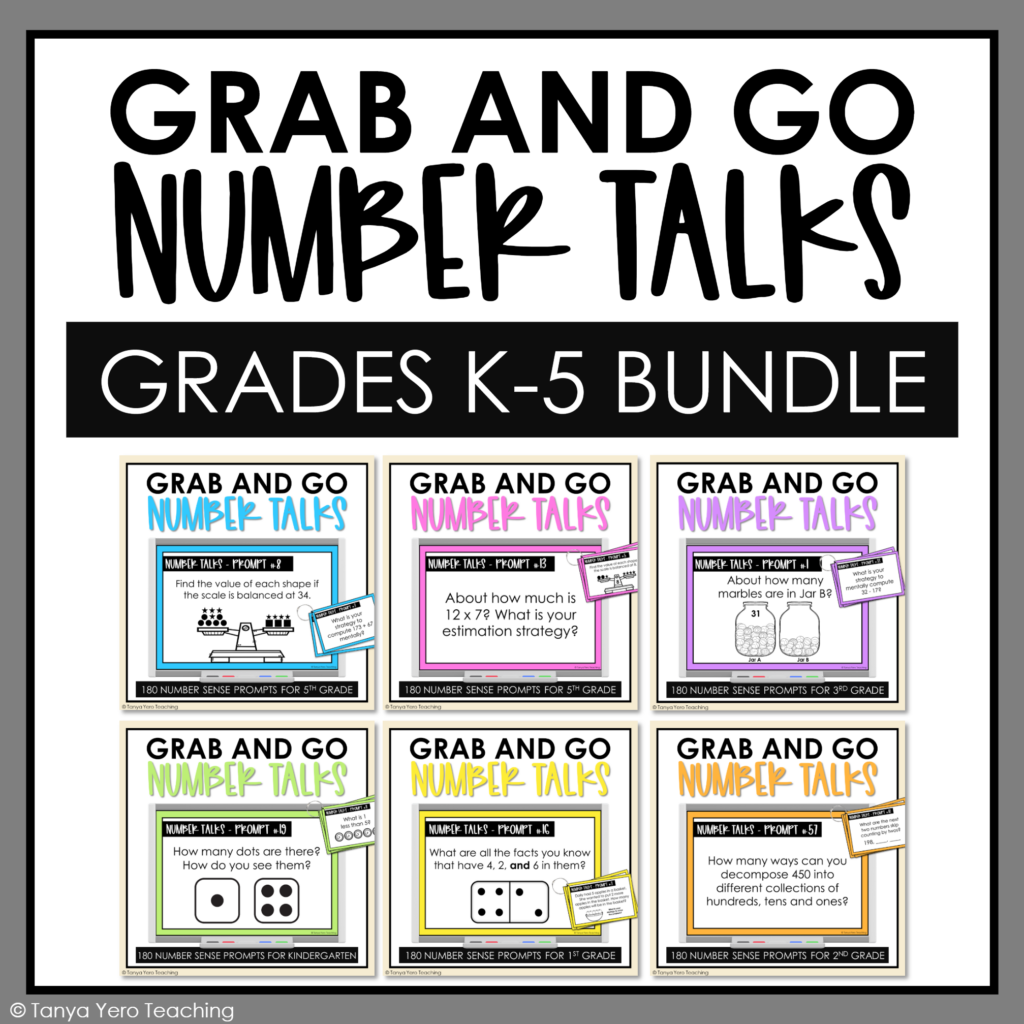
If you want to make math conversations easier to plan, try ready-to-use number talk prompts.
Why This Works Better Than Traditional Flash Cards Alone
Traditional flash cards can help some students memorize facts.
But visual flash cards do more.
They help students:
- Build number sense
- Form mental images
- Understand operations
- Connect symbols to visuals
- Practice facts in a meaningful way
- Develop flexible strategies
- Strengthen math conversations
This does not mean students never need symbolic practice.
They do.
But when students only see symbols, they miss important opportunities to understand what those symbols mean.
Visual flash cards help bridge that gap.
Fact fluency should not feel like a race to memorize.
It should feel like students are building a stronger, deeper understanding of numbers.
Visual math flash cards give students a way to see the math, talk about the math, and eventually recall the math with more confidence.
Because when students can visualize a fact, they are much more likely to understand it.
And when they understand it, memorization becomes much more meaningful.
Ready to ditch traditional flash cards and help students actually see the math?
Shop Visual Fact Fluency Math Cards: